They Took Her Farm in Winter—So She Built a Way Out of the Mountain
They Took Her Farm in Winter—So She Built a Way Out of the Mountain
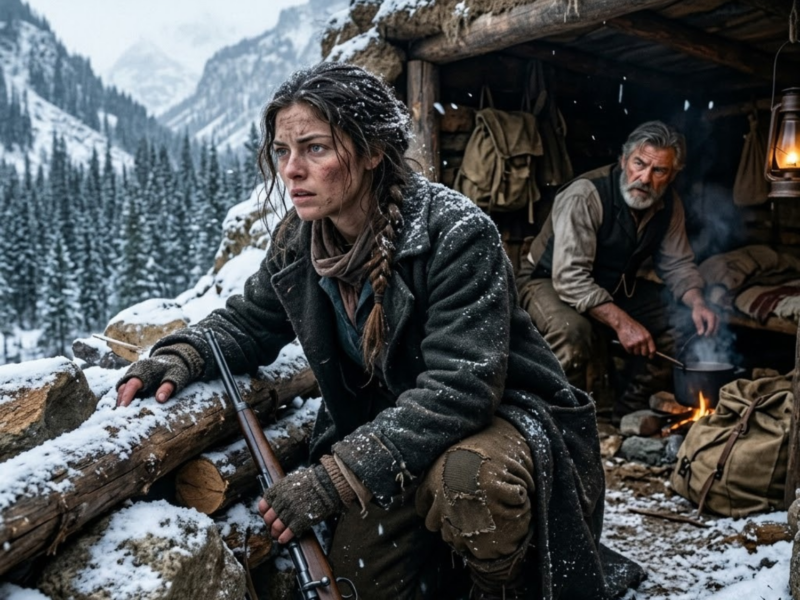
The bitter autumn wind whistled through the Montana territory in October 1894, offering no quarter to the displaced. Mary Caldwell stood silently in her modest kitchen, listening to the heavy, rhythmic thud of a stranger’s horse being led away from the family barn. The foreclosure was absolute and immediate. Her father had been dead for a year, and despite Mary’s relentless labor—repairing broken fences, hauling heavy timber, selling eggs, and sewing late into the night—the debt had consumed everything.
When the creditor arrived with his enforcers and a legal mandate, he granted no grace period. Her plea for a single day’s extension was dismissed out of hand. Worse still, he barred her from taking her father’s treasured tool chest, decreeing she could keep only what her body could physically carry.
Working swiftly against the fading light and an incoming snowstorm, Mary assembled a meager survival kit: a single wool blanket, a pocket knife, eleven matches, a small parcel of flour, two strips of salted meat, a length of rope, her father’s heavily annotated notebook, an oil lamp, and half a flask of fuel. Hidden behind a loose board in the shed, she discovered an old tin containing dried beans, coarse salt, cracked corn, and a sturdy hammer. Tying her father’s cast-iron cooking pot to her pack and slipping a small axe through her makeshift harness, she stepped out into the freezing dusk. The heavy wooden door clicked shut behind her, sealing off her past.
Before her departure, she had studied the final page of her father’s journal. An underlined entry directed her toward an abandoned prospect tunnel above Cedar Creek, noting it was dry past the first chamber and shielded from the eastern gales, roughly eight miles deep into the rugged wilderness. With snow swirling around her boots, Mary began her desperate ascent into the mountains, knowing failure meant perishing in the encroaching freeze.
Chapter 2: The Prospect Tunnel
The journey up the mountain was grueling. Mud quickly gave way to a treacherous blanket of fresh snow, and the heavy pack continually bit into her shoulder. Tempted more than once to abandon her heavy cast-iron pot, she remembered her father’s pragmatic wisdom: in the unforgiving wilderness, you mourn discarded tools far quicker than excess weight.
By late afternoon, the path narrowed through a dense stand of dark pines, the blowing snow utterly obliterating the faint wagon ruts. Locating Cedar Creek, she struggled upward against the elements until she spotted the pale limestone face described in the journal. Pushing aside a thick screen of obscuring brush, she found the low, jagged opening of the prospect tunnel.
A partial ceiling collapse blocked nearly half the passage with rubble and frozen earth. Striking a match, she illuminated a narrow, uneven chamber bearing animal tracks and ominous water stains. It was primitive, cramped, and desolate. Worse yet, when she attempted to build a welcoming fire near the entrance, the damp wood produced thick, choking clouds of grey smoke that forced her to frantically extinguish the flames.
Night descended with brutal swiftness. Mary endured her first freezing night huddled beneath pine branches and wrapped tightly in her single wool blanket, sleep coming only in fitful, shivering fragments.
Chapter 3: Engineering the Hearth
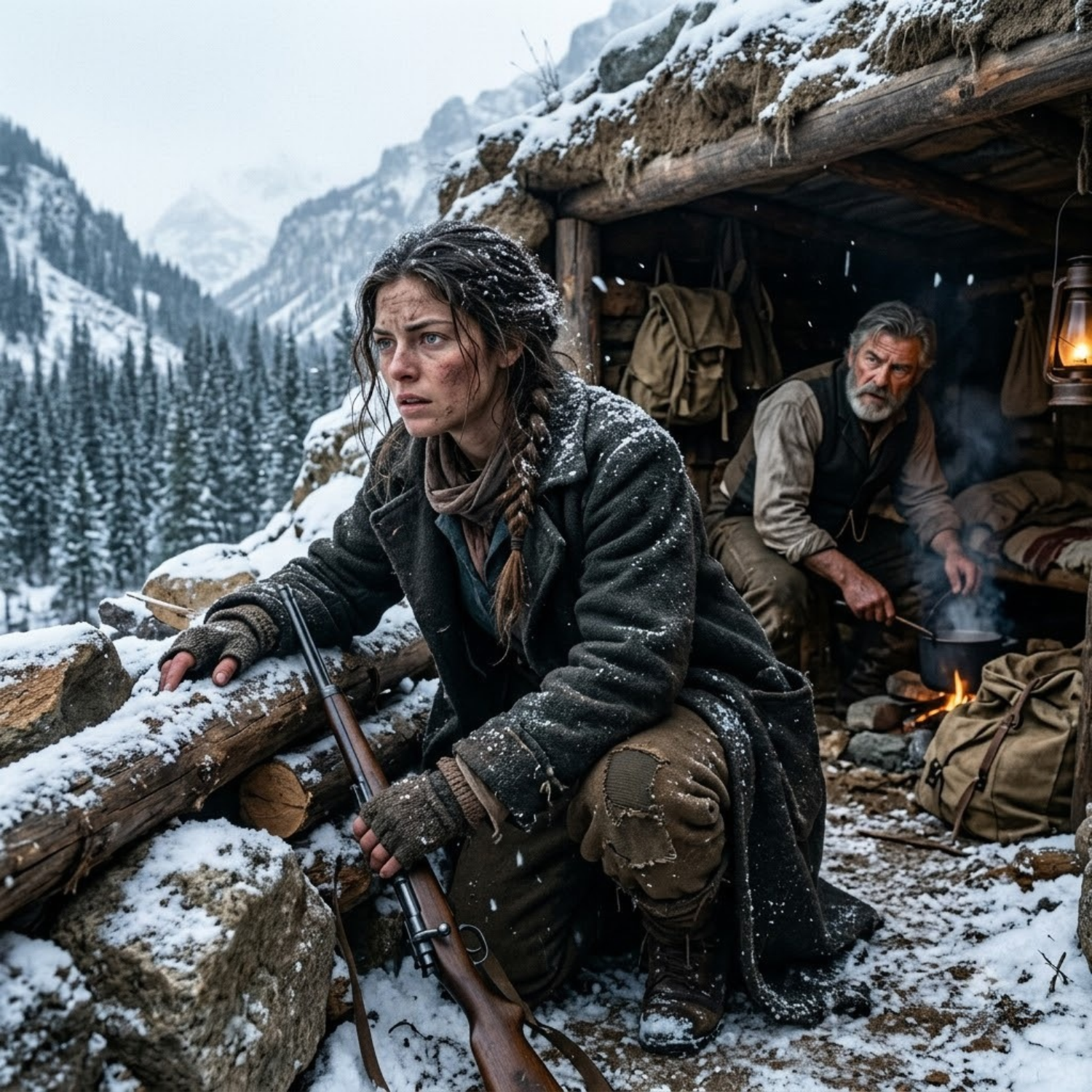
At first light, Mary shifted from despair to survival mode, thoroughly inspecting the subterranean space. Near the rear chamber, a subtle current of air brushed against her cheek. Striking a scrap of paper, she watched the wisps of smoke drift toward a narrow vertical fissure high in the stone ceiling.
Using scattered stones and stubborn mud, she constructed a primitive hearth directly beneath the natural vent. Testing it with a tiny flame, she watched the smoke hesitate before finally pulling cleanly upward. Encouraged, she fed the fire cautiously. However, a sudden gust whipping through the main tunnel entrance instantly stripped the warmth away.
Recognizing the flaw, Mary spent the next two days drastically modifying her environment. She stacked heavy stones into a low interior partition, packed the gaps tightly with wet mud, and forged an angled, zigzag entryway to block the biting wind. Furthermore, she constructed an elevated sleeping platform, carved branch hooks for her meager belongings, cleared a dedicated corner for firewood, and dug a systematic drainage trench to handle moisture.
Her matches were a source of constant anxiety. Having wasted three on the first night, she was down to a perilous eight. To conserve them, she buried glowing coals beneath thick layers of ash each night, resurrecting them each morning with dry bark and steady breath.
Food was an even graver concern. Her rations—beans, corn, flour, and salt pork—were strictly finite. Setting makeshift rabbit snares near the freezing creek, she endured four barren mornings before finally catching a single rabbit, smoking half and rationing the rest. The luxury of planning for tomorrow evaporated; she was now living strictly meal-to-meal, day-to-day.
Chapter 4: The Frozen Creek and the Whiteout
The mountain climate was unrelenting. Within days, Cedar Creek froze solid from bank to bank, transforming the simple task of hydration into a grueling labor. Her axe blade glanced uselessly off the thick ice armor, forcing her to melt snow in her cast-iron pot. She quickly realized that a massive pot of snow yielded agonizingly little water while consuming exorbitant amounts of precious firewood. Eventually, she carved a permanent, narrow access hole through a thinner bend in the creek ice, keeping it smashed open daily.
Overconfidence proved nearly fatal. Enticed by a rare, deceptively bright afternoon, Mary ventured far from the tunnel tracking deer. A sudden, violent squall materialized, obliterating her tracks and whiteout conditions descended instantly. Panic threatened to paralyze her as every slope suddenly looked identical.
Remembering her survival training, she forced herself to halt. Locating the general downward drainage of the terrain, she eventually found the frozen creek and traced it back to the familiar split boulder guarding her shelter.
Shaken by the close call, she immediately instituted safety protocols. Driving a tall pine branch deep into the slope above the entrance, she tied a strip of dark cloth to it as a visible beacon, supplementing it with tethered ropes tied to surrounding landmarks. She cemented a permanent rule in her father’s notebook: Memory is not a map.
Chapter 5: The Hidden Cache
By December, Mary had established a rigorous daily routine: inspecting the fire vent, checking stores, breaking the creek ice, gathering timber, tending snares, and returning before sundown. Yet, nature struck a demoralizing blow when she returned one evening to find her supplies compromised.
Feral mice had breached a corner of the tunnel, chewing through her flour sack and ruining nearly a third of her precious grain with droppings and dirt. Staring at the ruined provisions, Mary felt the cold weight of vulnerability. A storm could be weathered and hunger measured, but invisible pests could silently starve her.
Swiftly reorganizing, she suspended her remaining sacks from sturdy ceiling ropes, constructed a secure wooden storage box, and strictly separated her beans from her corn. Every inspection now carried life-or-death implications; a single loose knot or damp sack meant catastrophic loss. To stretch her supplies, she drafted a strict rationing ledger in her notebook, meticulously logging every ounce of flour, beans, corn, roots, seeds, and rendered fat.
While expanding her firewood cache deeper into the tunnel system, Mary felt another draft of frigid air leaking through a pile of fallen debris. Investigating the stone wall, she dislodged several heavy rocks to reveal a low, narrow, pitch-black passage angling upward into the mountain. Enlarging the opening with her hands, she discovered a dry, hidden secondary chamber.
Relocating her vulnerable food stores to this secret alcove vastly improved her security. However, the mystery of the draft persisted, whispering secrets of the mountain she had yet to uncover.
Chapter 6: Sealed in Stone
January brought an illusory thaw. Temperatures climbed, icicles wept, snow melted from the southern exposures, and the creek roared angrily beneath its thinning ice. Allowing herself a brief moment of optimism, Mary slowed her wood gathering, anticipating an early spring.
It was a dangerous illusion. On the fourth morning, the sky curdled to a dull, bruised grey, and a fierce easterly gale struck with terrifying fury. Recalling the ominous warning in her father’s notebook—Wind weak from the east—Mary battened down the shelter.
A multi-day blizzard buried the mountain, packing snow feet-deep against the tunnel entrance. Waking on the third morning of the siege, absolute silence greeted her. Pushing against the wooden interior barrier, she realized with horror that the drift had entirely sealed the doorway.
Worse still, the hearth smoke began backing up into the room. The exterior snowpack had suffocated the upper ventilation fissure. Suffocation, not freezing, was now her immediate executioner.
Failing to dig outward through the packed exterior drift, Mary remembered the mysterious draft in her storage alcove. Seizing her hammer and knife, she plunged into the dark secondary shaft, hacking frantically upward through frozen dirt and stubborn roots. A sudden cave-in buried her temporarily, costing her precious lamp oil and plunging her into absolute darkness.
Refusing to succumb to panic, she struck one of her last remaining matches. Driven by sheer desperation, she shored up the crumbling tunnel walls with scrap timber, pushing upward until her hammer struck solid wood. Breaking through the obstruction, a wooden marker pole pushed through the snow—the very beacon she had planted weeks earlier to mark her territory.
Widening the aperture, a rush of fresh, freezing air flooded the shaft. Mary had successfully forged a secondary escape route and a vital new ventilation life-line.
Chapter 7: Spring’s Return and the Journey Back
The harrowing ordeal of the subterranean entrapment forged a tempered resilience within Mary. When the mountain finally softened weeks later, shedding its icy armor and resurrecting the brown earth beneath, she did not rush blindly back to civilization.
Methodically reinforcing the primary entrance, clearing the air vents, laying in seasoned firewood reserves, and caching emergency rations in the hidden alcove, she ensured the sanctuary was fully prepared for any future trials. Leaving her trusty cast-iron pot by the hearth as a silent testament for any future wanderer, she finally stepped out into the brilliant spring sunshine.
The journey back to civilization was quiet. Walking into town with a patched coat, weathered skin, and calloused hands, she encountered stunned stares from townsfolk who had long since presumed her dead. Ignoring the temptation to return to her ruined family farm, she forged a new path.
Securing honest employment at a local tool and hardware repair shop, she utilized the practical mechanical skills imparted by her father. Over the ensuing years, through relentless thrift and unyielding grit, she saved enough to purchase her own modest plot of land outside town, officially registering the deed under her own name: Mary Caldwell.
Though she eventually built a comfortable, conventional life, she never forgot the dark mountain. Every autumn before the first frost, she faithfully hiked up to the Cedar Creek tunnel, inspected the stonework, cleared the ventilation shafts, and replenished the emergency supplies. The mountain had tried to bury her; instead, it had taught her how to build an unbreakable life out of stone, shadow, and survival.
Epilogue: The Hearth That Outlasted
The years that followed were kind to Mary Caldwell, not because the Montana territory suddenly grew gentle, but because Mary had learned the most profound lesson the mountain had to teach: endurance is not an accident; it is engineered.
She worked the repair shop through her twenties and thirties, earning a quiet, unshakable reputation. Men who brought in rusted plowshares or split axes quickly learned that Mary did not just fix things—she reinforced them. When she built her own small home on the plot of land she purchased south of town, she didn’t rely on the single-wall framing that had doomed her neighbors during the Great Freeze.
In the heart of her new house, discretely tucked behind a wall of carefully fitted fieldstone, she laid a small, baffled smoke channel. It didn’t span forty feet like the old prospect tunnel, but it was enough to capture the residual heat of her cast-iron stove and return it gently to her bedroom through the long, biting nights of January.
She never forgot the tunnel above Cedar Creek. Every September, just as the leaves turned the color of old copper and the frost began to silver the grass, Mary would pack a mule with fresh flour, matches wrapped in oilcloth, a block of salt, and dry wood. She would make the eight-mile trek up into the timber alone, her boots finding the familiar switchbacks with the effortless memory of someone whose roots had gone deep into the shale.
She would clear the pine-needle thatch from the ventilation pipe, check the inner masonry for frost-heaves, replace the tallow-treated canvas, and ensure the emergency hatch swung freely.
And always, before she locked the heavy oak door and turned back down the trail, she would step into the secondary chamber, run her palm over the cool, patient stone, and trace the words carved into the wall by a man who had left her a map when she had nothing else left in the world.
Sometimes, travelers passing through the upper trail would stop by the old prospect tunnel, drawn by curiosity or caught out by an unexpected squall. They would find the door unlocked, the dry firewood stacked neatly by a stone hearth, a tin cup hanging from a branch hook, and a small carved wooden block resting on the shelf.
On that block, carved in the clean, deliberate strokes of a woman who knew the precise weight of every tool she held, were instructions on how to tend the draft and three simple words:
Keep the stone warm.
No one ever learned who lived there, and the town of Arbon eventually stopped whispering about the lone woman who rode into the mountains each autumn with a pack mule. To them, she was simply Mary Caldwell—the steady, reliable woman who fixed what was broken and never complained about the cold.
But up on the slope, where the pines met the gray Montana sky and the mountain held its eternal silence, the tunnel remained—a quiet, enduring monument to a night when a twenty-five-year-old girl walked out into a blizzard with eleven logs and a broken heart, and decided that she would not let the world freeze her out.
The fire inside the stone was never allowed to die permanently. And as the decades rolled on, long after Mary’s own footsteps had faded from the trail, the hearth beneath the mountain continued to breathe—slow, quiet, steady—the way all good things move.









