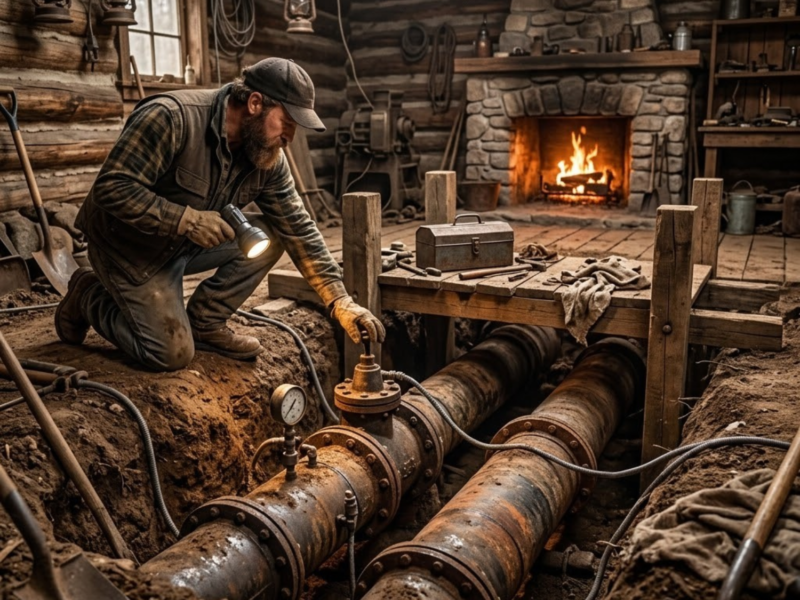
Settlers Laughed at His Underground Heat Recovery Duct — Until It Kept His Cabin 71°F Warmer
Settlers Laughed at His Underground Heat Recovery…
The thermometer outside Thomas Mercer’s cabin read minus-eight degrees Fahrenheit on that crisp January morning in 1843. But inside, his bare feet touched floorboards that felt as warm as summer stone. Fifty yards away, the Henderson family huddled around a roaring, voracious fire that had already devoured their last cords of wood while thick, jagged frost crusted the inside of their log walls.
The knock came just after dawn on January 12th. Thomas opened his heavy oak door to find Robert Henderson standing in snow up to his knees, his face the color of wet ash beneath a matted beard, his words coming in ragged clouds of frozen breath.
The Henderson cabin, built just the previous spring using standard frontier methods, had become uninhabitable. Despite burning wood continuously for three days straight, the interior temperature had plummeted so low that thick ice had formed on the water bucket sitting a mere five feet from their blazing fireplace. Robert’s wife, Mary, and their two children—ages seven and nine—were wrapped in every blanket and hide they owned, shivering violently even as the hearth consumed log after heavy log. They needed shelter, or they would not survive another night.
Thomas pulled on his boots, grabbed a heavy woolen shawl, and followed Robert through the pre-dawn darkness. The fifty-yard walk across the open clearing felt infinitely longer in the brutal cold. The wind cut through every seam and gap in their clothing, numbing exposed skin in a matter of seconds. This was the specific brand of cold that killed men without malice—the kind that made the Dakota Territory winters legendary even among hardened frontiersmen who had survived the worst of Montana and Wyoming.
When Thomas stepped inside the Henderson cabin, he understood immediately why they were failing.
The stone fireplace was massive, taking up nearly a quarter of the cabin’s interior wall space. Robert had built it oversized, believing larger fires meant more heat. A massive blaze raged inside, flames roaring up into the chimney throat and consuming split oak at a rate that would exhaust their entire winter supply within days. But the heat generated by that monstrous fire rose straight up and out through the unbaffled chimney, dragging the ambient warmth of the room right along with it.
The air five feet from the hearth was barely above freezing. The corners of the cabin were cold enough to support frost patterns on the logs. Mary Henderson sat with both children pressed desperately against her, wrapped together inside a stiff buffalo robe. She looked up when Thomas entered, and he saw the naked fear in her eyes. This was not mere discomfort; this was a family in mortal danger.
Robert explained that they had been burning wood continuously since the temperature dropped four days earlier. They had gone through nearly two full cords—wood that should have lasted them a month under normal conditions. At this rate, they would run out before the week was out, and there was no possibility of cutting more timber in these conditions. The standing dead trees they relied on for firewood were entombed in hard-packed snowdrifts, and the air was far too extreme for sustained outdoor labor.
Thomas studied the fireplace construction while Robert talked. The fundamental flaw was obvious to anyone who understood how heat moved. The fireplace was designed like every other frontier hearth, optimized for cooking and illumination rather than thermal retention. The firebox was deep, the chimney was wide, and the draft was fierce. But that same draft that made the fire burn hot also pulled the heated air straight out of the structure, leaving the family to feed wood into a system that sent ninety percent of its energy directly into the winter sky.
“Pack what you can carry,” Thomas said quietly, turning to Robert. “Bring your family to my place.”
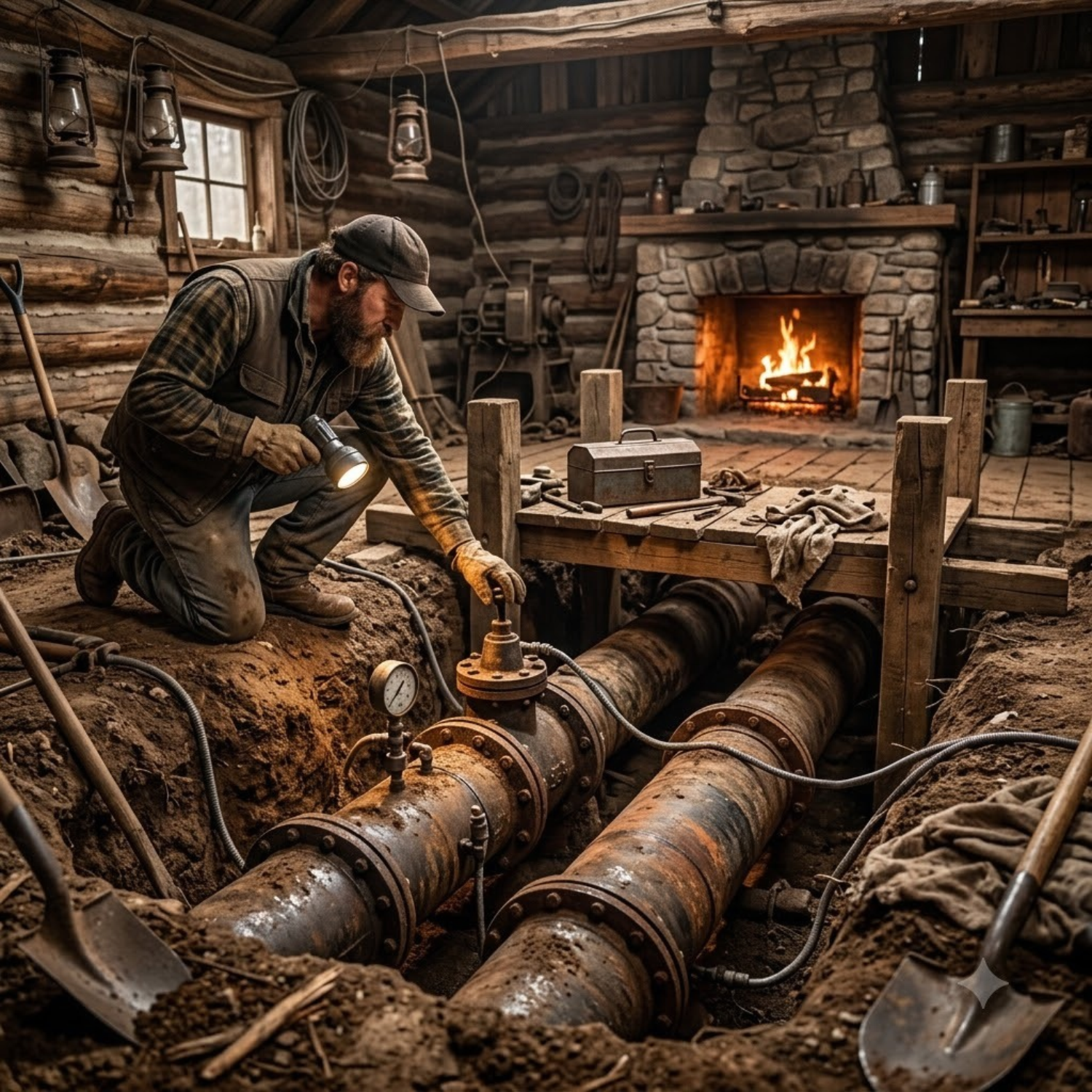
Related Articles

They Mocked the Widow’s Dirt Cellar—Then the Freeze Left Every Cabin Cold but Hers Warm
They Mocked the Widow’s Dirt Cellar—Then the Freeze Left Every Cabin Cold but Hers Warm…

A Homeless Veteran and His German Shepherd Inherited a Ridge No One Wanted — 35 Feet In, They Found
Chapter 1 / 7 A Homeless Veteran and His German Shepherd Inherit… A Homeless Veteran…

Neighbors Laughed When He Built A Cabin Inside An Old Barn—Until It Kept His Home 35 Degrees Warmer
Chapter 1 / 8 Neighbors Laughed When He Built A Cabin Inside An… Neighbors Laughed…

His Sod House Had No Woodpile in January – Until the Trains Stopped and the Town Came Begging
Chapter 1 / 10 His Sod House Had No Woodpile in January – Until t……

She Built Her Cabin Over the Woodshed and Never Burned Wet Wood Again
Chapter 1 / 8 She Built Her Cabin Over the Woodshed and Never Bu… She…

The Duke Abandoned Her on Their Wedding Day—Years Later, He Discovered What He Had Lost
Chapter 1 / 7 The Duke Abandoned Her on Their Wedding Day—Years… The Duke Abandoned…

He Wedged a Tiny A Frame Into a Crevice Before Winter and His Family Slept at 75°F While Town Hit
Chapter 1 / 7 He Wedged a Tiny A Frame Into a Crevice Before Win……

He Was Too Old to Ride—So He Bought the Ruined Ranch and Found the Room Behind the Fireplac
Chapter 1 / 5 He Was Too Old to Ride—So He Bought the Ruined Ran……

A Navy SEAL Built a Home Inside a Mountain—Then His Dog Warned Him Before the Storm
Chapter 1 / 5 A Navy SEAL Built a Home Inside a Mountain—Then Hi… A…

Settlers Mocked His Hillside Cabin But His Family Stayed Warm While Neighbors Froze
Chapter 1 / 6 Settlers Mocked His Hillside Cabin But His Family… Settlers Mocked His…