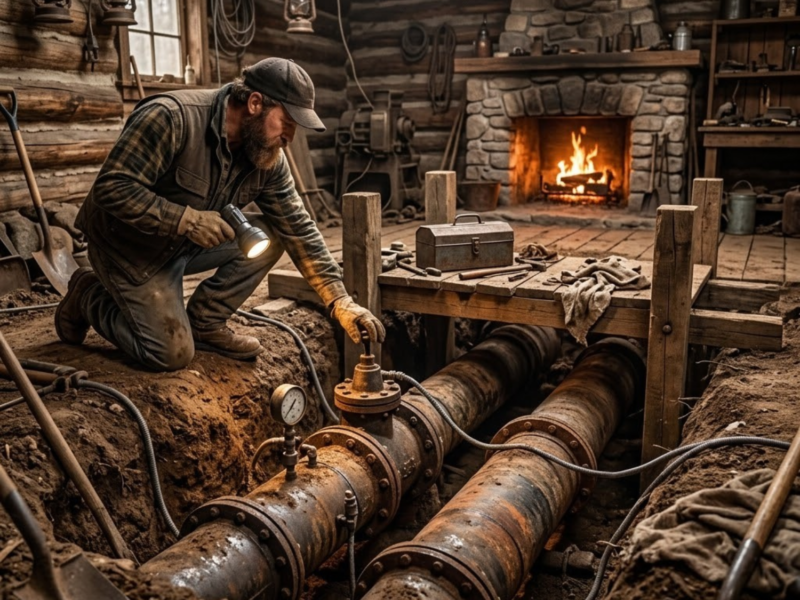
Settlers Laughed at His Underground Heat Recovery Duct — Until It Kept His Cabin 71°F Warmer
THE WILLAMETTE VALLEY
Thomas Mercer left the Dakota Territory in 1849, joining the great western migration toward the Pacific. He was thirty-eight years old, carrying modest savings from a decade of trapping and farming, and seeking a permanent home.
He settled in Oregon’s lush Willamette Valley, purchasing rich agricultural land where he raised cattle and grew wheat. In 1851, he married Catherine Ross, an immigrant widow from Ohio. They raised three children, living a quiet, productive, and thoroughly unremarkable life by frontier standards.
Few people in Oregon knew about his time in Dakota, or the thermal heating innovation he had left buried in the frozen northern earth. He mentioned it only when specifically asked about his youth, describing it simply as “an experiment in cabin construction.”
Thomas Mercer passed away peacefully on March 14th, 1873, at the age of sixty-two, following a winter bout of pneumonia. Catherine and his adult children buried him in a quiet cemetery outside Salem, Oregon, placing a modest headstone bearing his name, dates, and the simple inscription: Beloved Husband and Father.
There was no mention of Dakota Territory, underground thermal mass, or the dozens of lives his hidden cedar logs had saved from the bitter northern frost.
Yet, decades later, when abandonment claimed the old homesteads of the northern plains, archaeological surveys and wandering settlers would occasionally unearth the legacy Thomas left behind. Unearthing rotting floorboards, they would discover intact cedar ducts buried beneath the earth, still sound thanks to the aromatic oils of the wood.
In those forgotten ruins, modern engineers would marvel at the intuitive genius of a frontier trapper who had mastered thermodynamics without a textbook—proving that the truest monuments are rarely built of marble and gold, but are woven silently into the ground we walk upon, keeping the world warm long after we are gone.









