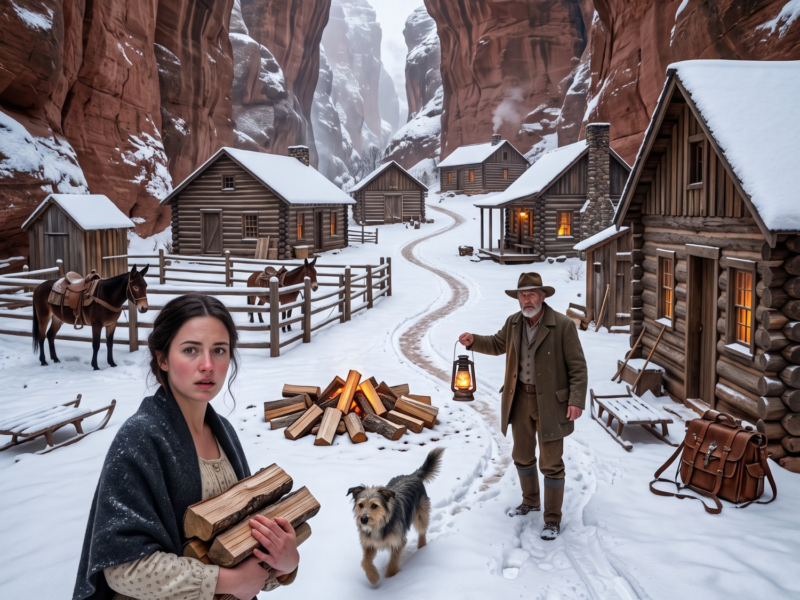
A Wyoming Widow Chose a Crack in the Mountain for Her Home—At -40°F, It Stayed Warm
THE LEGACY OF STONE
The years passed, and the story of the Great Die-Up became a legend in the West.
The Holleridge Basin survived. More than survived—it thrived. The earth-banked houses dotted the valley, their sod roofs green in the summer and deep under snow in the winter. Smoke rose sparingly from their chimneys, proof of a community that had learned to let the land work for them.
Ainsley Ferris never left the crevice on the ridge. She grew old inside the stone, warm and safe, revered by the valley not as a strange widow, but as the architect of their salvation.
One crisp autumn morning, Thaddeus Rowe climbed the ridge. His hair was white now, his hands gnarled from decades of building. He stood beside Ainsley at the mouth of the rock, looking down at the prospering valley.
“They’re teaching the children how to cut the drainage channels now,” Rowe said, a quiet pride in his voice. “The knowledge is out of our hands. It belongs to them.”
Ainsley smiled, wrapping a shawl around her shoulders. She looked at the stone walls that had absorbed her fire, shielded her from murderers, and broken the back of the deadliest winter in history.
“You were worried about dying alone up here once,” Rowe noted.
“I was,” Ainsley said softly. “But I learned something important that winter.”
She looked out over the valley, where the smoke curled peacefully into the sky.
“A house keeps you warm one winter at a time,” Ainsley said. “But a truth you teach… that keeps warming people long after the fire dies.”
The mountain kept her warm to the end, as she always knew it would. It had been holding its heat for ten thousand years. It had simply, at last, been asked to share.









