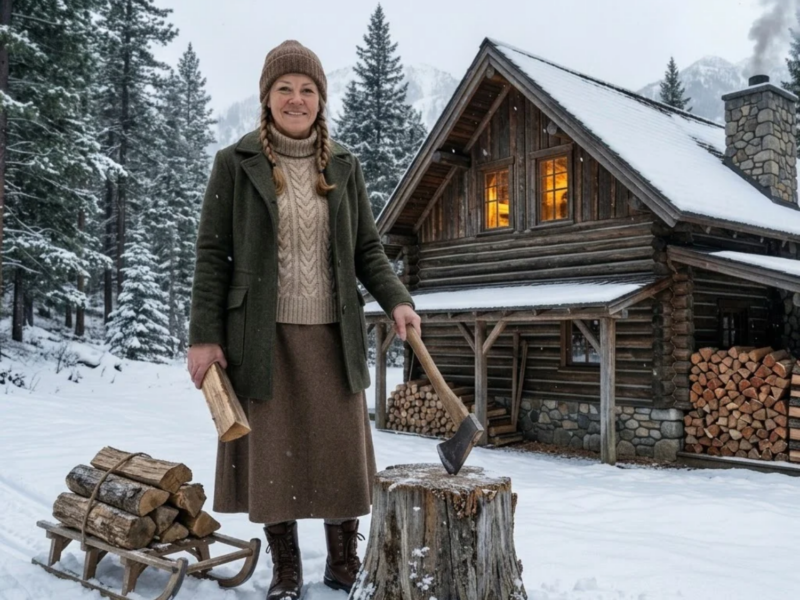
She Built Her Cabin Over the Woodshed and Never Burned Wet Wood Again
The Anatomy of Failure
Trouble on a homestead never announces itself with a trumpet blast; it starts small, disguised as ordinary inconvenience. A loose hinge, a thin patch in the cedar shakes, a pile of firewood stacked wrong.
That first winter alone, Clara had stacked her wood precisely the way Daniel always had—a long, open cordwood pile lined up along the north exterior wall of the cabin, covered loosely with strips of bark and an old tarp. It was the tried-and-true method every family on the ridge relied upon. It had never failed anyone badly enough to force a change.
It failed Clara within six weeks.
The wood nearest the frozen ground—the heavy logs she needed most during the dead of night when the mercury bottomed out—came in wet every single time. Not visibly soaked through, not obviously rotted, but holding a deep, insidious core-dampness that hissed, sputtered, and smoked rather than blazing.
Thus began her grim daily ritual. At four in the morning, she would kneel shivering by the hearth, coaxing a dying flame with pathetic scraps of kindling she had managed to dry inside the warmth of the cabin. Watching her own breath cloud in a room that refused to hold its heat, she learned to ration the good timber, sorting the logs into those that might catch on the first try and those that required an hour of parching near the fire before they were of any use. She learned to wake up hours before the cold did, simply to stay one step ahead of the frost.
It was never enough. There were nights that winter when the fire nearly went out before dawn, leaving her waking with her woolen blankets rimmed in crisp white frost from the drafts creeping through walls that looked solid by daylight but surrendered completely after midnight.
She survived it. But survival, she came to understand, was not the same thing as being ready for what was coming next.









