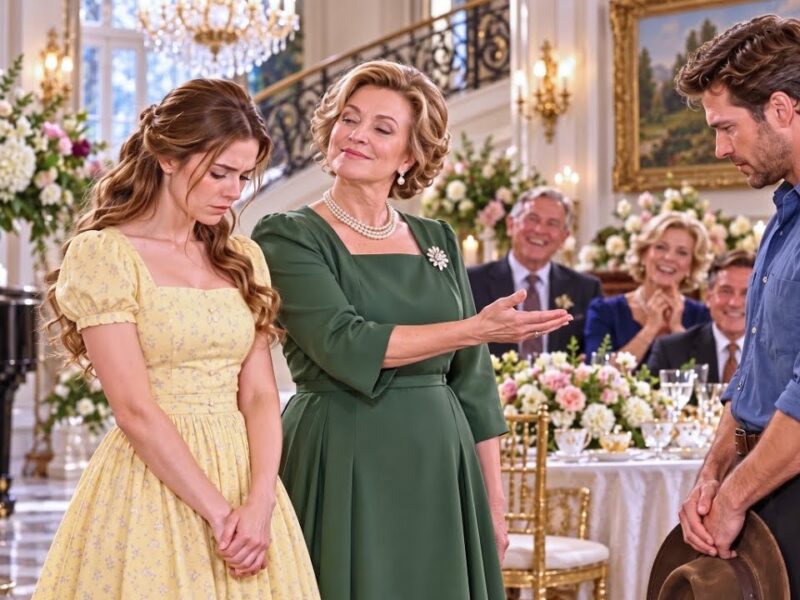
Stepmother Gave Her to a Humble Man to Humiliate Her — But Nothing Went As She Expected!
Stepmother Gave Her to a Humble Man to Humiliate H…
Stepmother Gave Her to a Humble Man to Humiliate Her — But Nothing Went As She Expected!
The Whitmore mansion was not a home; it was a museum of Margaret’s ambitions. Every vase, every Persian rug, and every crystal chandelier had been chosen not for comfort, but for the precise amount of envy it could extract from a visiting guest.
For twenty-four years, Clara Whitmore had learned the quiet art of disappearing within its walls.
She had been twelve when her mother died, leaving behind a house that felt too large and a father whose grief made him small. Robert Whitmore was a good man, a titan of Chicago industry, but sorrow had a way of hollowing out the strongest of foundations. When he married Margaret a year later, Clara had hoped for a mother. Instead, she received a warden.
Margaret was a woman carved from polished marble—beautiful, cold, and entirely unyielding. In the early days, there were tight smiles and forced pleasantries. But as Robert’s health began to fail, a slow, creeping rot taking hold of his heart and lungs, Margaret’s true nature unfurled. She systematically severed Clara from the family legacy. Clara was moved to a drafty room at the end of the servant’s corridor. She was excluded from the extravagant dinner parties, her face carefully scrubbed from the family portraits commissioned for the society papers.
“You have your mother’s melancholic eyes, Clara,” Margaret would say, adjusting her diamond cuffs. “It depresses the guests. Be a dear and take your supper in the kitchen.”
When Robert finally passed away, his will revealed the depth of Margaret’s manipulation. The estate, the accounts, the sprawling Whitmore Enterprises—all of it fell under Margaret’s iron-fisted executorship. To Clara, Robert left only a meager monthly stipend and a sealed letter.
My dearest Clara, the letter read, the ink blurred by her father’s trembling hand. I have made mistakes I cannot undo. But I leave you the only thing of true value: your mother’s heart. Remain kind, even when life becomes cruel. The world will try to harden you. Do not let it.
Clara kept that letter beneath her pillow. It was her shield. While Margaret spent her days hosting socialites and tearing through the company’s cash reserves, Clara spent hers taking the L-train to a battered community center on the South Side of Chicago. There, she served hot meals to the elderly, organized coat drives, and helped struggling single mothers fill out housing applications. She earned a pittance, but the center was the only place in the world where she felt visible.
Margaret, of course, found this utterly humiliating.
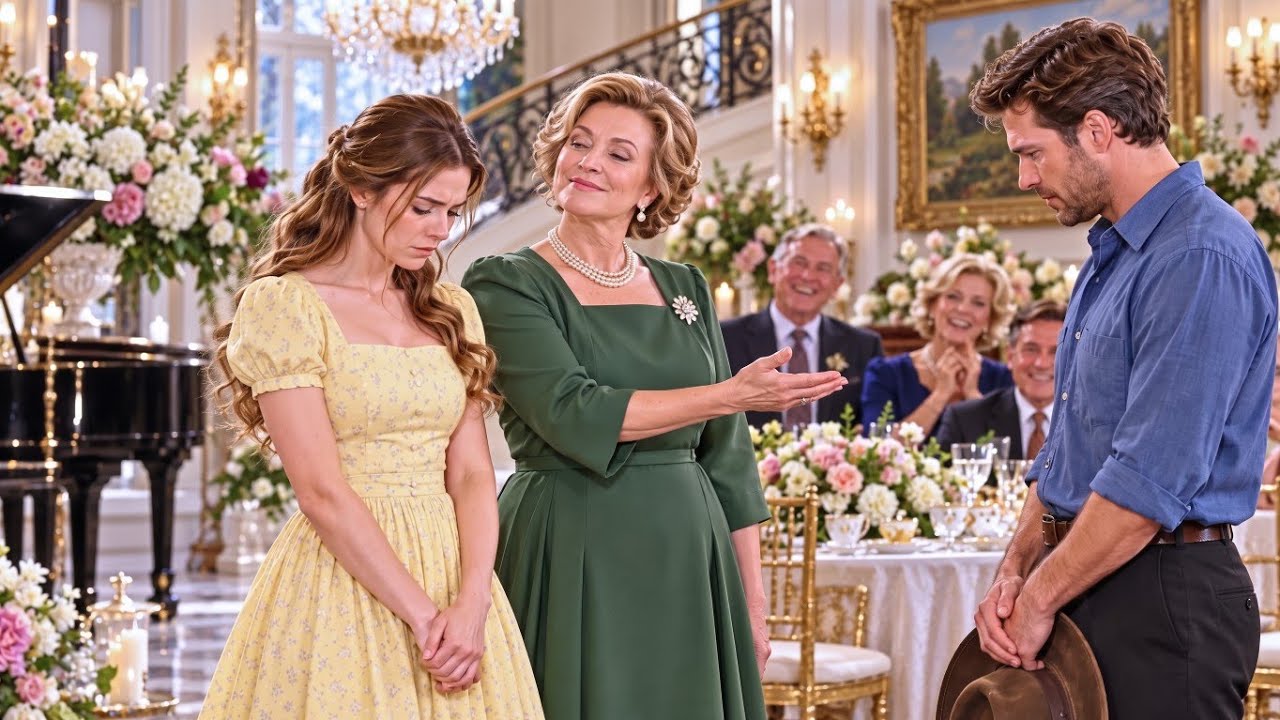
“You smell of boiled cabbage and desperation,” Margaret sneered one evening, catching Clara slipping through the foyer. “You are a Whitmore. You are supposed to marry a senator, or at least a hedge fund manager. Instead, you play nursemaid to the destitute. It ends this weekend, Clara. I am hosting a celebration, and you will attend. Wear something that doesn’t make you look like a Victorian orphan.”
Clara had nodded, unaware that the celebration was not a party at all. It was an execution.
Related Articles

They Mocked the Widow’s Dirt Cellar—Then the Freeze Left Every Cabin Cold but Hers Warm
They Mocked the Widow’s Dirt Cellar—Then the Freeze Left Every Cabin Cold but Hers Warm…

A Homeless Veteran and His German Shepherd Inherited a Ridge No One Wanted — 35 Feet In, They Found
Chapter 1 / 7 A Homeless Veteran and His German Shepherd Inherit… A Homeless Veteran…

Neighbors Laughed When He Built A Cabin Inside An Old Barn—Until It Kept His Home 35 Degrees Warmer
Chapter 1 / 8 Neighbors Laughed When He Built A Cabin Inside An… Neighbors Laughed…

His Sod House Had No Woodpile in January – Until the Trains Stopped and the Town Came Begging
Chapter 1 / 10 His Sod House Had No Woodpile in January – Until t……

She Built Her Cabin Over the Woodshed and Never Burned Wet Wood Again
Chapter 1 / 8 She Built Her Cabin Over the Woodshed and Never Bu… She…

The Duke Abandoned Her on Their Wedding Day—Years Later, He Discovered What He Had Lost
Chapter 1 / 7 The Duke Abandoned Her on Their Wedding Day—Years… The Duke Abandoned…

He Wedged a Tiny A Frame Into a Crevice Before Winter and His Family Slept at 75°F While Town Hit
Chapter 1 / 7 He Wedged a Tiny A Frame Into a Crevice Before Win……

He Was Too Old to Ride—So He Bought the Ruined Ranch and Found the Room Behind the Fireplac
Chapter 1 / 5 He Was Too Old to Ride—So He Bought the Ruined Ran……

Settlers Laughed at His Underground Heat Recovery Duct — Until It Kept His Cabin 71°F Warmer
Chapter 1 / 9 Settlers Laughed at His Underground Heat Recovery… Settlers Laughed at His…

A Navy SEAL Built a Home Inside a Mountain—Then His Dog Warned Him Before the Storm
Chapter 1 / 5 A Navy SEAL Built a Home Inside a Mountain—Then Hi… A…