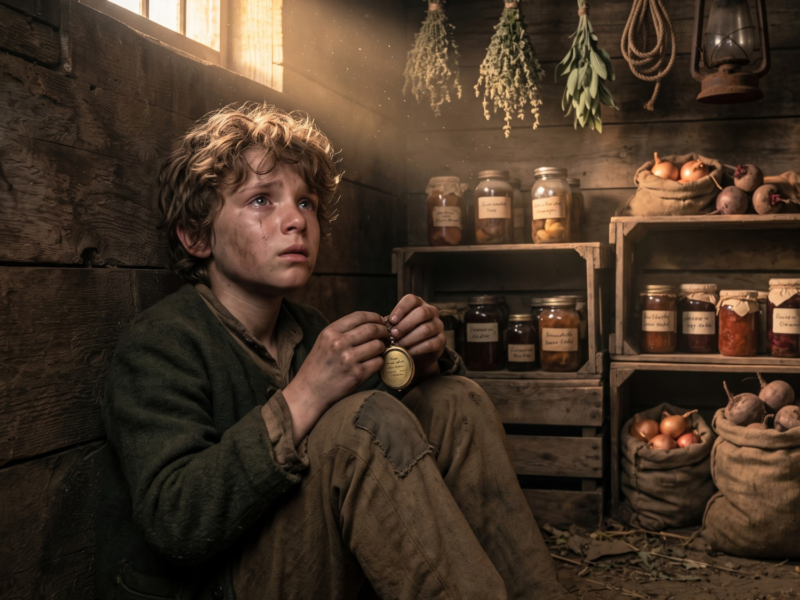
They Murdered His Father for His Ranch — His Son Returned Years Later as a Wealthy Cattle King
THE RECKONING OF COLD CREEK
The formal hearing three weeks later drew considerable attention from across the territory. The courthouse was packed to the rafters, the air thick with sweat and anticipation. Curious observers, wealthy cattlemen, and terrified locals filled the wooden pews to witness what had become, through Jericho’s careful placement of newspaper articles, the trial of the decade.
Silas Grieve sat at the defense table, his expensive lawyers buzzing around him like flies. Grieve looked confident. Arrogant, even. He believed that money could rewrite reality.
Jericho sat perfectly still at the plaintiff’s table, his dented pocket watch resting on the wood in front of him.
Jericho’s legal team presented their case methodically. They brought out the Denver document specialists, who testified to the chemical composition of the ink, proving the aniline dye didn’t exist in the territory until years after Elias Vain’s death.
Grieve’s lead attorney, a slick man from Chicago, scoffed at this. “City science, Your Honor. Speculation based on vials and tubes, not cold hard facts. My client possesses a legally binding deed, registered properly with the county.”
“Call Amos Whitfield,” Jericho’s lawyer announced.
A murmur rippled through the courtroom. Grieve’s confident smirk vanished instantly. He turned in his chair, his eyes widening in genuine shock as the side door opened.
Amos walked in, limping heavily, flanked by two heavily armed US Marshals Jericho had imported from Denver.
Amos took the stand. He looked like a walking corpse, but his voice rang out clear in the silent room, carrying the particular weight of a man finally unburdening guilt carried far too long.
“I witnessed the shooting myself,” Amos said, staring directly at Silas Grieve. “Elias Vain never signed any debt note. Silas Grieve’s men forged that documentation after killing him specifically to provide legal cover for what was, in truth, simple murder and land theft.”
The courtroom erupted into gasps and angry murmuring. The judge banged his gavel repeatedly.
“Did you witness who forged the signature, Mr. Whitfield?” the lawyer asked.
Amos looked at Jericho. He took a deep breath. “I did. Because I held the pen. Silas Grieve held a gun to my head and forced me to sign Elias’s name. And then… and then I shot Mary Vain.”
Pandemonium broke out. Grieve leaped to his feet, knocking his chair over. “He’s lying! He’s a drunk and a lunatic! This man paid him to perjure himself!”
The judge slammed his gavel. “Order! Order in this court!”
Grieve’s lawyers attempted to cross-examine, but Amos was unbreakable. He had nothing left to lose, making him immune to their threats. He detailed exact dates, the exact caliber of the weapons used, and where Grieve kept a secret ledger of illicit payoffs to local officials—including the very county clerks who had stamped the fraudulent deed.









