Thrown Out in November, She Moved Into a $40 Mine Tunnel — Then a 9-Day Blizzard Shut the Whole Town
The Winter Corridor
After that, survival became raw, unadorned labor.
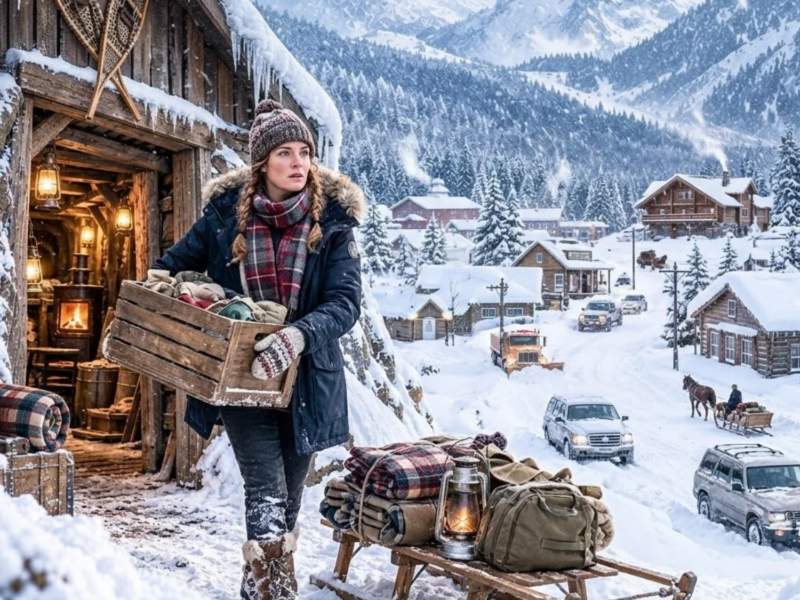
She split and stacked three cords of dry lodgepole pine and fir all along the interior tunnel walls, floor to shoulder, stretching forty feet deep. Walking into her home meant walking down a secure corridor built entirely of her own back-breaking sweat.
She bought straw bales off the Kulberg place at a dollar apiece, laying the floor a foot deep back in the warm interior bend, capping it with clean wooden planks to walk upon, and elevating her bed frame on stable pallets well above the dry dirt.
A kerosene lantern hung from an iron spike. A wooden shelf held her canned beans, peaches, and coffee, religiously rotated oldest stock forward—the exact same inventory system she had maintained for eleven years at the Pinewood laundry.
Fifty pounds of flour sat securely in a steel trash can with a tight-fitting lid to keep out mice. Drinking water was stored in heavy glass jugs tucked far back in the warm zone where frost could never touch them, replenished twice a week during her regular shifts at the laundromat.
Twice a week, she walked down the mountain with her hair pinned neatly, her collar starched straight, stepping past the supper bench and ignoring whatever whispers followed her wake. They couldn’t honestly claim she looked like a woman living in a hole.
Of course, they muttered plenty else through the diner’s front window. One frosty December morning, she watched Royce enact his little comedic routine for a booth of traveling strangers—hunching his shoulders, making pathetic digging motions with his stubby hands, and drawing roars of laughter.
Hetti Blodgett saw her on the sidewalk at Thanksgiving, caught sight of Pam’s steady, unblinking gaze, and got a look on her face as though she’d accidentally swallowed a straight pin—wracked with either sudden guilt or the simple, profound discomfort of a conscience refusing to be buried. She crossed the street rather than pass within six feet of her.
Local schoolkids rode their heavy bicycles partway up the east cut on a dare, hammering on the canvas-covered door before pedaling away shrieking into the brush.
Pam simply ignored them, steadily stacking her firewood.
By mid-December, the fifty-gallon barrel stove could hold a bed of coals banked safely for eight solid hours. The interior thermometer steadily read sixty-two degrees, while the radio broadcasts out of Chateau droned on about an apocalyptic cold front stacking up over the Rockies like an endless train of freight cars.
She stood in her open doorway one evening holding a steaming tin mug of coffee, watching the sky over Beavenon Ridge curdle into the bruised purple of a fresh contusion. The clouds rolled low and heavy; the wind keened across the tunnel mouth, finding no loose boards or rattling glass to tear away.
Far below, the electric lights of Dunore Creek glittered—pretty, thin, and terrifyingly fragile, every single one of them hanging off the exact same sagging copper wires strung precariously across the mountain pass.
The very first fat snowflakes landed on her wool sleeve, heavy as moths, refusing to melt against the freezing air.
“All right,” she murmured to the darkening sky, the way a veteran soldier answers a midnight sentinel. “Come on, then.”
She latched the heavy oak door, primed the rock throat with a burning twist of paper, and stoked the barrel stove high. The fire caught, the steel drum sighed, and she sat back to listen to the blizzard arrive with the terrifying inevitability of a freight train barreling down an empty track.









