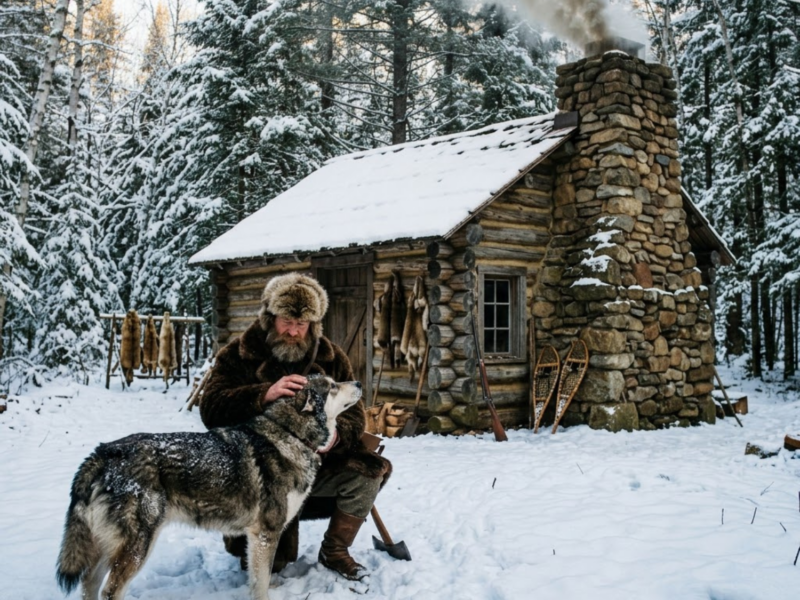
He Built an “Ugly” Chimney Everyone Mocked — His Cabin Heated Twice as Fast
The Gospel of Stone
When the Great Blizzard finally broke three days later, leaving the valley buried beneath mountainous, impenetrable drifts of white, the community of Blackwood emerged battered, exhausted, and fundamentally changed.
Several wooden cabins had suffered severe damage, their roofs compromised by the snow load, their inhabitants suffering from severe frostbite and deep exposure. The woodpiles across the settlement were decimated, burned in a frantic, inefficient panic to stave off the freezing drafts.
But when the panicked neighbors finally managed to dig their way to Ara Vance’s isolated homestead, expecting the absolute worst, they did not find a frozen tragedy.
They found Mr. Thorne standing in the doorway of the barn, looking rested, warm, and deeply, profoundly contemplative.
It was Mr. Thorne, the former patriarch of brute force, who became the fiercest, most vocal advocate for Ara’s unconventional methods. He did not simply admit he was wrong to the men at the store. He preached the gospel of thermal mass and earth-sheltering to anyone who would listen.
He stood in the mercantile, in the exact spot where he had once mocked the widow, and described in vivid, awestruck detail the physics of the cold sink, the constant temperature of the deep earth, and the incredible efficiency of masonry heaters. He explained how the heavy stones captured the heat, how the passive ventilation moved the air without stealing the warmth, and how the earth itself was the greatest ally they had in the fight against the winter.
The quiet triumph of Ara’s competence over the loud, established doubt of the community initiated a profound shift in the way the settlers lived.
They stopped building vulnerable wooden boxes on top of the freezing ground. Following Ara’s meticulous example, they began to dig. They learned to excavate deep cellars, to line them with thick, heat-absorbing fieldstone, to engineer U-shaped cold sinks at their entrances, and to build slow-burning masonry heaters that utilized every ounce of thermal energy from their wood.
They learned to work with the landscape. They learned to sink their lives into the protective, ancient embrace of the earth, rather than standing exposed upon its surface, fighting a war they could never truly win.
Ara Vance did not boast. She did not lecture the men who came to ask her for advice. She simply showed them her cellar, explained the physics as her grandfather had explained them to her, and let the warmth of the room speak for itself.
The legacy of that brutal winter was not one of tragedy, but of adaptation. The community of Blackwood thrived, turning the harsh Dakota plains into a home not by conquering the wind, but by understanding that true resilience requires the wisdom to seek shelter in the very earth that sustains us.









