She Turned an Old Stagecoach Into Her Bedroom—Then the Worst Blizzard in 80 Years Buried the Town
She Turned an Old Stagecoach Into Her Bedroom—Then…
She Turned an Old Stagecoach Into Her Bedroom—Then the Worst Blizzard in 80 Years Buried the Town
.
.
The sound that signaled the end of Alice Shaw’s life wasn’t the howl of the coming winter wind, but the sharp, metallic click of a Colt single-action revolver being cocked.
“Step away from the door, Alice.”
The voice belonged to her Uncle Silas, but the gun belonged to Mr. Gable. The Kearney merchant stood in the center of the one-room sod cabin, his polished leather boots tracking dark mud across the floorboards Alice’s father had laid by hand. Gable didn’t hold the weapon; he merely rested his hand on the pearl grip protruding from his holster, a silent threat that made Silas do his dirty work.
Alice didn’t move. She was eighteen, her hands stained with the dark soil of the Custer County plains, her breath visible in the freezing October air drafting through the open door.
“You told me I had until the first of November,” Alice said, her voice steady despite the tremor in her chest.
“Plans change,” Gable said, pulling a leather folio from his heavy wool coat. He didn’t look at her; he looked at the walls, the floor, the cast-iron stove. He looked at her home like it was a carcass waiting to be stripped. “The railroad surveyor is coming south three weeks early. I need this property cleared, surveyed, and transferred to my holding company by Friday. Which means you leave today.”
“This is my father’s land,” Alice said, locking eyes with her uncle. “Silas, tell him. The deed is in trust until I turn twenty-one.”
Silas couldn’t meet her gaze. He stared at the floorboards, his heavy, bearded face flushed with a mixture of shame and cheap whiskey. “The trust was dissolved, Allie. Your father… he left debts. Heavy ones. Mr. Gable bought them. He owns it all now. Free and clear.”
“My father owed no one.” The memory of her father, Thomas Shaw, flashed in her mind—a man of iron and wood, a carriage builder who paid for everything in cash or trade. He had died two years ago of a sudden, violent fever that took him in less than forty-eight hours.
“Signatures don’t lie, Miss Shaw,” Gable sneered, dropping the folio on the wooden table. “Your uncle signed as executor. It’s done. You have ten minutes to pack a bag. Leave the heavy coats; they were purchased on store credit, which you no longer possess.”
Alice looked at Silas. She saw the new pocket watch gleaming against his vest. She saw the fine wool of Gable’s coat. And in that frozen moment, the naive, grieving girl died, replaced by something cold and sharp. They hadn’t just sold her land. They had stolen it.
“Where am I supposed to go?” she asked softly.
“Kearney,” Gable replied, turning his back to her. “There’s a laundry on 4th Street that takes in strays. Or you can walk out onto the prairie and let the frost take you. I don’t care which. Just be off my dirt.”
Ten minutes later, Alice stood on the county road with a single canvas sack. She had twelve dollars hidden in her boot—money she had secretly saved from mending clothes for the ranch hands. She watched the buggy churn up the dust as Gable and her uncle rode back toward Broken Bow.
They expected her to walk south to the train station. They expected her to break.
Instead, she turned west.
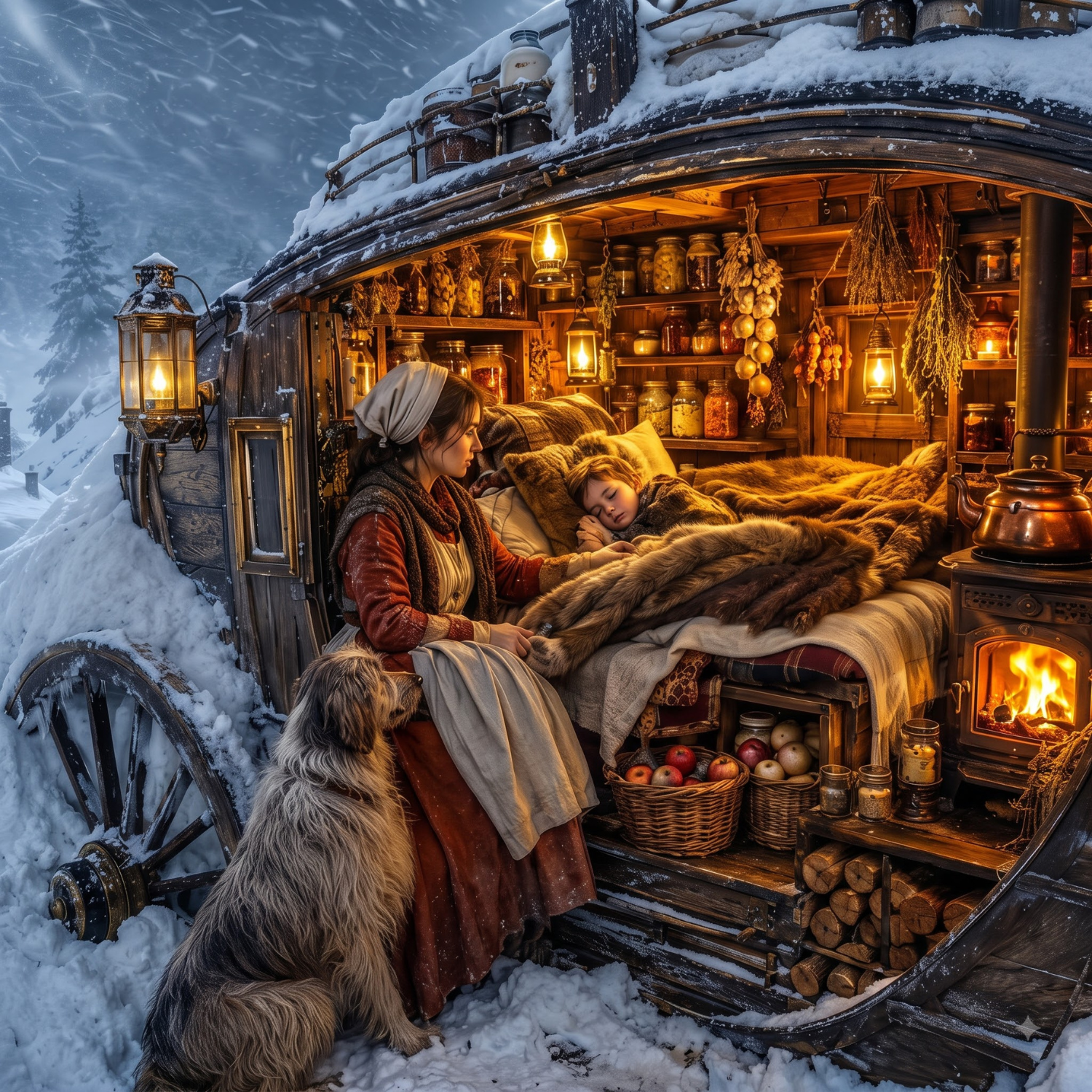
A mile down the road sat the old relay station, and on its overgrown lot, a decommissioned Concord stagecoach sinking into the weeds. It was a rotting wooden box, an artifact of a bygone era. To anyone else, it was garbage. To Alice, it was the beginning of an empire. She was going to survive the winter. And then, she was going to find out exactly what her uncle had signed, and she was going to destroy them both.