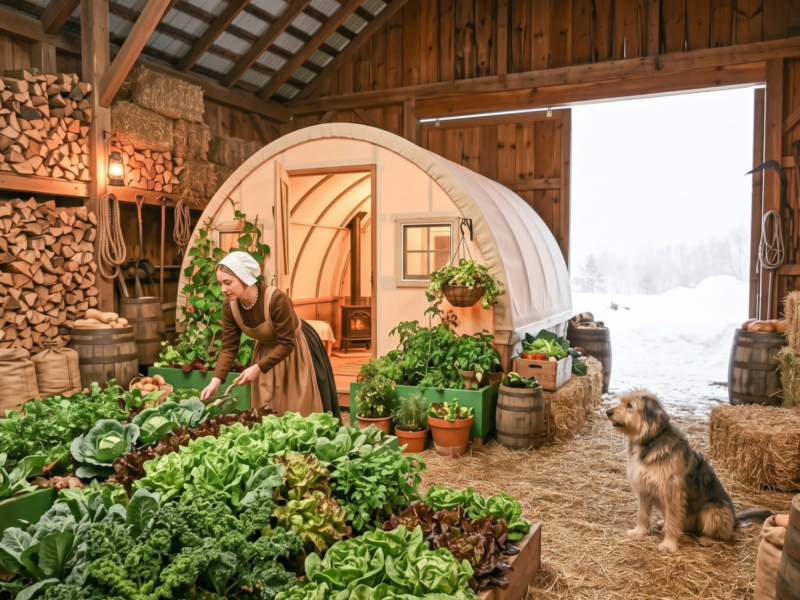
They Called Her Barn Shelter Crazy—Until Her Daughters Survived the 40° Cold
They Called Her Barn Shelter Crazy—Until Her Daugh…
They Called Her Barn Shelter Crazy—Until Her Daughters Survived the 40° Cold
.
.
The valley below Elkhorn Ridge had gone utterly silent.
It was not the soft, expectant hush that pulls in a valley before sunrise, nor the drowsy quiet of farms folded in sleep. This silence had a terrifying, physical weight to it. It felt as though the whole of the mountain had drawn one long, freezing breath and absolutely refused to let it go.
No rooster called from the draws. No wagon wheel groaned over the frozen ruts of the road far below. Even the lodgepole pines along the crest stood as motionless as things carved from black iron, framed against a sky the color of a cold gun barrel.
High on the rocky slope, a thirty-five-year-old woman stood alone.
A heavy canvas sack of potatoes rode uncomfortably against her spine. Frost had gathered at the tail of her chestnut braid, tiny beads of it catching what little, anemic light the morning offered. Each breath left her lips in a pale ribbon that hung suspended for a moment in the still air, before the bitter, aggressive edge of that October dawn swallowed it whole.
Halfway up the steep, winding deer trail, Marin Ashby paused, turned, and looked back down toward the town of Dunore.
Thin, gray threads of smoke lifted from the chimneys below, rising as straight as plumb lines in the windless, freezing air. Down there, the people were beginning another unremarkable morning. They filled their enameled coffee pots, casually stoked their cast-iron stoves, and they had absolutely no notion that winter had already started its long, silent climb down out of the high country toward them.
Down in those streets, men had laughed from their warm porches as Marin had dragged a loaded, makeshift sled up this same frozen trail for days. They had slapped each other on the back and made jokes about the divorced woman building a castle in the rocks.
None of those laughing men had noticed the ravens. They had not seen the black flocks abandoning the high, exposed ridges two days prior. They had not noticed the elk herds drifting down through the yellowing aspen benches far too early in the season.
Marin alone read the warning. Her dead grandmother had taught her how to hear the things the stillness was trying to say.
She shifted the heavy sack higher on her bruised shoulders and climbed on. She had twenty-two days before the sky finished drawing its breath, and let the winter down into the valley. She had an old leather book, a cave, a six-year-old boy who trusted her without condition, and two hands that had already bled.
It was not much. But she had spent her whole life learning how to make not enough be enough.









