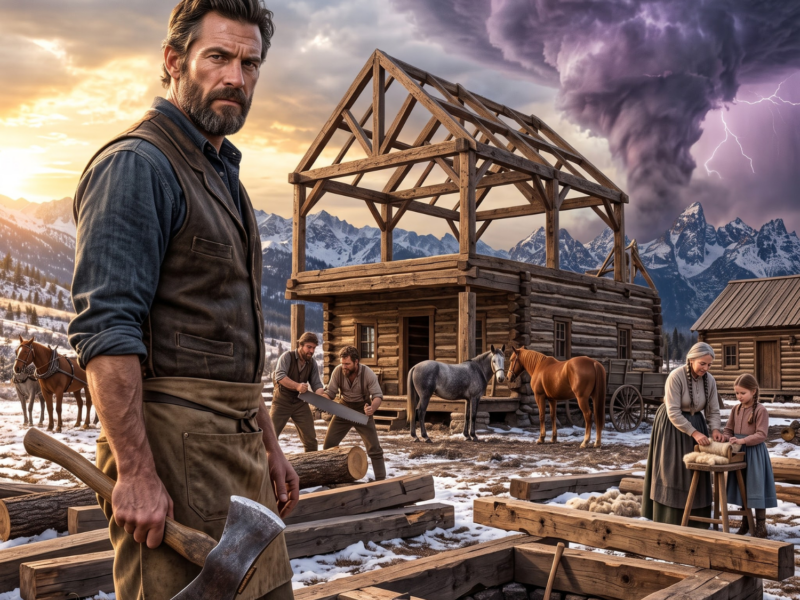
They Mocked Him for Building a SECOND ROOF Over His Cabin — Until WINTER CAME
The Great Collapse
Three weeks later, the weather changed its mind, and the true test arrived.
On January 15th, the temperature climbed unexpectedly, bringing a false, dangerous thaw. Snow began falling heavily around noon, but it was not the light, dry, powdery snow the valley usually saw in deep winter.
It was “heart-attack snow.” Wet, incredibly dense, and heavy with moisture. It was the kind of snow that stuck like glue to tree branches, snapping them under its weight, and clung fiercely to fence rails.
By sunset, Owen had six inches of this wet cement on the steep outer roof. By midnight, there was nearly a foot.
The next morning, the storm had not stopped. The sky was a relentless, churning gray.
Mara stood by the frosted window, holding a cup of tea, watching the snow pile up with growing dread. Thomas sat by the iron stove, looking nervously between his mother and father.
“Are you worried, Papa?” Thomas asked quietly.
Owen looked up from carving a piece of pine. He walked to the window and stood beside his wife.
The outer roof was blanketed in a thick, white layer. But because of the severe, aggressive pitch of the A-frame, it could not hold the tremendous weight. Every few minutes, a deep, rumbling whoosh would echo through the yard. A massive, heavy sheet of wet snow would break loose, sliding violently down the steep shingles, and crash into the designated drop zones in the yard with a thud that shook the ground.
Then another section would let go. Then another.
The roof was never completely clear, but crucially, it never carried the full, crushing weight of the storm for long. The engineering was shedding the load automatically.
Across the valley, however, other roofs were behaving very differently.
Most of the cabins and barns in Ashen Creek had traditional, lower-pitched roofs designed for easier construction. The wet, sticky snow didn’t slide off them; it stacked. Layer upon heavy layer accumulated.
And as the sun set on January 16th, the cruelest phase of the storm began. The freak warm front passed, and the temperature plummeted violently.
That massive, wet, saturated snowpack sitting on the town’s roofs began to freeze solid. It turned from heavy snow into a colossal, immovable slab of dense ice.
That was when the horrifying sounds started.
All through the dark valley, timbers began groaning in agony. Cedar shingles cracked under the sheer, unyielding pressure. The shifting ice sounded like bones breaking in the night.
A mile away, Caleb Dorsey tied a rope around his waist, handed the other end to his wife, and climbed onto his freezing, icy roof with a heavy iron shovel. His two teenage sons joined him. They worked frantically in the blinding dark for almost three hours, their muscles screaming. But every heavy load of ice they managed to push over the edge seemed to be instantly replaced by another relentless sheet of falling snow. Caleb wept in frustration, terrified his grand house was going to collapse and crush his wife.
At Edwin Pike’s immaculate, expertly built workshop, disaster struck from within. The heat from Edwin’s roaring wood stove rose to the ceiling, warming the shingles from underneath. It melted the very bottom layer of the snowpack on the roof. The water had nowhere to run because of the ice dam frozen at the eaves. It found a seam.
Freezing, muddy water began dripping steadily through the ceiling of his pristine workshop, directly onto his expensive, imported tools. Edwin cursed, throwing iron buckets underneath the leaks. But the water found new paths. He desperately moved his tools, then finally had to climb outside into the blizzard with a pickaxe, risking a lethal fall to desperately chip away the ice dam before the roof rotted through.









