Our Uncle Stole Our Home — Then Our Dog Led Us to a Hidden House Three Families Kept Secret
THE CRACK IN THE MOUNTAINAfter Our Uncle Took Our Home in the Winter of 1882, My Little Sister and I Followed Our Dog Through a Crack in a Wyoming Mountain—and Found a Fully Built House Hidden Inside a Cave, With Three Different Families’ Clues Explaining Why Nobody Had Taken It Away
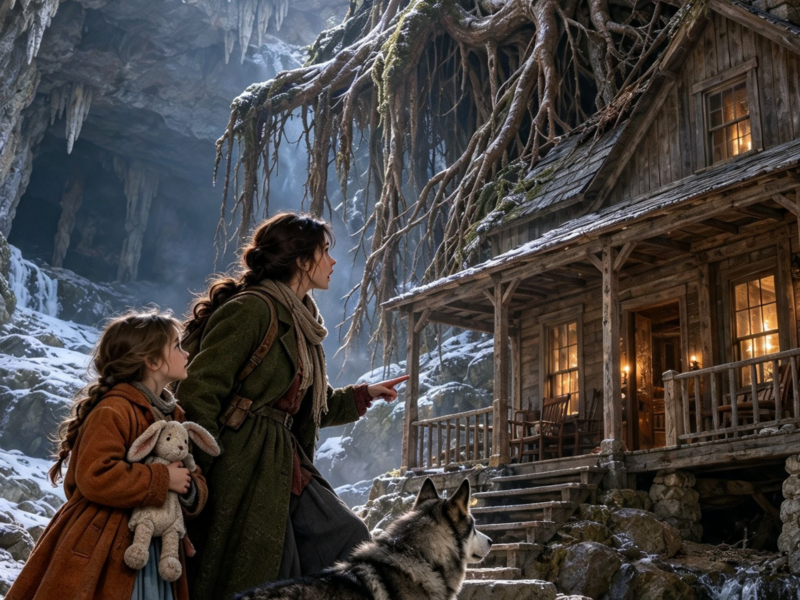
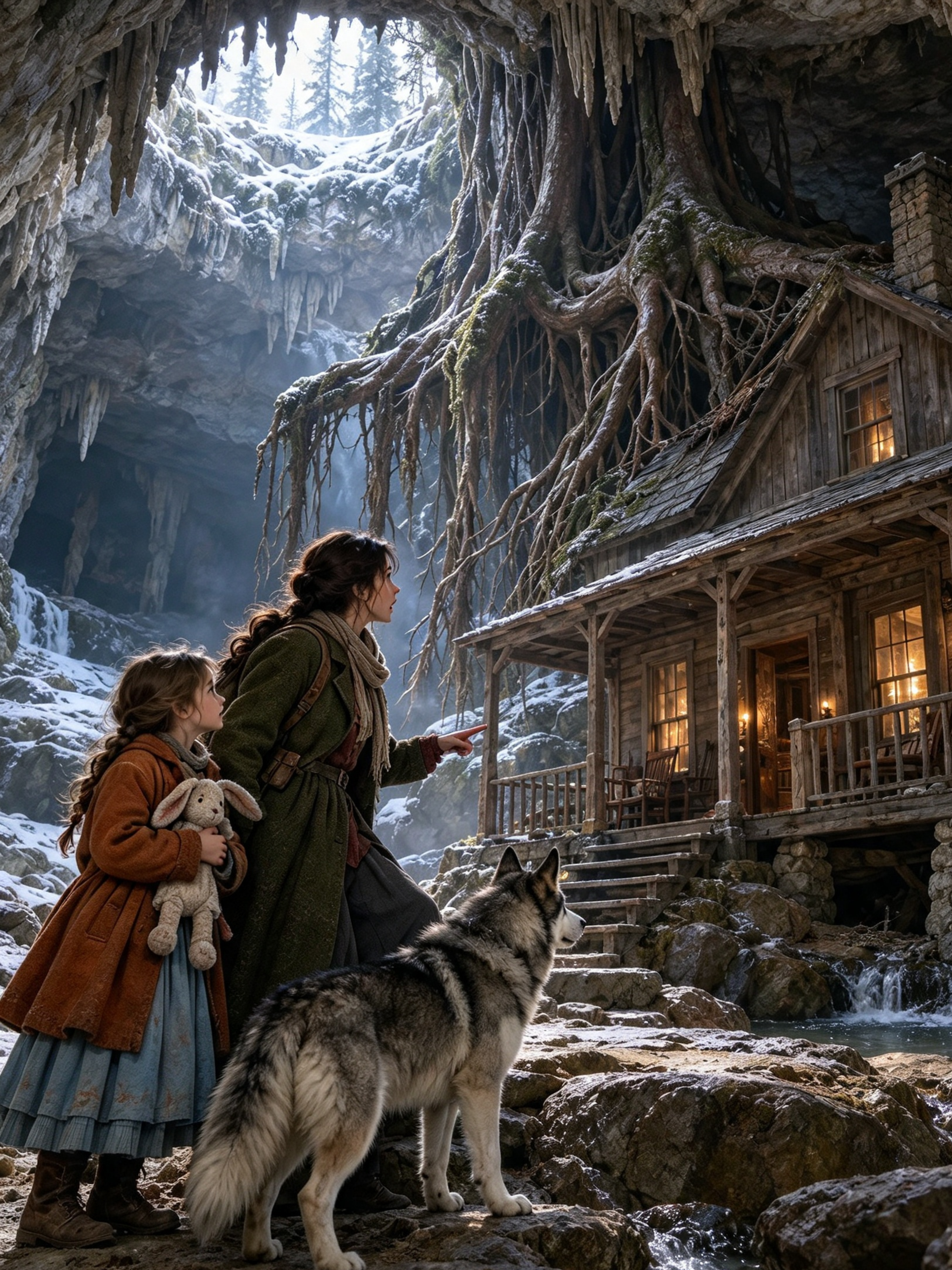
Flint disappeared through a crack in the mountainside, and I grabbed my little sister’s hand before following him into the darkness. For eight feet, we could barely move. Then the passage widened. And I saw something I had no explanation for. A house. An actual wooden house standing inside an enormous cave. Four walls. A pitched roof. Glass windows. A covered porch with two steps. And above it, thick roots from ancient ponderosa pines twisted through cracks in the stone ceiling.
My nine-year-old sister, June, stopped breathing for a moment. “Petra,” she whispered. “Who would build a house in here?”
I couldn’t answer.
Three days earlier, we had possessed a home in Sweetwater County. Now everything we owned fit inside one canvas rucksack. Our uncle Gideon had made sure of that.
My name is Petra Winslow. I was twenty-two that winter, old enough to understand what had happened to our family, but not wealthy enough to stop it. Our father, Thomas Winslow, had worked eleven years in the coal mines. He died in August when a support beam collapsed underground. Our mother had died years earlier of typhoid fever, leaving me to raise June as best I could.
After Father’s funeral, his brother Gideon arrived carrying documents that supposedly proved Father had borrowed money against the family property. The signatures looked unfamiliar. But I had no money for legal help, and nobody volunteered to challenge Gideon. By November, he was ordering us out.
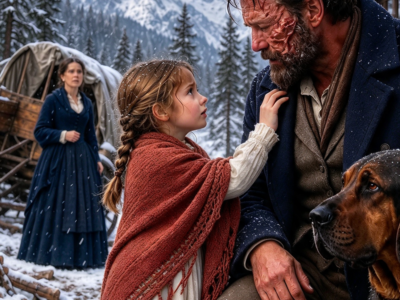
I still remember standing in the snow while he lit Mother’s favorite lamp behind the parlor window. June carried her little cloth rabbit. I carried bread, matches, a knife, and one blanket. Our father’s husky, Flint, followed without hesitation.
We survived the first night beneath fallen pine branches. The second night, we sheltered against a shallow rock ledge. On the third day, the storm became dangerous. June was barely speaking. Her lips had lost their color, and I could feel how slowly she was moving. The nearest town was too far away.
Then Flint stopped beside the cliff. He stared at a narrow opening beneath the roots, pushed his nose inside, and vanished. One bark came from the darkness. I had no better choice than to trust him.
Now we stood inside a cavern large enough to swallow a barn, looking at a house that seemed to have been built by someone who expected it to last. The cave floor was dry. Pale daylight entered through fractures overhead. There were no fresh footprints except ours and Flint’s.
The house appeared abandoned. But it wasn’t ruined. That difference troubled me.
I approached the porch, keeping June behind me. The wooden steps held my weight. The front door opened when I pushed. Inside stood a stone fireplace, a cast-iron stove, a kitchen counter, and shelves covered in fine dust. A narrow hallway led to a bedroom. There was a bed with an old quilt folded across the mattress. Another door opened into a storage room containing tools, rope, and empty shelving.
No food. No firewood. No sign that anyone had lived there recently. Yet the floors were sound, the windows unbroken, and the roof intact. Someone had gone to extraordinary lengths to construct this place. Then they had walked away.
I searched every room before allowing June to settle. That night, she slept beneath the old quilt with Flint curled behind her knees. I remained beside the cold fireplace, holding Father’s folding knife. The storm continued outside. But beneath the mountain, we could barely hear it.
The following morning, I began examining the house more carefully. A wooden trough behind the kitchen counter connected to a pipe entering the rear wall. It looked like part of an old water system. I followed the pipe’s direction into the cavern and discovered a narrow spring running from a crack in the stone. Whoever had designed the house had arranged access to its water. Nearby, a natural drainage opening carried the overflow away.
This wasn’t a temporary shelter. Its builder had understood the cave.
Over the next several days, I collected fallen timber, lit the fireplace after checking its draft, and searched the nearby creek for food. I caught trout with an improvised hook. I gathered hawthorn berries where I could identify them. June began drawing a map of the cavern on a smooth pine board. For the first time since our father died, I heard her laugh.
But every improvement raised the same question. Who had built this house? And why had they left it for strangers to find?
On our ninth day, I noticed something above the kitchen counter. A series of shallow marks near the end of a supporting beam. I climbed high enough to examine them. There were initials — J.M. — 1859. And beneath them, a sentence carved into the wood:
This house is not mine. It is held in trust. Take care of it, and it will take care of you.
I read it twice. The message suggested the house had been deliberately left for future occupants. I climbed down, unsettled. A man had built this shelter more than twenty years earlier. And somehow, he had known someone else might need it.
When I opened a stubborn kitchen drawer, I found a folded builder’s inventory. The handwriting matched the careful work throughout the house. But beneath the list was a warning written in a different hand. It concerned a weakened section of the north wall. Someone else had lived here after the original builder. Someone who had examined his work and tried to preserve it.
I crossed the kitchen, knelt beside the north wall, and pressed my thumb against the plaster near the floor. It gave slightly. The warning was accurate. I repaired the damaged area with clay and ash, wondering who had left that note.
Then, several mornings later, while straightening June’s quilt, I noticed faded stitching near one corner. Two initials — E.C. — 1874. Fifteen years after the inscription on the kitchen beam.
I stared at the stitching. This was no longer the story of a single abandoned house. At least two people, perhaps two separate families, had left evidence of their time here. And they seemed to have known their belongings might help whoever arrived next.
That evening, I returned to the storage room. A lower shelf stood slightly away from the wall. I pulled it forward to look behind it. Something wrapped in old oilcloth lay on the floor. I reached into the narrow space, gripped the bundle, and slowly drew it toward the light.