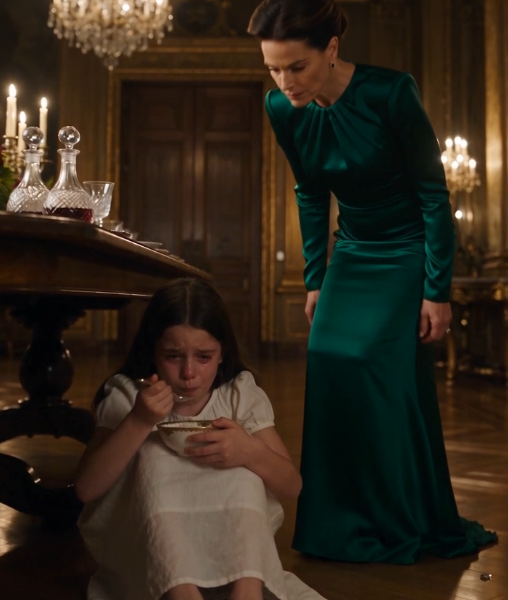
She thought she could starve his little girl in secret—until he walked in early and saw every bruise, every scrap of rice, and the truth she never imagined would be spoken aloud.
the neighbors who had watched Lila grow, the teachers who were helping her thrive, the social workers who had guided them through hard days, and a handful of children from the community who needed a safe place to belong. The table was set in the garden, long and bright, loaded with simple food and overflowing with kindness. When everyone had eaten and the sun began to dip low, Richard stood and spoke from his heart.
He told them that true wealth was not measured in what you kept for yourself, but in what you gave to those who had less. He spoke of silence as a choice that protects cruelty, and of truth as a gift that sets everyone free. He thanked Maria for her courage and Lila for her strength. He said that this house would always be open to anyone who needed shelter, anyone who needed to be heard, anyone who had been made to feel small or afraid. “No child should ever have to sit on the floor while others feast,” he said. “From today onward, there will always be a place at this table for every voice that needs to be heard.”
Lila stood beside him as he spoke, holding his hand in one of hers and Maria’s in the other. When he finished, she looked out at the faces turned toward her and said, “If you see someone who is hungry or sad or alone, please help them. It makes a difference.” The guests clapped, not with polite applause, but with genuine warmth. Many came forward afterward to share stories of their own, to offer help, to promise they would keep their eyes open and their voices ready. Something had shifted in the community that day—fear had loosened its grip, and hope had taken its place.