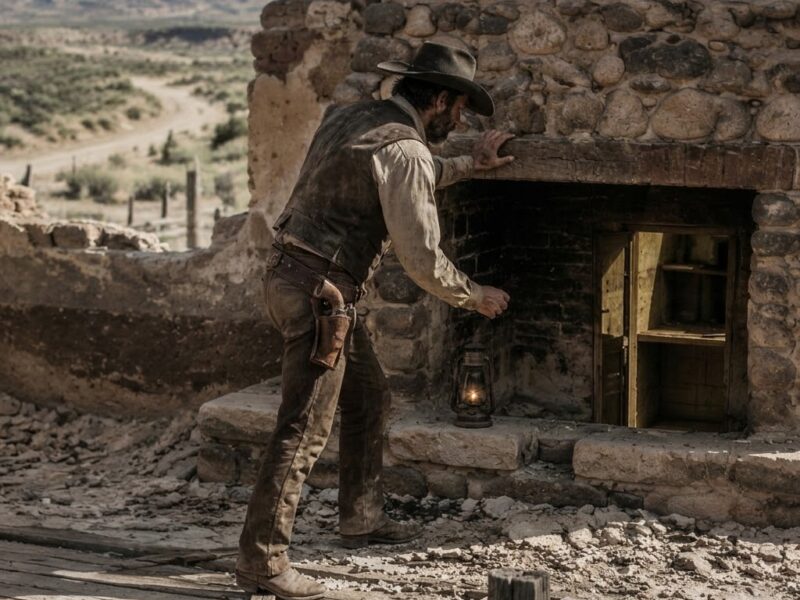
He Was Too Old to Ride—So He Bought the Ruined Ranch and Found the Room Behind the Fireplac
The Neighbors of Cold Creek
The valley did not rush to welcome him, nor did it reject him. In cattle country, a man was judged by his willingness to pull his own weight, and Walter Weaver proved himself before the first snow locked the passes.
For three weeks, he labored from first light to last. He stripped the sagging roof down to its bare rafters, hauling up new cedar shakes he had purchased from Orin Pardee down at the mill. He chinked the log walls with a stubborn mixture of clay, wet sawdust, and chopped grass, sealing out the mountain draft. He installed a secondhand sheet-iron stove, venting its pipe through the north gable with a clean tin flashing bedded in tar.
As the days shortened and the frost hardened into a permanent silver rime across the grass, the valley’s quiet inhabitants began to make their appearance—not with speeches or handshakes, but with the practical currency of survival.
First came Merritt Doss, a thirty-nine-year-old widow who ran twenty head of milk cows two miles down the creek. She sent her fourteen-year-old son, Jud, up the track with a heavy cast-iron pot filled with beef stew, wild onions, and potatoes, tied down under a cloth.
“We brought supper,” Jud had announced awkwardly from the doorway, setting the pot down on the pine table beside Hetti Anne’s tin box.
“Much obliged,” Walter had replied.
Then came Alderly Fen, a weathered freighter who stopped his wagon to drop off a heavy barrel of fine chinking clay, refusing payment because Hetti Anne Marlo had once sat up two nights with his dying wife during the diphtheria winter of ’84. Josie Renick, a sharp-eyed grandmother living alone up the North Fork, sent down a basket of eggs via a hired boy with a scribbled note: Welcome to the valley.
Even Bertram Alt, an itinerant blacksmith who traveled the low ranches shoeing stock, spent an afternoon resetting the buckskin’s shoes and helping Walter raise the final course of roof shakes, accepting nothing more than a plate of beans and a cup of black coffee for his trouble.
By December, smoke was rising steadily every morning from the north gable of the Marlo place. The local hands stopped calling it “the old Marlo ruin” and began calling it Weaver’s Place.
Walter settled into a rhythm as predictable as the turning of the constellations. Mondays were for woodcutting; Tuesdays for splitting and stacking ricks four feet high against the shed; Wednesdays for riding the property line to mend wire broken by elk; Thursdays for shoring up the corral posts; Fridays for trading labor down at Merritt Doss’s ranch for milk and butter; Saturdays for sharpening his tools on Anel Puit’s whetstone; and Sundays for wiping down the Barlow knife and slipping it back into his right-hand trouser pocket.









