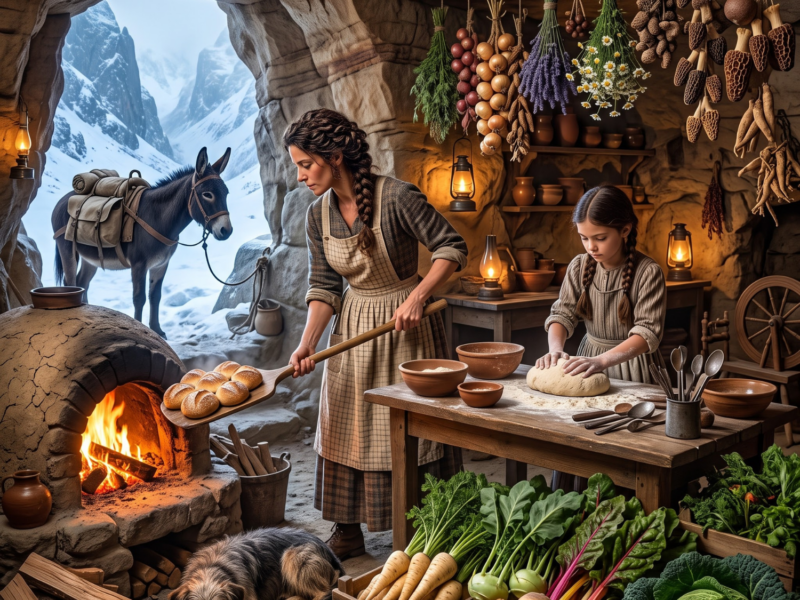
They Expected a Frozen Widow in a Blizzard — Instead They Found Fresh Bread and a Warm Shelter
The Breath of the Earth
The second batch of bread demanded patience. Mara fired the new, heavy stone oven for four hours, letting the sandstone absorb the inferno deep into its core. She raked the coals out, swept the floor with a pine bough, and sealed the dough inside with a flat rock.
Dawn arrived on the twelfth day. A steady, shrieking wind battered the ravine outside, but Mara knelt beside the oven in the quiet cave and pulled the heavy stone door aside.
A cloud of fragrant, intoxicating steam rolled out. The loaf was uneven, carrying scars from the hot stone floor, but its crust was a perfect, hollow-sounding golden brown.
The smell reached Elsie before the sunlight did. The girl sat up, throwing off her blankets, her eyes wide. Even Bramble lifted his head, whining softly.
Mara cut the loaf with her hunting knife. A wisp of steam rose from the perfectly baked, airy crumb. She handed the largest slice to her daughter.
A warm loaf of bread now existed exactly where frozen ground and the cruelty of Ashen Creek were supposed to have left them for dead. Elsie closed her eyes as she took a bite, holding the bread with both hands as if warmth itself were a physical object to be hoarded.
But winter is a relentless tactician. A week later, an arctic front dropped the temperature to twenty below zero.
The cave remained livable, but the sourdough starter began to die. The mixture stopped bubbling. The dough refused to rise. Mara tested the jar near the oven, near the bed, near the garden. Nothing worked.
Then she realized the floor was the enemy. The ambient air was warm, but the stone beneath them was acting as a heat sink, slowly draining the thermal energy from the stoneware jar.
She moved the jar to a natural shelf in the limestone wall that radiated geothermal heat, and wrapped it tightly in Thomas’s old wool coat. Two days later, the starter bubbled back to life.
With carbohydrates secured, the body demanded protein. Mara unraveled strands of rusted wire she had scavenged from the mill and twisted them into snares. Guided by Bramble’s keen nose, she set the traps along the snowpack trails used by snowshoe hares just outside the ravine.
The traps yielded meat for stew and fat for calories. The bones were boiled into a rich, marrow-heavy broth to soak their bread. The pelts were dried and stitched into a heavy blanket.
The cave was no longer a desperate hiding place. It was an ecosystem.









