They Laughed When She Wrapped Her House in Straw—Then the First Blizzard Hit…
They Laughed When She Wrapped Her House in Straw—T…
They Laughed When She Wrapped Her House in Straw—Then the First Blizzard Hit…
The wind cutting across Cedar Fork in mid-November wasn’t just cold; it was predatory. It carried the metallic, ozone scent of a season that intended to bury everything in its path.
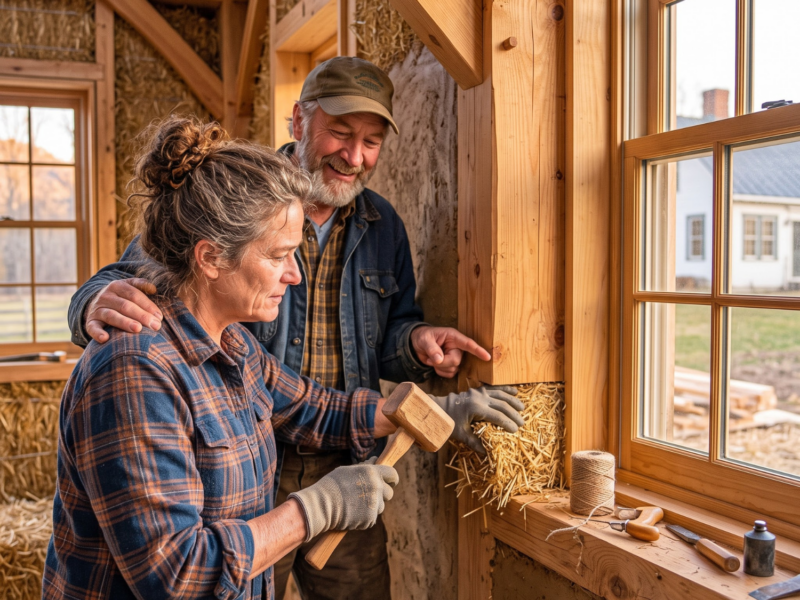
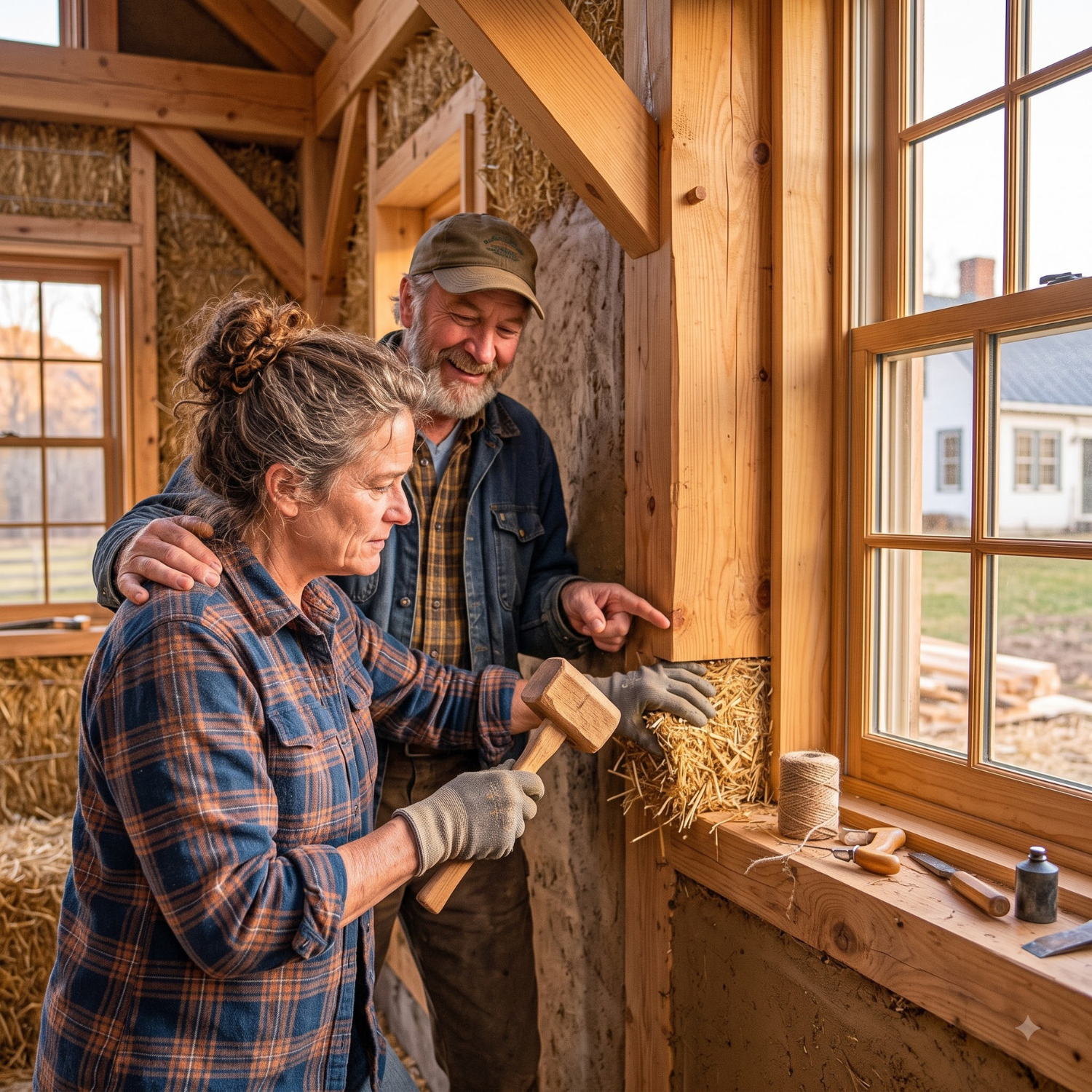
Martha Reed, fifty-eight years old and possessing a stubbornness that had outlasted a bad marriage and three decades of volatile crop yields, braced her boots in the frozen mud of her front yard. With a grunt that tore at her shoulder muscles, she hoisted a heavy, golden bale of straw and shoved it firmly against the wooden framework encasing her white farmhouse.
“Building yourself a barn, Martha!” a voice called out, sharp and amused over the wind.
Martha didn’t stop to look. She knew the voice. Ray Hollis, her neighbor from across the narrow dirt lane, was leaning against the tailgate of his battered Ford pickup, laughing.
“I’m building a jacket,” Martha called back, wiping a smear of dirt from her forehead with the back of a canvas-gloved hand. “And unlike you, Ray, I plan on wearing it before I freeze to death.”
Ray chuckled, shaking his head.
Martha had spent five agonizing weeks insulating her drafty, century-old farmhouse with straw bales. It was an unconventional, desperate retrofit guided by an architect named June Mercer. It was Thursday. A massive, historic blizzard was due by Sunday night.
If the house was still too cold when the storm broke, Martha had made a promise to her daughter, Nora. She had promised she would pack a bag, lock the door, and spend the winter seventy miles south in the city. To Martha, abandoning her farm for the winter felt like a profound, unacceptable defeat.
She turned back to the covered stack of straw sitting under a blue plastic tarp. She pulled another bale.
As her hands gripped the twine, she felt it. The outside of the bale was crisp and dry, but as her fingers sank into the center, she touched something damp, heavy, and slick. A sharp, musty odor—the undeniable smell of composting decay—hit her nose.
Martha pulled the bale free and dropped it on the ground. She ripped the twine. The center of the straw was dark brown and wet.
She quickly tore into the next bale in the stack. Wet. The next one. Wet.
Panic, cold and sharp, flared in her chest.
“That’ll rot right inside your wall,” Ray said. He had crossed the lane and was standing behind her, his amusement entirely gone. He was a farmer; he knew exactly what wet straw meant.
“Then it won’t go in my wall,” Martha snapped, grabbing the twine of the rejected bales and violently dragging them away from the house, dumping them near the frostbitten garden.
She looked at the exposed wooden framework on the north side of her house. The space she had expected to fill that morning remained empty, a glaring hole in her winter armor.
Inside her kitchen, a folded wool blanket lay on the daybed where she slept when the back bedroom got too freezing to endure. Her cast-iron woodstove was burning, throwing a meager, localized heat. Beside the front door sat a small, packed duffel bag—a humiliating reminder of her promise to Nora.
Martha walked into the kitchen, ignoring the cold draft whistling through the unfinished wall. She grabbed a rusted biscuit tin from the top of the refrigerator. Inside were her carefully managed receipts and a pitifully thin stack of twenty-dollar bills.
She picked up the landline phone and dialed Lee at the county farm supply store.
“Lee, it’s Martha. The last twenty bales you delivered are wet in the center. I can’t use them for insulation.”
“Ah, damn it, Martha. I’m sorry,” Lee’s voice crackled over the line. “Must have been a leak in the storage barn. I can offer you replacements from a dry batch.”
“I need them today, Lee. The storm is coming.”
“I can’t, Martha. My delivery truck threw an axle this morning, and the backup is booked solid through the weekend moving cattle feed. You’ll have to haul them yourself, or hire a hotshot.”
Martha closed her eyes, doing the brutal arithmetic of poverty. Paying a private hauler would cost fifty dollars. Fifty dollars would cut directly into the money she desperately needed to buy the exterior finishing boards to seal the house from the weather.
“I’ll figure it out,” Martha said, hanging up the phone.
She looked out the kitchen window. Across the lane, Ray was backing his large, covered utility trailer into his repair barn.
Martha tucked the receipt for the wet load into her heavy coat pocket. She walked out into the biting wind and crossed the lane.
Related Articles

They Mocked the Widow’s Dirt Cellar—Then the Freeze Left Every Cabin Cold but Hers Warm
They Mocked the Widow’s Dirt Cellar—Then the Freeze Left Every Cabin Cold but Hers Warm…

A Homeless Veteran and His German Shepherd Inherited a Ridge No One Wanted — 35 Feet In, They Found
Chapter 1 / 7 A Homeless Veteran and His German Shepherd Inherit… A Homeless Veteran…

Neighbors Laughed When He Built A Cabin Inside An Old Barn—Until It Kept His Home 35 Degrees Warmer
Chapter 1 / 8 Neighbors Laughed When He Built A Cabin Inside An… Neighbors Laughed…

His Sod House Had No Woodpile in January – Until the Trains Stopped and the Town Came Begging
Chapter 1 / 10 His Sod House Had No Woodpile in January – Until t……

She Built Her Cabin Over the Woodshed and Never Burned Wet Wood Again
Chapter 1 / 8 She Built Her Cabin Over the Woodshed and Never Bu… She…

The Duke Abandoned Her on Their Wedding Day—Years Later, He Discovered What He Had Lost
Chapter 1 / 7 The Duke Abandoned Her on Their Wedding Day—Years… The Duke Abandoned…

He Wedged a Tiny A Frame Into a Crevice Before Winter and His Family Slept at 75°F While Town Hit
Chapter 1 / 7 He Wedged a Tiny A Frame Into a Crevice Before Win……

He Was Too Old to Ride—So He Bought the Ruined Ranch and Found the Room Behind the Fireplac
Chapter 1 / 5 He Was Too Old to Ride—So He Bought the Ruined Ran……

Settlers Laughed at His Underground Heat Recovery Duct — Until It Kept His Cabin 71°F Warmer
Chapter 1 / 9 Settlers Laughed at His Underground Heat Recovery… Settlers Laughed at His…

A Navy SEAL Built a Home Inside a Mountain—Then His Dog Warned Him Before the Storm
Chapter 1 / 5 A Navy SEAL Built a Home Inside a Mountain—Then Hi… A…