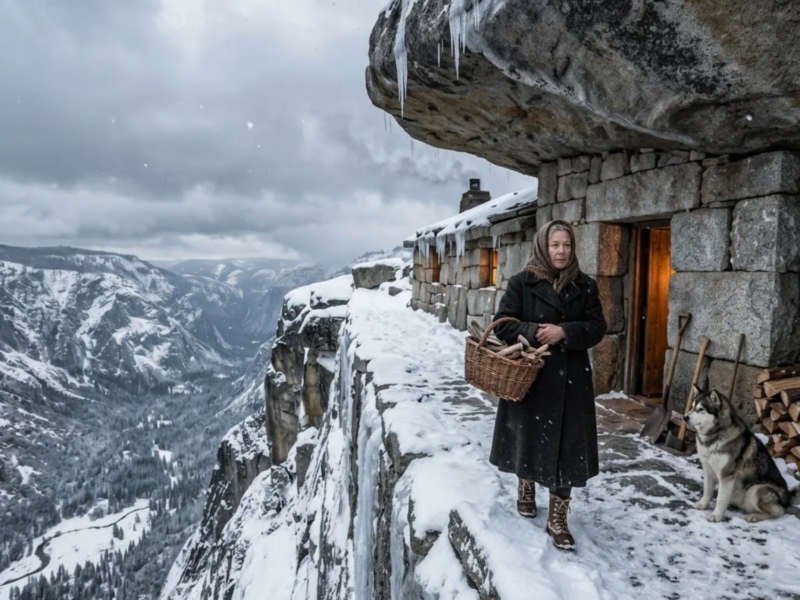
They Mocked Her Hidden Mountain Shelter—Then the Coldest Winter on Record Proved Her Right
The Loss of the Toes and the Wisdom of Ashanaki
Living as a free trapper meant surviving entirely on your own terms—and paying the ultimate price for mistakes.
The most brutal lesson of the cold had been delivered to her in December of 1878, high above the tree line at 11,000 feet in the Bitterroot spurs. Checking a late line of marten traps, a sudden whiteout blinded her within fifty paces. Her canvas lean-to blew away in the first hour of darkness, and her fire died past midnight. She spent the night pressed against the flank of her mule, her left foot slowly turning into a dead, frozen limb.
By dawn, the three smallest toes of her left foot were white as chalk and completely numb. Dragging herself down through thigh-deep drifts, she stumbled into a Crow winter camp along the Big Horn River.
There she met Ashanaki, a master healer whose hands were as steady as any surgeon’s. Ashanaki looked at the blackened foot for three heartbeats, heated her knife in the coals, and cleanly amputated the three dead toes at the joint, dressing the cauterized stumps with a healing paste of ground root and pine resin. Mabe drifted in and out of fever for six days, lulled by the low, rhythmic humming of the healer’s voice.
When Mabe finally woke clear-eyed, Ashanaki sat across from her by the fire and delivered a philosophy that pierced deeper than any knife:“If you fight the winter, it will kill you. If you work with the winter, you will live. The mountain tells you what it will do. You must listen.”
Mabe had spent the eight years since learning how to listen. She read the cloud banks, tracked the behavior of marmets and deer, and learned to distinguish ordinary winter dangers from lethal extremes.
Now, in the autumn of 1886, the signs were screaming a warning louder than anything she had ever witnessed. The frantic beavers, the early migration of the birds, the unnatural density of the horses’ coats, and the strange, ancient sound of the wind—all pointed to an apocalypse of ice.
The limestone shelter she had chosen—called Awe Bakp (“Stone Above the Wind”) by the Crow—was a geological mercy. Twenty feet deep and fifteen wide, with a natural sandstone cap that shed snow effortlessly and held fire-heat like an oven, it was structurally sound. But an open cave in extreme cold acts like a chimney, drawing dense, freezing air inward along the floor while forcing warm air out through the top.
An ordinary brush windbreak or a hastily chinked log cabin would fail utterly against it. What was required was massive, immovable thermal mass.
She needed a thick stone wall.









