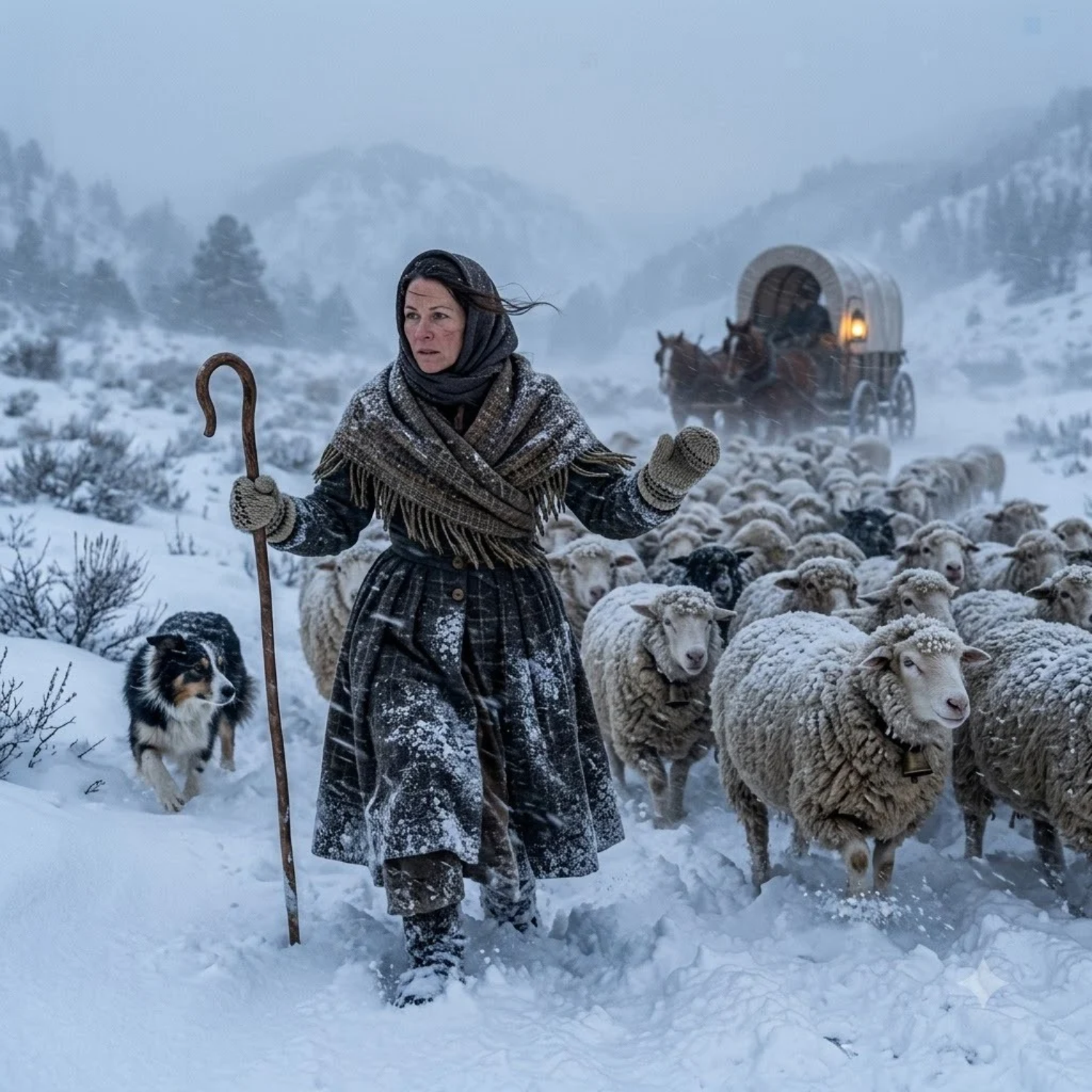
Two Sisters Hid 600 Pounds of Food Under Their Floor—Then Winter Cut the Town Off for 4 Months
The Ghost of Caleb’s List
The winter before, Lenora had shared this very cabin with Nell and Caleb. They had prepared for an ordinary winter, trusting in the rhythm of the territory, assuming the freight wagons would always rumble through before cupboards ran dry.
That was the fatal mistake.
By February, the flour sack had bottomed out, the salt pork was gone, and even the chicory-laced coffee had been rationed down to black water. Caleb had not been a careless man; he had simply trusted the system. One clear, deceptively mild morning, he hitched his horse and left for the trading post to buy flour, beans, and fresh lamp oil.
By afternoon, the northwest wind abruptly turned, driving a white wall of snow across the trail, burying it, and erasing it from the face of the earth. Caleb never came home.
Two days later, searchers found his frozen form huddled near an abandoned haystack less than three miles from the safety of the village. Inside the frozen wool lining of his coat, clutched in his stiffened fingers, was Lenora’s shopping list. She had kept it, folding the grease-stained scrap of paper into the back of her empty ledger like a headstone carved of pulp and ink.
When the snow finally melted away in April of 1887, revealing the sodden, muddy ruts of Red Willow Crossing, Lenora sat at the kitchen table with Nell. There was no theatrical mourning, no long, weeping discussion about Caleb. His old wooden chair remained tucked quietly against the wall, and his shopping list stayed folded inside the ledger.
Instead, Lenora had a pencil stub, a scrap of paper, and an unyielding set of numbers.
She calculated what two working women would need to survive a hard, unbroken winter. Flour, cornmeal, beans, smoked meat, root vegetables, preserves, salt. Then she added a margin for spoilage. Then another margin for delayed freight. Finally, she added enough extra buffer so that a single bad month or a trapped neighbor would not force either sister onto a winter road.
When she finished multiplying, she wrote a single number on the page: 600.
Nell stared at it, her eyes wide. “That’s for two people.”
“For two people who don’t know when the road will open,” Lenora replied quietly.
Nell understood the necessity of storing more than they had the previous year, but six hundred pounds of provisions felt like an insult to the progress of the territory. Red Willow had a stage road now. Silus Crowe ran a well-stocked general store. Telegraph wires stretched east to larger towns. This was not the raw, lawless frontier of a decade prior.
“And if winter doesn’t come?” Nell asked, leaning back.
“Winter will come,” Lenora said, her gaze drifting to Caleb’s empty chair before returning to the ledger. “Food keeps better than regret.”
After a long silence, Nell pulled the ledger across the table, took the pencil, and darkened the number Lenora had written, making it heavy and permanent. She still thought it was madness, but she had enlisted in the war.