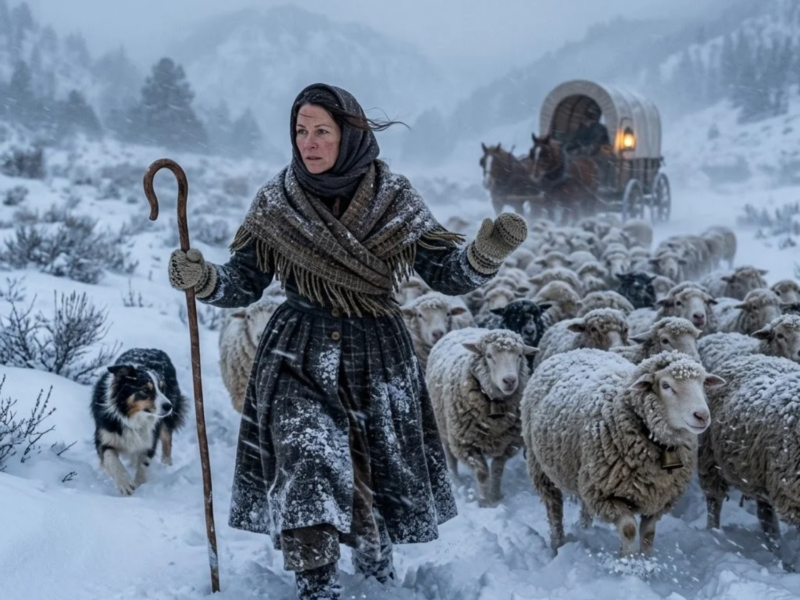
Two Sisters Hid 600 Pounds of Food Under Their Floor—Then Winter Cut the Town Off for 4 Months
Testing the Vault
The first genuine warning arrived in early September.
Nell opened the trap door one morning, climbed halfway down the ladder, and stopped cold. The cellar smelled wrong—not overtly rotting, but heavily, ominously damp. Raising her lantern, she saw small beads of moisture clinging to the underside of an overhead plank. Along the north wall, an onion sack felt wet and sodden against her palm, several bulbs already turning soft and translucent.
Bram Keter had been right. The exhaust opening wasn’t drawing enough humid air, the sump was fractionally too shallow, and crates pushed too close to the wall had created stagnant pockets of condensation.
They launched an immediate emergency salvage operation. Crates came hoisting up through the floor; the spoiled onions were tossed outside. Nell deepened the sump and laid down an extra layer of coarse gravel while Lenora enlarged the exhaust opening overhead. They repositioned the wooden racks, leaving a strict air gap between the crates and the cold earth walls.
To test the microclimate, Lenora hung a strip of dry wool right beside the dampest section of the wall. If moisture remained trapped, the wool would hold it like a sponge.
The next morning, the cloth was still cool and damp. The following morning, less so. By the third day, the wool was bone dry before noon. The cellar had made its first mistake, but the sisters had discovered it weeks before winter could extract a lethal toll.
By harvest time, the town had christened the excavation with a half-respectful, half-mocking moniker: The Veile Sisters’ 600-Pound Hole.
Reverend Josiah Bell, the local minister, raised a profound ethical question one Sunday: if one household hoarded flour, beans, and salt before a freeze, what happened to poorer families who could only buy provisions week to week? Silus Crowe understood the dilemma well; his shelves were finite, and freight wagons could not carry everything.
Lenora brought her ledger directly to the store. Most of her provisions had come from home cultivation, hunting, and barter, but the point was valid. Preparation for one household could not come at the direct expense of starving neighbors.
So the sisters adjusted their strategy once more, spreading their staple purchases across multiple shipments and trading smoked venison directly for flour when barter made more sense than cash. One afternoon, Lenora stood in Crowe’s store with enough money in her purse to buy the last remaining sack of beans on the shelf. She looked at it, then looked past the counter to see two local mothers waiting anxiously. Lenora quietly closed her purse.
“Leave that one,” she told Silus.
The six hundred pounds would still be reached, but not by claiming a monopoly on survival.









