Two Sisters Hid 600 Pounds of Food Under Their Floor—Then Winter Cut the Town Off for 4 Months
The Wealth That Couldn't Feed
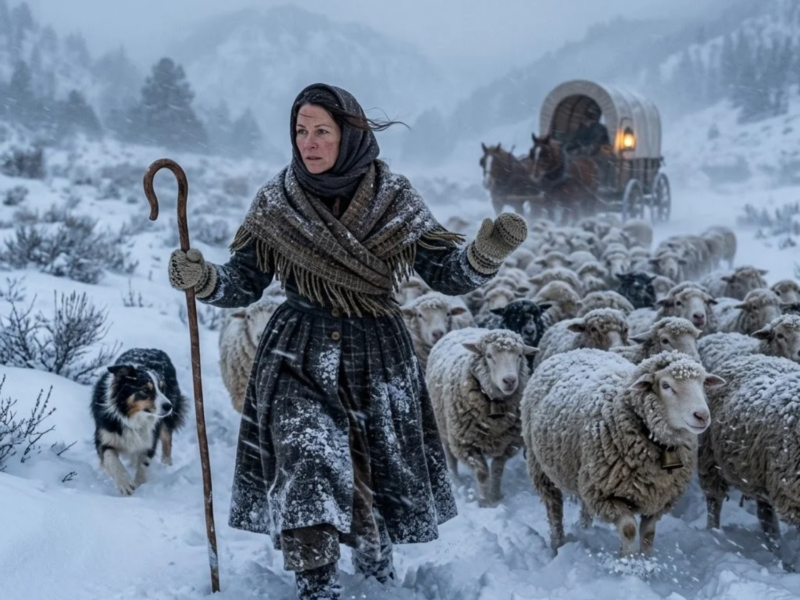
In early February, a solitary horse broke through the blinding ground-drift. Mabel Stroud sat in the saddle, her woolen scarf stiff with ice, her expensive boots ruined by slush. She dismounted stiffly at the Veile cabin porch.
“The children need something that isn’t meat,” Mabel said bluntly.
The Strouds still possessed vast herds of cattle on the open range; Ephraim could slaughter an animal when absolute necessity demanded it, but a steer could not be transformed into flour, beans, cornmeal, or vitamin-rich roots. Wealth frozen behind a barbed-wire fence was a hollow mockery when the pantry was empty.
Lenora swung open the trap door, and Mabel descended into the lantern-lit cavern. She inspected the raised crates, the dry gravel floor, the clever wooden baffle beneath the hatch.
“I thought you were just building around your fear,” Mabel murmured, running a hand over the smooth planking.
“I was,” Lenora replied from the ladder. “Then I fixed what fear built badly.”
Lenora measured out potatoes, beans, cornmeal, and a precious jar of preserved fruit. Together, Mabel and Nell knotted the canvas sack. No one spoke of the polished wagon Mabel had arrived in months ago.
February bled into March, and still the road refused to open. There was no single, cinematic storm to curse anymore; it was the sheer, brutal duration of the cold that ground people down. The Veile ledger dropped further: 246 pounds, then 158, then 91.
Lenora and Nell cut themselves down to two meager meals a day. Nell began wearing an extra layer of wool indoors to fight the deep chill creeping through her bones, and Lenora noticed her sister’s hands shaking during morning chores.
Elsewhere in Red Willow, however, a profound shift was occurring. The town was learning the hard art of communal survival. Reverend Bell redirected starving families to households that still possessed hidden reserves. Silus Crowe managed inventory with surgical precision.
Then Mabel Stroud arrived leading a horse dragging a sack of oats salvaged from the Stroud stables. She didn’t call it repayment; she simply dropped it on the porch and nodded. Others followed suit—a jar of peaches here, a few pounds of hidden beans there, a cut of beef from an emergency slaughter. The village was slowly weaving itself into a safety net far stronger than any individual cellar.









