Begging on My Knees — Then the Most Feared Man in Chicago Saw What No One Else Dared Notice
THE SILENCE NO ONE HEARDI was eight years old when I dropped to my knees in the middle of a crowded store and begged for baby formula while strangers laughed and filmed me. “Please, sir… my baby brothers haven’t eaten all day.” Then a man everyone in Chicago seemed afraid to look at quietly paid for everything and followed me home, where what he found inside our house left even a feared mafia boss completely stunned.
My name was Ivy Sterling.
That afternoon, I stood barefoot at the checkout counter, soaked through by rain, clutching two cans of formula tight against my chest like they were gold. Mud streaked my legs. My fingers were numb and blue with cold. I poured every damp coin I owned onto the counter — and knew instantly it wasn’t nearly enough.
“Please,” I whispered, my voice trembling. “My baby brothers are hungry. I’ll pay you back when I’m bigger. I promise I will.”
The cashier called the manager. He barely glanced at me. “This isn’t a shelter. Can’t pay? Put it back and leave.”
“My mom hasn’t gotten up in two days,” I pleaded, tears stinging my eyes. “The babies won’t stop crying. I don’t know what else to do.”
People turned to stare. Phones lifted. Murmurs rippled through the crowd — sharp, cruel, loud enough to hear.
“She’s making it up.”
“Just a scam.”
“Get security.”
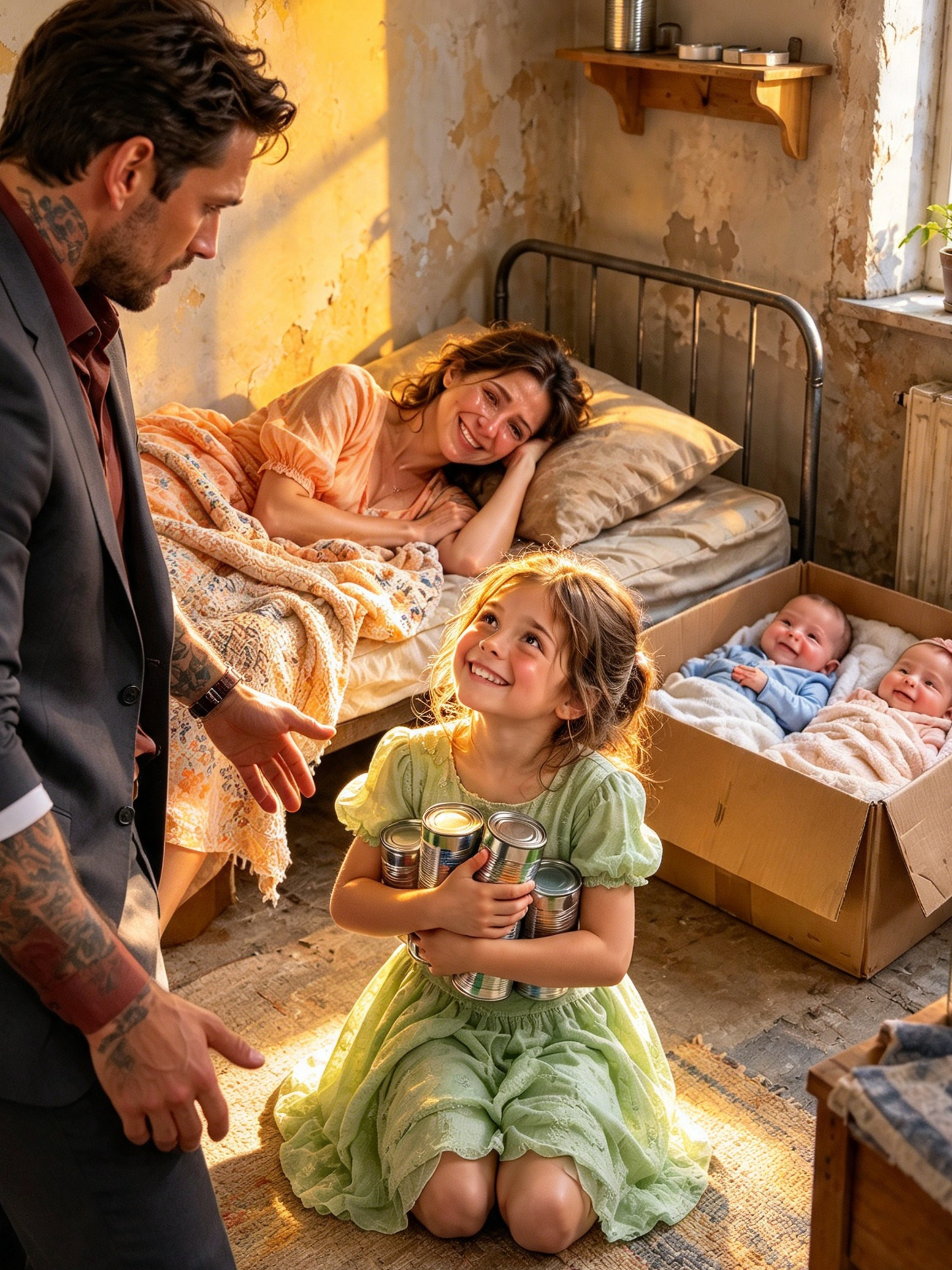
Someone laughed — loud and harsh. I hugged the cans closer, tears spilling over, hot and fast down my cold cheeks. Finally, my knees gave way. I sank right there on the hard tiles, right in front of everyone.
“I’ll do anything,” I begged, looking up at faces that wouldn’t meet my eyes. “Just let me feed them. Please.”
Nobody stepped forward. Nobody helped.
Then a calm, quiet voice cut through the noise. “Leave her alone.”
The laughter died instantly. The crowd parted like water. A tall man in a dark tailored coat stepped through — broad-shouldered, steady, his presence filling the room until it felt too small. The manager went pale. Two men near the register moved aside without being told. Someone behind me breathed a name like a prayer or a warning.
“Arthur Pendelton.”
I didn’t understand why everyone suddenly looked afraid. I was eight. I didn’t know Arthur was one of the most feared men in the city — that his name made grown men flinch, that power clung to him like his shadow. To me, he was just the first person who had ever stopped to listen.
He looked down at the cans in my arms. “How much?”
Minutes later, he had paid for everything — formula, bread, warm milk, medicine — enough to last days. He crouched beside me, level with my eyes, and handed me the bags.
“Go home now, kid.”
“Thank you,” I whispered.
Then I ran. I never looked back. I never saw him follow — past the bright storefronts, down streets where the lights grew dim, into alleys where the pavement cracked and the houses leaned like they might fall. I slipped through a broken door and into our home — or what passed for one.
Arthur stepped in behind me. And froze.
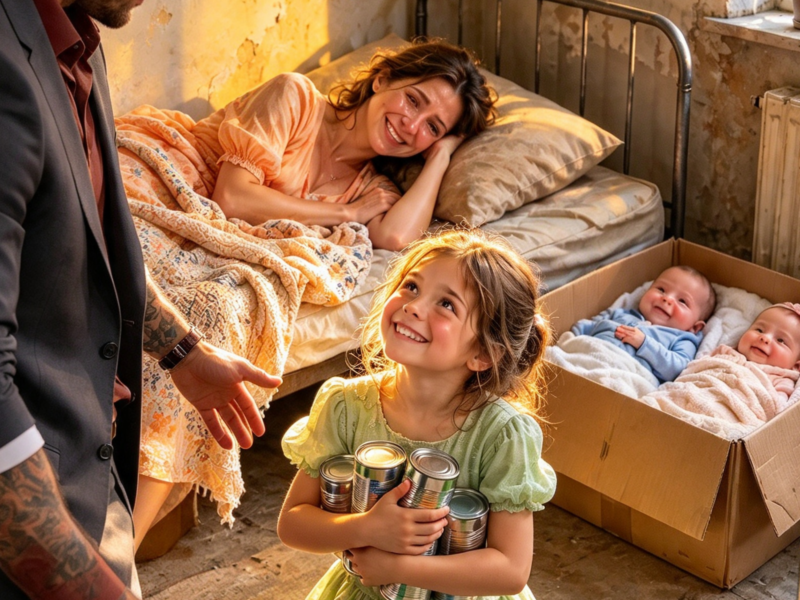
My twin baby brothers lay on a torn couch, wrapped in rags, their cries so weak they were barely sounds anymore — just small, shivering whimpers. I rushed toward them.
“I got your milk,” I whispered, setting the bags down. “I’m here.”
But Arthur wasn’t looking at the babies. He was staring across the room, at the narrow bed pushed against the wall. My mother lay perfectly still beneath a thin blanket. Her eyes were open, but she wasn’t seeing anything.
“Mom?” I stepped closer, touching her cold hand. “Mom, wake up. I brought food.”
Nothing. No answer. No movement.
Behind me, Arthur slowly took off his heavy coat. For the first time since he’d walked into the store, the powerful man everyone feared looked shaken. He stared at my mother. Then at my brothers. Then at the room — empty cupboards, no heat, windows cracked, cold air seeping through every gap. And whatever he saw there stripped away every bit of his power and pride, leaving just a man who could not speak.