The Little Girl Who Gave Me a Reason to Live — Then I Saw the Message That Exposed Why I Was Supposed to Die
THE GIRL WHO BROKE THE SILENCEThree hours after a doctor told me I might have only weeks left to live, I found a homeless three-year-old girl sitting alone in the rain with a sign asking for somewhere safe to sleep. I brought her home believing I was giving her a temporary refuge — but days later, after she gave me a reason to fight for my life, I discovered my own brother might have been waiting for me to die.
My name is Dominic Moretti.
At thirty-eight, I had money, power, and a reputation that made powerful men weigh every word before they spoke it. None of it meant a thing the moment Dr. Enrico Falcone slid the scan results across his desk.
“Four to six weeks,” he said quietly.
Cancer had spread through my liver, my lungs, my lymph nodes — everywhere.
“There is an experimental treatment,” he added.
“No.”
He stared at me, stunned. “Don’t you have anything worth fighting for?”
Three years earlier, I did. My wife, Isabella. My six-year-old son, Mateo. Then a drunk driver took both of them while I stayed behind late at the office. After that, I kept breathing. I just stopped caring whether I kept doing it.
I walked out of the hospital and wandered the streets of Manhattan in the pouring rain. That was when I saw her.
A tiny girl huddled beneath a bakery awning — messy blonde curls, scuffed boots, a patched dress soaked through. Beside her sat a crumpled cardboard sign:
I DON’T NEED MONEY. I JUST NEED SOMEWHERE SAFE TO SLEEP TONIGHT.
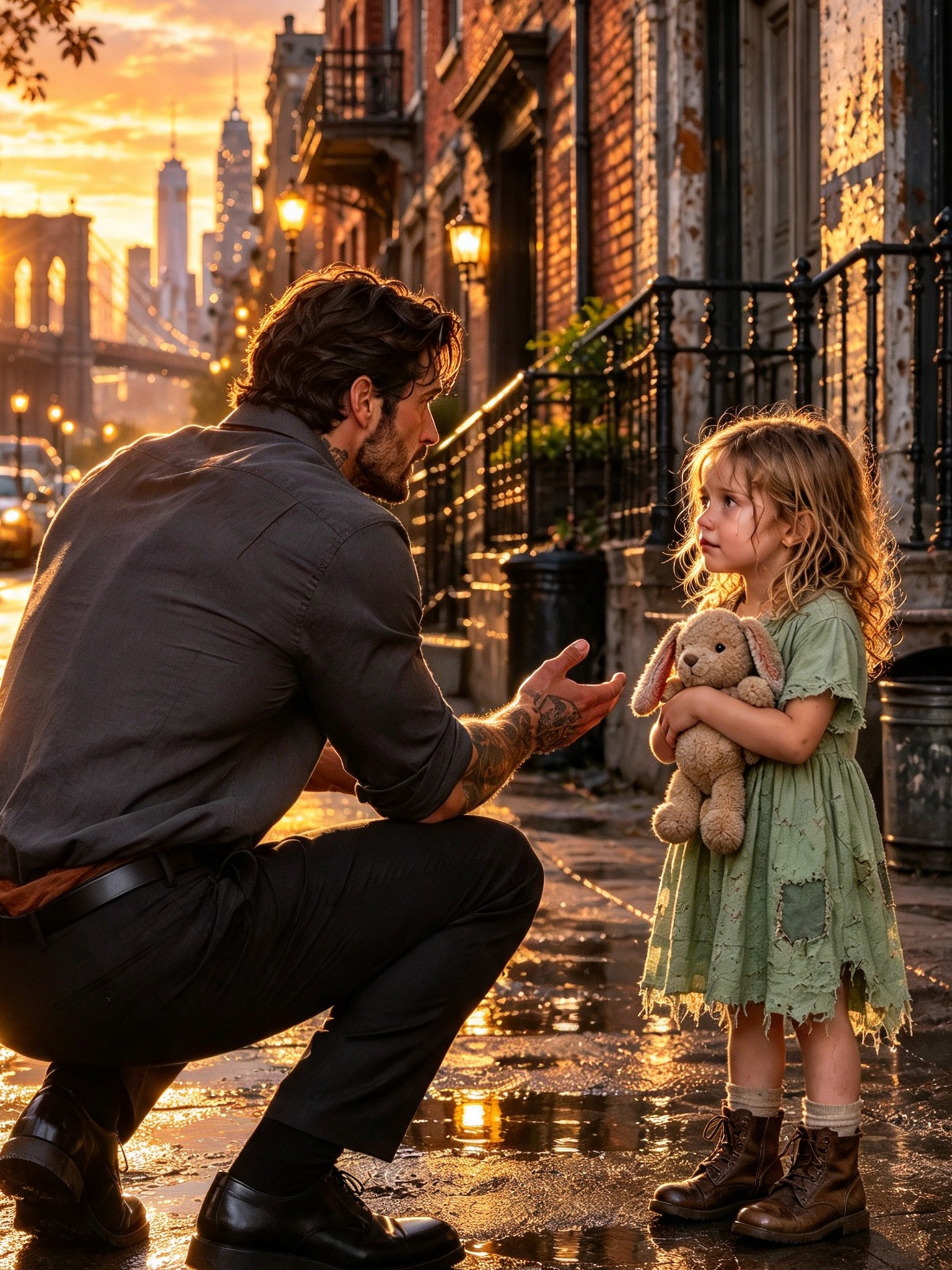
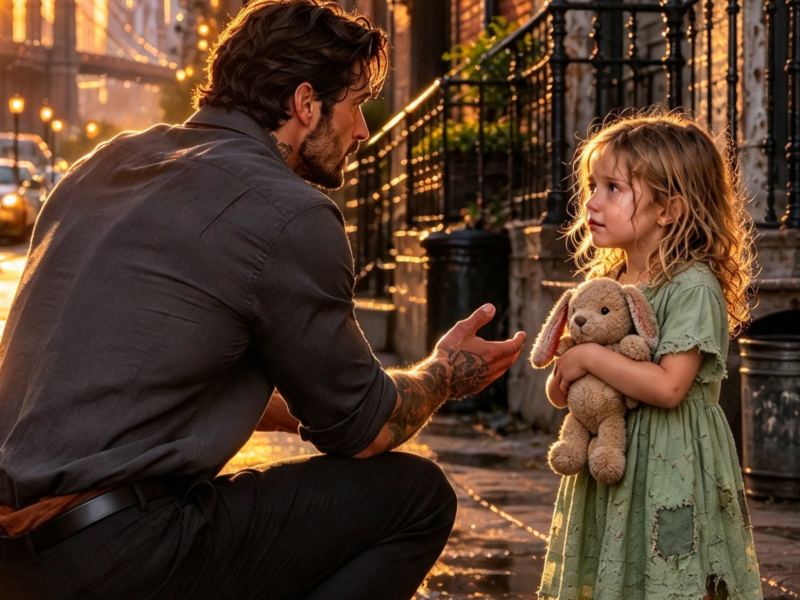
“What’s your name?” I asked, kneeling in the wet.
“Emmy.”
“Where’s your family?”
Her smile faded. “They’re gone.”
Something inside me cracked wide open.
Through the proper channels, Emmy was placed temporarily in my care. And then everything changed. She filled my silent mansion with crayon marks, bedtime stories, endless questions, and laughter — bright, unapologetic, impossible to ignore. She insisted we eat breakfast together every morning. She held my hand when we walked down the hall.
One morning, she placed her small hand over mine across the table. “Dominic?”
“Yes, Emmy?”
“Will you still be here tomorrow?”
For the first time in three years, I ached to say yes. I wanted it more than I had ever wanted anything. That afternoon, I called Enrico.
“I’ll do the treatment.”
Four days later, my younger brother, Luca, came to dinner. Emmy sat across from me, giggling as spaghetti slipped from her fork onto her plate. Luca stopped in the doorway, his expression unreadable.
“You look different,” he said.
“I started treatment.”
For a split second, something crossed his face — not relief, not joy. Fear. Pure, sharp, unmistakable fear.
Then his phone lit up on the table. A message appeared before he could grab it.
WHY IS DOMINIC STILL ALIVE? WE NEED TO TALK — URGENTLY.
My blood turned to ice. He snatched the phone up, but it was too late. I had seen it. The diagnosis. His reaction. That message burning bright against the screen.
Suddenly, the illness I had accepted without question didn’t feel so simple anymore. My brother hadn’t come to celebrate that I was fighting to survive. He had come because someone needed to know why I hadn’t died yet.