They Crawled Under My Table and Begged Me to Be Their Dad — They Had No Idea I Was the Most Feared Man in Chicago
CHAPTER 1: THE PLEA BENEATH THE TABLE
Four terrified little girls crawled beneath my café table one night and begged me to pretend I was their father. “Please,” the smallest whispered, clutching my pant leg while a dangerous-looking man searched for them across the room, but none of those girls knew they had chosen the one man almost everyone in Chicago’s criminal underworld was afraid to cross.
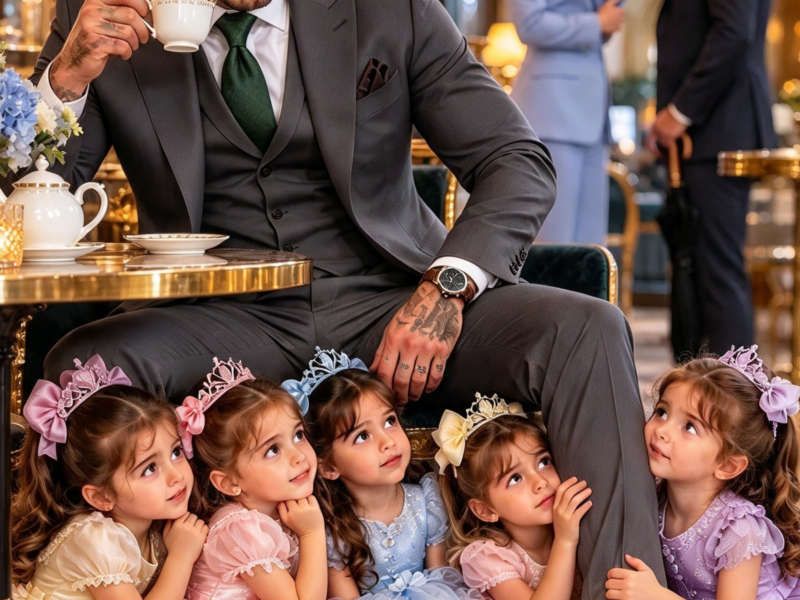
The first girl appeared beneath my table so quietly I almost thought my eyes were playing tricks on me. Then another frightened face appeared beside hers, followed by a third, and finally a fourth.
My hand froze halfway to my teacup. All four wore matching navy coats and cream-colored ribbons, yet their expressions couldn’t have been more different. One looked terrified. Another looked furious, the third seemed seconds from crying, and the smallest had wrapped both hands around my pant leg as if letting go might mean something terrible.
“Please,” she whispered again.
Most people in Chicago knew exactly who I was. Alexander Hayes wasn’t a name strangers approached casually, because behind closed doors, I controlled businesses, territory, information, and men who understood that betraying me carried consequences.
Fear was familiar to me. But fear in a child’s eyes was different.
“Are you girls lost?” I asked quietly.
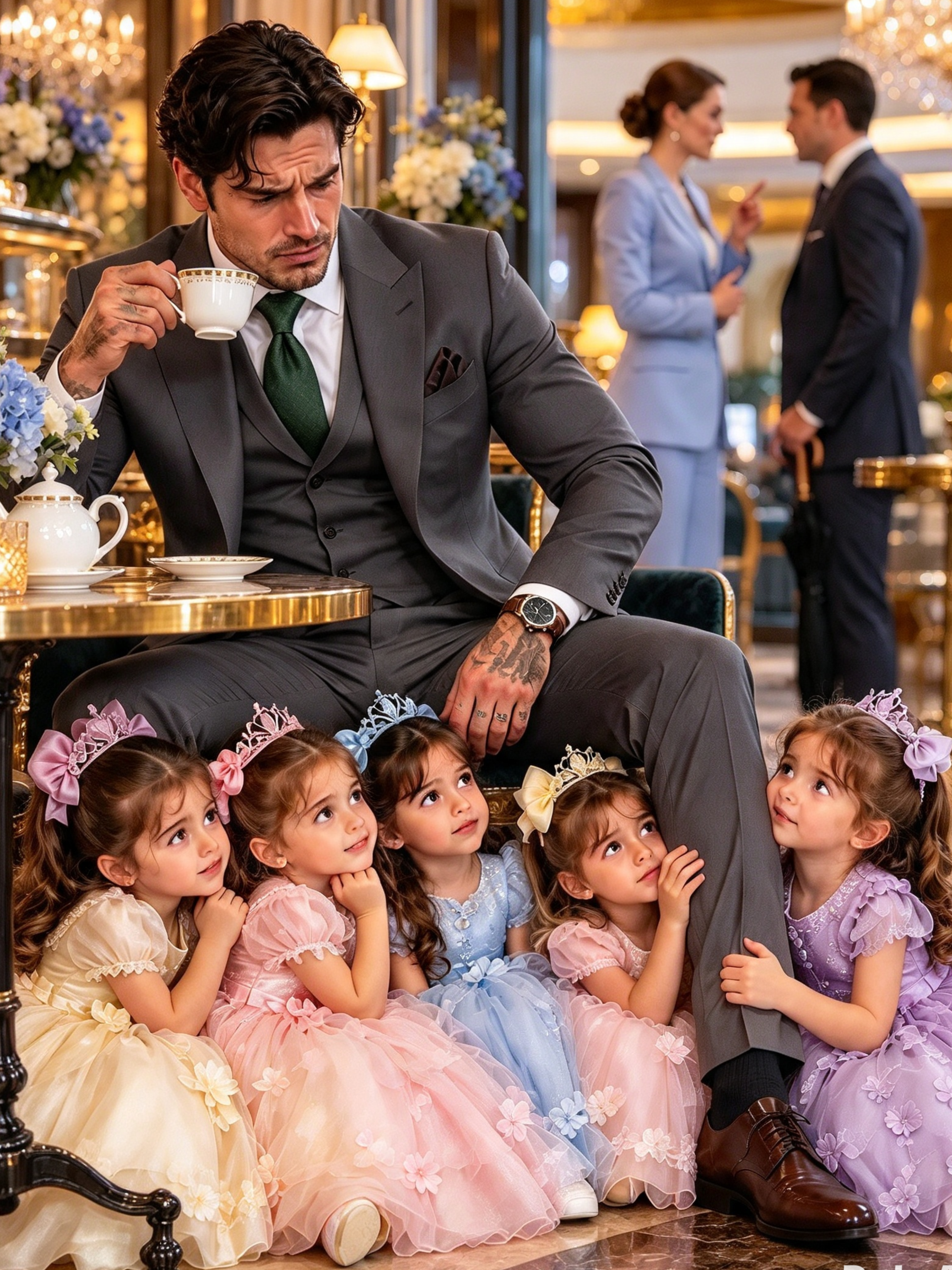
Four heads shook at once. The smallest glanced toward the café entrance, then tightened her grip on me. “Our mom is over there.”
I followed her gaze and saw a woman in a charcoal-gray suit standing near the doorway with two men. Her dark auburn hair was pinned neatly behind her head, and although she carried herself with elegance and authority, I recognized what her eyes were doing. She was searching. For them.
“You should go back to your mother,” I said.
“No.”
All four answered together, so quickly that something cold settled in my stomach. Before I could ask another question, the smallest girl looked straight into my eyes.
“Pretend you’re our father.”
For several seconds, the noise of the café seemed to vanish. I’d spent years watching adults lie, manipulate, threaten, and betray one another for money or power. But these children weren’t trying to gain anything from me. They were trying to escape something.
“Why?” I asked.
One girl swallowed hard. “Because Mr. Mercer says we need one.”
“But we don’t want him,” another added.
My eyes shifted toward the men standing beside their mother. “Which one is Mr. Mercer?”
The angriest girl pointed. “Him.”
I studied him carefully — broad, polished, too sure of himself. “What did he do?”
“He told Mommy she was difficult,” one girl whispered.
Another lowered her voice. “He said nobody trusts women who can’t keep a husband.”
“He says our family looks broken,” the third added.
Then the smallest stared up at me, her fingers still twisted into my pants. “And he said he could fix us.”
Something inside me shifted. Hardened.
“Did he hurt any of you?”
They shook their heads in unison.
“Did he threaten you?”
This time, nobody answered immediately. Then one girl spoke, barely audible.
“He told Mommy she would marry him eventually. He said we should start getting used to calling him Dad.”
My knuckles whitened around the edge of the table. I knew this kind of man. I knew the language — the ownership, the entitlement, the quiet erasure of someone else’s will.
At home, my son Ethan was the only person who knew there was still a man beneath the reputation. After losing his mother years ago, he became the reason I remembered that some things mattered more than territory, money, or power. And suddenly, looking into those four frightened faces, I saw the same fear I’d once seen in Ethan’s eyes.
Children didn’t understand empires or reputations. They understood who made them feel safe.
And somehow, these four had chosen me.
I set my teacup down slowly. The clink seemed loud in the hush.
“Okay.”
Four pairs of eyes widened.
“Okay what?” the smallest whispered.
I looked across the room — at Mercer, preening and confident — then down at the girls who had placed their trust in a stranger.
“Okay,” I said, my voice low and steady. “I’ll be your father.”
Her face lit up — but before she could speak, footsteps approached. Slow. Deliberate. Heavy.
I lifted my head. Mr. Mercer was coming straight toward me.