The Wall
Mrs
Mrs. Ellison appeared in the doorway as if she had been waiting just out of sight. She wore a black dress that fit like a second skin. Her blonde hair was perfect. Her face was not.
“Rosa—stop.”
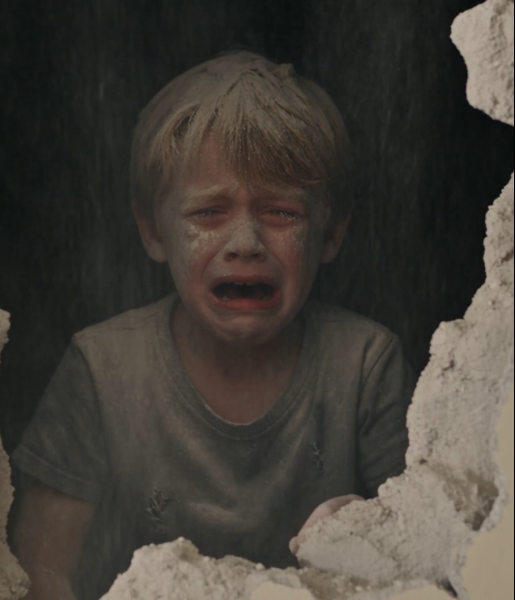
Rosa did not stop. The hammer came down a third time. Larger pieces of wall fell away. Through the opening, a child’s face emerged: white with dust, eyes squeezed shut, mouth open in a continuous, thin scream. The boy’s hair was the color of old ash. His gray T-shirt was torn. One small hand reached through the broken plaster, fingers trembling.
Mrs. Ellison grabbed Rosa’s arm. “You don’t understand—”
“I understand enough,” Rosa said, and her voice cracked on the last word. She yanked free and swung once more. The hole became large enough for a body.
The boy tried to climb out. He was crying so hard he could barely breathe. Dust coated his eyelashes and the corners of his mouth. Behind him the space inside the wall was narrow, dark, and lined with what looked like old insulation and wooden studs. There was no light. There was almost no air.
Mrs. Ellison’s polished composure shattered. She seized Rosa by both shoulders and tried to drag her backward. The sledgehammer swung wildly between them. Rosa’s face was wet with tears and dust. She kept repeating something under her breath that might have been a prayer or a curse.
Then the double doors at the far end of the corridor opened.
Mr. Ellison stepped through.
He was tall, broad-shouldered, dressed in a black tuxedo that looked as if it had been tailored that morning. His dark hair was neatly combed. His expression was calm in the way a closed door is calm. He walked the length of the marble hall without hurrying, his reflection gliding beneath him on the polished floor. Crystal chandeliers threw soft light across his shoulders. Outside the open doors, white columns and green lawn waited in perfect afternoon stillness.









