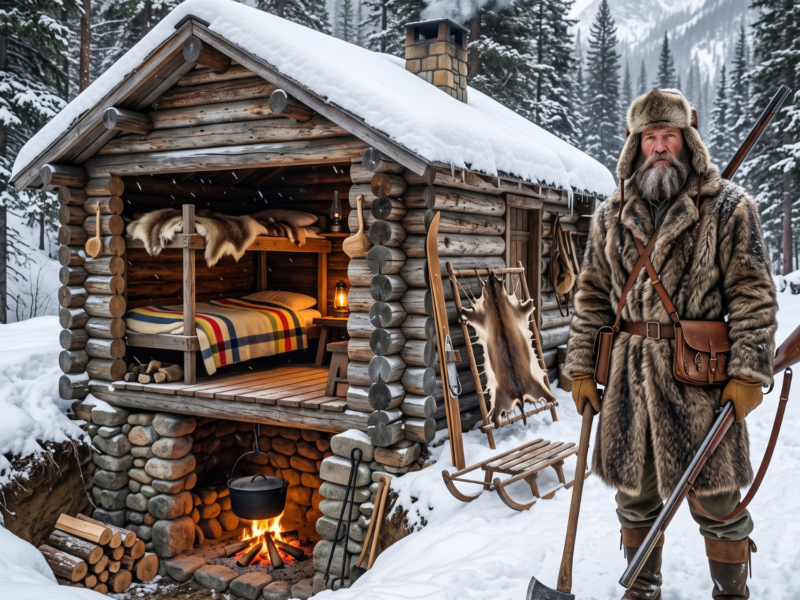
He Built the Cabin Everyone Hated — It Survived the Harshest Winter on Record
The Sky Changes
October 23, 1879
They called it Indian Summer. The October air was rich and golden, warm enough that men worked their claims in their undershirts. The elk were fat, the hunting was easy, and a sense of complacency draped over the valley like a warm quilt.
But at dawn on the 23rd, Henrik stepped out of his tunnel entrance and looked north.
The air was still warm, but a high, thin veil of clouds was creeping over the horizon, bleeding the blue out of the sky. The hairs on Henrik’s forearms stood up. He had seen that exact sky over the frozen fjords and silent pine forests of his youth. It was not a storm front. It was a killer.
He spent the next ten hours working with a frantic, focused energy. He moved his goat and three chickens into the hillside barn, fortifying the door. He hauled endless buckets of creek water, filling every vessel he owned. He moved a week’s worth of firewood directly into the living space, stacking it against the warm stone of his stove.
Patterson rode by at noon, his coat unbuttoned in the pleasant heat. “What’s got you so stirred up, Henrik?”
Henrik pointed a calloused finger at the pale sky. “Storm coming.”
Patterson squinted upward, then laughed. “Might get a little rain, that’s all. It’s beautiful out.”
“Big storm,” Henrik said, his voice hard, lacking its usual quiet deference. “Very cold soon.”
“Henrik, it’s barely fall,” Patterson sighed, amused by the foreigner’s endless paranoia. “We won’t see real cold for another month. Stop worrying over nothing.”
Henrik did not argue. He simply turned and carried another armful of wood into the earth.
By four in the afternoon, the warmth vanished, replaced by a biting chill that seemed to drop straight from the stratosphere. By midnight, the mercury plummeted below freezing.
And by dawn on October 24th, the Montana prairie descended into a frozen hell.









