How One Settler’s “Hidden” Winter Room Became the Only Safe Place in the Blizzard of ’47
THE ICE THAT BROKE THE WORLD
The cabin walls groaned under the weight of a wind that had been battering them without pause for sixty-three hours.
Jacob Werner sat motionless on the edge of the bed, wrapped in every coarse wool blanket they owned. Beneath the heavy layers lay his wife, Anna. She was perfectly still. The agonizing, rattling cough that had plagued her for three days had finally ceased in the early hours of the morning.
Jacob stared at the stone hearth. The fire had burned continuously since the blizzard struck in mid-January of 1847. It had been a hungry, desperate fire, consuming their entire winter wood supply in less than three days. Yet, for all its roaring, the heat had simply vanished. It rose straight up the chimney and was swallowed by the Wyoming night.
The temperature had dropped to what Jacob estimated was fifteen degrees below zero—perhaps colder. The wind made accurate assessment impossible. It drove the cold through the gaps between the cabin logs, slicing through the standard mixture of mud and moss chinking as if it were paper. The single window, covered only with oiled parchment, provided no resistance. The dirt floor seemed to inhale the warmth, radiating the subterranean freeze of the earth upward.
Jacob had built this cabin with his own two hands. He had followed the accepted patterns of frontier construction, using the exact techniques passed down from settler to settler without question. Solid logs, proper notching, heavy chinking. It was what everyone did.
And it was wrong.
He sat beside his dead wife and understood with a sudden, crystalline clarity that the fundamental design of the frontier cabin was a death trap. A surface structure, no matter how meticulously constructed, was entirely at the mercy of temperature extremes. Heat escaped. Cold penetrated. The wind multiplied the danger tenfold.
He reached out from beneath his blanket and gently rested his hand over Anna’s unmoving chest. He did not weep. The grief was there, an ocean of it, but it was instantly frozen by a realization that was reshaping the architecture of his mind.
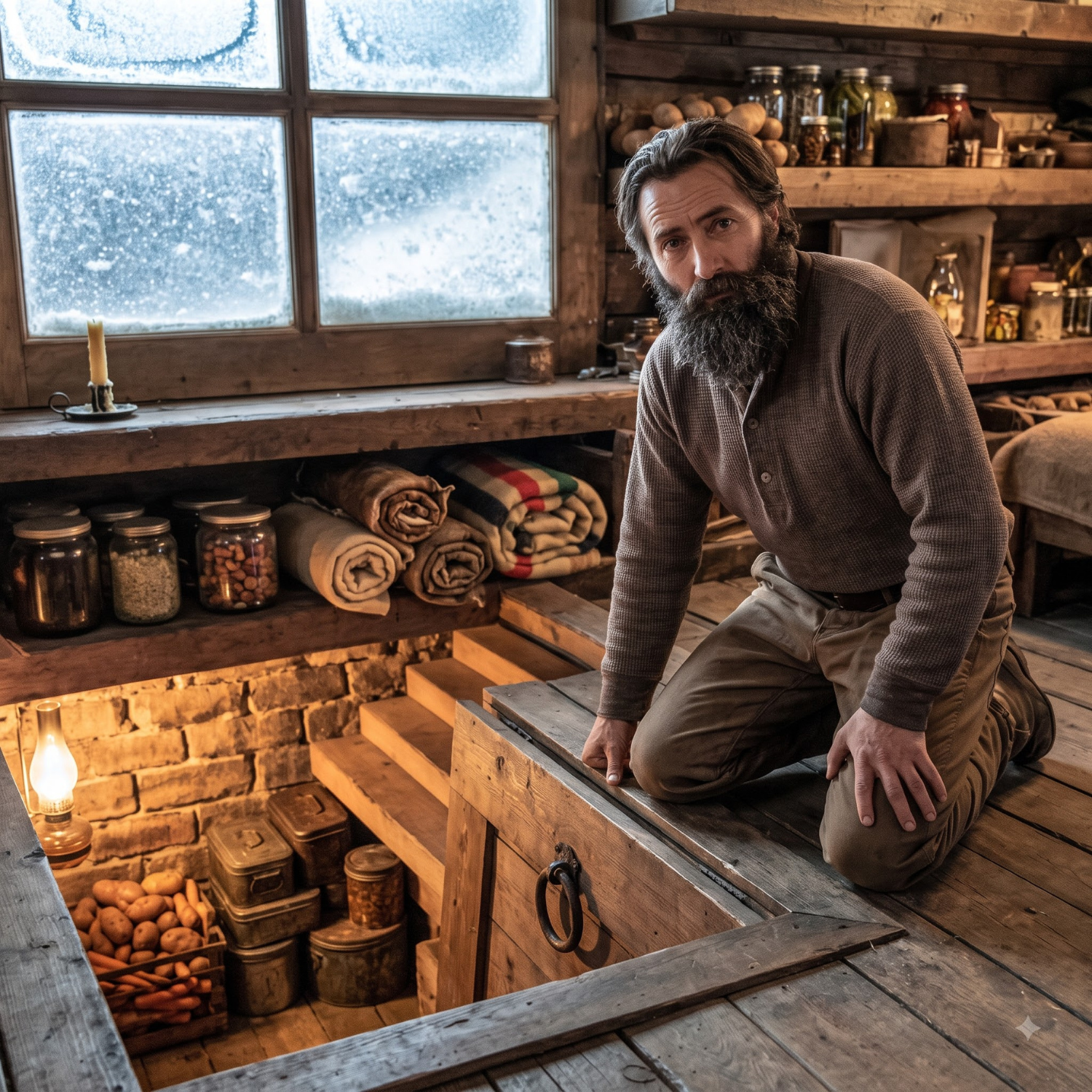
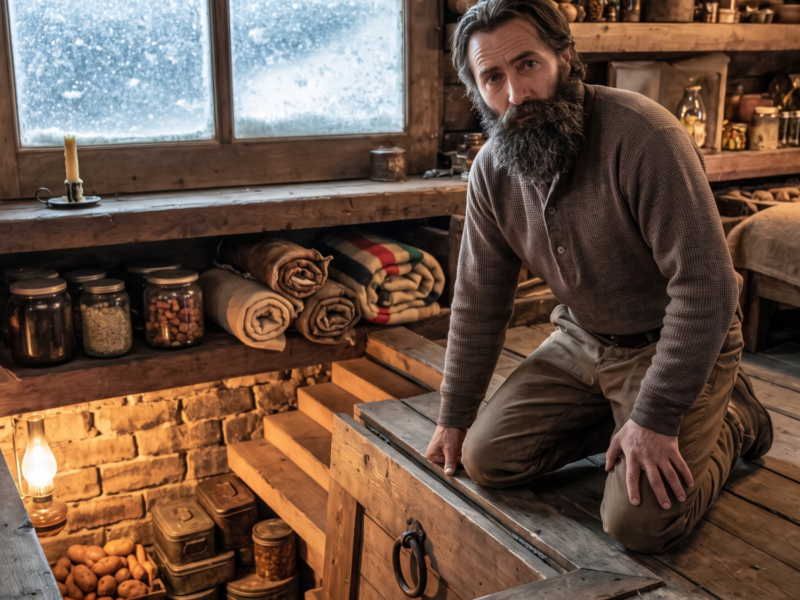
He thought of the root cellar he had dug the previous summer. Even in the deepest, most bitter cold of December, the root cellar never froze. The potatoes and carrots remained perfectly preserved, shielded by the earth itself. He thought of the silver miners he had met up north, men who worked in their shirtsleeves deep underground while surface temperatures turned exposed skin black with frostbite.
The earth, Jacob thought, his gray eyes narrowing in the freezing dark. The earth does the work.
A question formed in his mind—a question that would consume him, break his back, and ultimately rewrite the rules of survival. What if the safest place during a winter storm was not a cabin on the surface, but a properly constructed chamber beneath it?