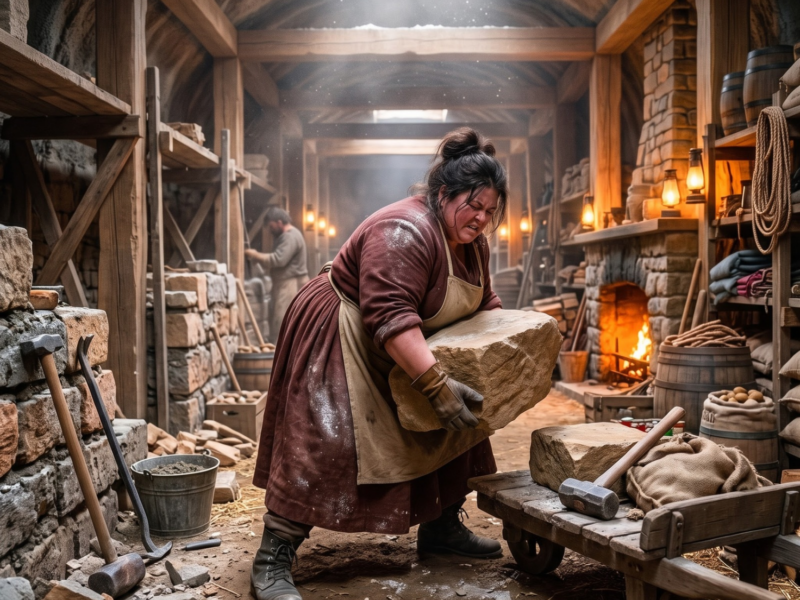
Neighbors Laughed at the Fat Widow’s Stone Hut — Until the Blizzard Couldn’t Break It
The Test of the Blizzard
They moved into the stone house on November 15th.
There was no grand ceremony. They carried blankets, two chairs, a table, Addie’s ragdoll, the tin cup that had held the morning ice, and Silas’s sled rope. The old wooden cabin stood empty fifty yards away, looking pathetic and frail against the looming bulk of the stone shelter.
That first night, Hattie lit a fire using just four small pieces of pine. In the old cabin, those four pieces would have vanished into the drafts before supper.
An hour later, Hattie placed her hand against the stone wall directly behind the firebox. It wasn’t hot. It was warm—the deep, steady warmth of a sun-baked boulder.
By morning, outside temperatures had plunged to nineteen below zero. Silas climbed down from the loft, checked Wendell’s hanging thermometer, and stared in disbelief.
61 degrees.
Addie scampered down barefoot, squealing with delight. “My feet aren’t cold!”
Silas grabbed the small leather ledger and wrote across the top of the page: Nov 15. Outside -19. Inside 61. Four pieces of wood.
Over the next six weeks, the temperature dropped into the negative twenties and thirties. The townspeople watched in stunned silence as only a single, thin wisp of smoke rose from the widow’s chimney while their own cabins consumed cord after cord of frantic firewood just to stay above freezing. Bo Coulter rode past twice a week, staring at the small woodpile with undisguised bewilderment.
Then came late December, and the true monster of the Wyoming plains arrived.
The barometer at the Rock River depot dropped off the scale overnight. The wind died completely, replaced by an eerie, suffocating stillness. The clouds over the western ridge turned the color of bruised iron.
Wendell rode back from town at a hard gallop, his bay mare blowing white foam. He burst into the yard and swung down before the animal had even stopped.
“Hattie!” he called out.
She stepped out of the cabin door, an armload of pine in her grip. “What is it?”
“The storm coming in tonight is a fifty-year blow,” Wendell said grimly, his face pale. “And I just rode past the Coulter place. Bo’s youngest boy, Ellis—he’s twelve. He’s had a chest cough for a week, and their west wall is losing heat faster than they can pump it in. Bo’s burning furniture in the stove. The boy won’t survive what’s coming in that house.”
Hattie looked toward the western road, then at her own snug stone house, and finally down at Silas and Addie watching from the doorway.
She turned to Wendell. “How much time do we have?”
“Two hours. Maybe less.”
Hattie turned to her son. “Silas. Son.”
“Yes, ma’am?”
“Get every blanket we own. Move the table against the north wall. If I’m not back before dark, bar this door and don’t open it for anyone.”
She pulled on Jonas’s heavy coat, wrapped her boots in canvas strips, stuffed her leather satchel with dried beef and a canteen, and mounted Wendell’s spare horse.
“Wendell, you don’t have to come,” she said.
He swung up onto Judgment, pulling his hat down tight against his brow. “Hattie, I’ve been waiting six weeks to find out if I get to forgive myself. Let’s ride.”









