They Built a House Out of the Prairie — Then the Fuel Pile Had to Last Until Spring
The Chill of October
The first hard frost arrived on the last day of October.
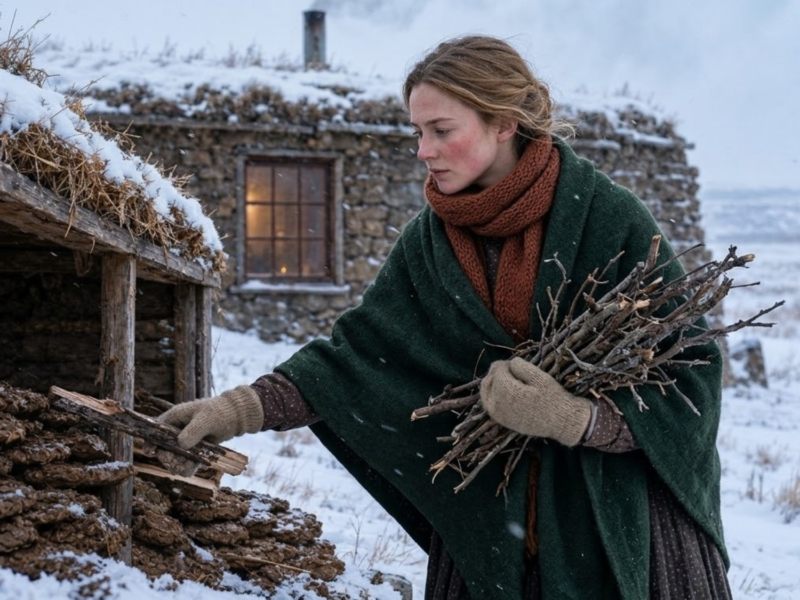
Bridget woke to find a skin of ice over the water bucket left outside. Inside the dugout, the air remained pleasant—cool like a deep root cellar, steady and manageable. Ursula built her first small fire in the iron barrel stove using dry twigs and a handful of bison chips. The smoke rose clean through the pipe, and the stones beneath the stove began to absorb the heat, radiating it slowly through the night.
Yet the wind probed for every weakness. One October night, Ursula held a tallow candle near the floor and watched the flame lean sideways toward the northern wall.
The next morning, she and Xaver shoveled thick earth and old straw against the base of the exterior walls, sealing the gap where the wind slipped beneath the lowest sod bricks. Inside, she smoothed a fresh coat of clay plaster over the rough walls, filling every drafty fissure. Around the window frame, she brushed on a coat of white lime wash to keep the dirt from crumbling.
Before winter closed the trails entirely, Xaver drove the wagon into town with the small earnings from his harness repairs. Ursula gave him a strict, prioritized list: flour first, then coffee and salt, and finally kerosene for the lamp. There was no wood or coal to buy; every ounce of heat had to come from their own claim.
When the wagon returned, the flour was safely stowed under the board half of the roof near the bed.
Before the first heavy snowfall, Xaver performed one final, crucial chore: he ran a stout hemp rope across the frozen yard from the house door straight to the animal shed where Clover and the horses stood. On the open plains, winter storms could reduce visibility to zero in minutes, blinding a person just yards from their own doorstep. With the guide rope, they would never lose their way.









