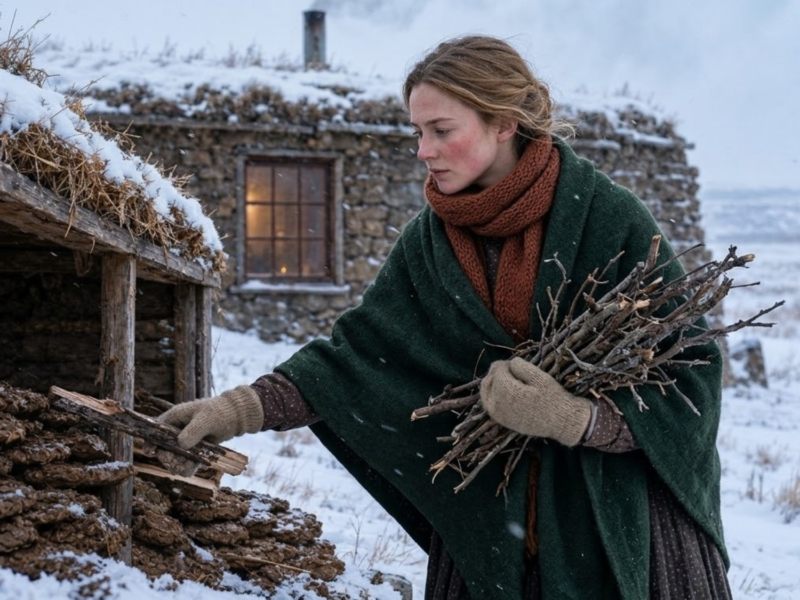
They Built a House Out of the Prairie — Then the Fuel Pile Had to Last Until Spring
The Thaw and the Test
In early March, the wind abruptly shifted to the south.
Temperatures climbed above freezing, and the thick snow blanket on the sod roof began to melt. With the thaw came an old enemy: the roof began to drip.
For a week, meltwater saturated the upper layers of earth, and muddy water seeped through the brush side, staining the white muslin ceiling a dismal brown. Their bed remained completely dry beneath the protective boards Ursula had installed the previous June, but pots and pans had to be placed strategically across the floor to catch the leaks.
As soon as the weather cleared, Ursula scrambled up onto the roof with a spade. She cut fresh, heavy sod from the flat, patched the thin spots, and tamped them down hard. Inside, she replastered the water-damaged walls, took down the stained muslin, washed it sparkling white in the tub, and hung it back up.
In May, exactly one year after their first cut of the plow, Ursula walked out to the east wall to inspect their remaining winter stores.
There, leaning against the mud bricks, was a low, dark mound of fuel—barely ankle-high.
They had made it. By the slimmest of margins, the pile had held out until the prairie turned green once more.
Ursula walked back inside, opened the heavy leather cover of the family Bible, and turned to the blank pages at the back. With a steady hand, she recorded the history of the year: how high the chip pile had stood in October, when the cobs ran out, how many weeks the twisted hay had carried them.
Then, beneath the numbers, she wrote a single sentence of hard-earned wisdom:
Start in June.
And in June, Ursula Yost picked up her wicker basket once again and walked out into the sea of grass.









