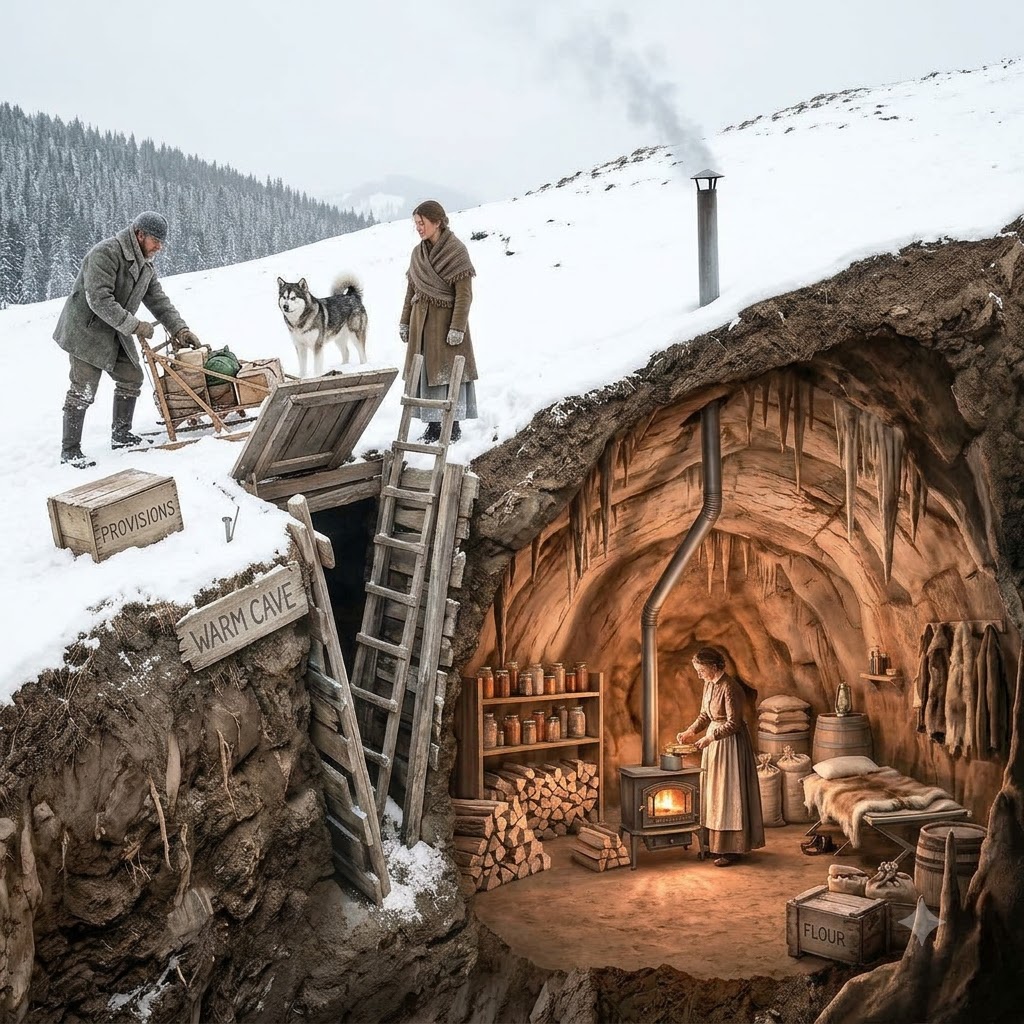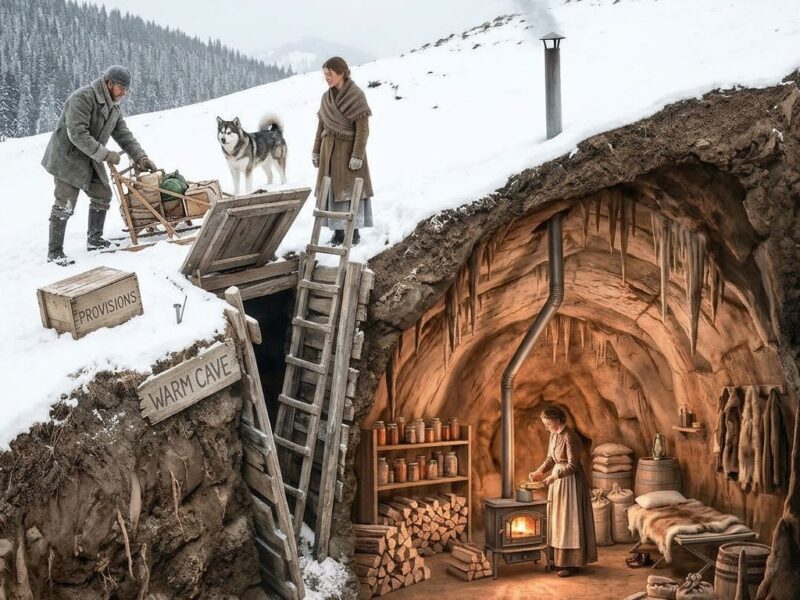
They Said Her $15 Cave Would Collapse—Until the Worst Dakota Winter Proved Her Right
The Girl with Three Dollars
Six months before the great cold descended, Bridget had walked into Ashfall Bend on foot. She carried a frayed canvas bag with three silver dollars sewn securely into the hem of her skirt, and a bitter farewell letter from her late husband’s mother that was not worth the paper it stained.
She had turned sixteen in April. Her hair was the color of forge fire at dusk, her boots were split at the toe, and the small, hard swelling beneath her coarse apron told a story her proud mouth refused to speak. She had come up from Omaha on the mail road, sleeping in roadside ditches when the nights were warm enough and in the shelter of hay ricks when they were not. She had walked one hundred and eighty miles because a train ticket cost seven dollars, and she possessed three.
The mail road carried her past Ashfall Bend on a Tuesday in the second week of June. She saw a plume of smoke rising from a blacksmith’s shop, a whitewashed church with a silent bell, and a general store bearing a hand-painted sign that had lost its second letter. She had no plan beyond the next hour. She turned toward the store simply because a store meant a stove, and a stove in June meant coffee, and she had not tasted coffee since Nebraska City.
She pushed the door open with her shoulder, her hands full. The bell above the door jangled, and the conversation inside instantly died—the heavy, absolute silence that falls when a coffin is carried past.
Six men at the counter turned. Two women at the dry-goods shelf froze. A boy sweeping the floor stopped dead in his tracks. Bridget did not fidget. Her grandmother had taught her long ago that when strangers stared, you looked back without blinking and never apologized for existing.
She walked straight to the counter, set her canvas bag on the floor, and folded her hands on the scarred wood. The words she had rehearsed all the way from Fremont came out plain and even: “I’m here to inquire about a homestead claim.”
The silence deepened. A stout man in a broadcloth coat with wax-tipped mustache detached himself from the group by the stove, his face locked in the arranged pity of a man about to be kind for his own peace of mind.
“Miss,” he began, his voice carrying the haughty weight of the town council, “this is no country for a woman alone. Certainly not for one in your condition. The Christian thing would be for you to go home to your people.”
Bridget met his eyes without moving her hands. “My people showed me the door, sir. The law says any citizen may claim one hundred and sixty acres.”
A tall carpenter with hair like dry straw let out a short, mirthless laugh. “Work them, girl. The wind out here pulls the iron nails right out of the walls. The first winter will take you before the first snow.”
A third voice came from a woman dressed in black so dark it seemed to drink the lamplight. She had gray eyes that judged before they looked. “There is an orphanage in Bismarck. You can hand the child over to decent people and begin again with a clean name.”
Something inside Bridget’s chest—something that had been hardening stone by stone all the way up from Omaha—finally settled. It was older than rage. It was the memory of her grandmother Mave sitting on the porch of a slab cabin in the Kentucky hills, snapping green beans into a tin bowl and saying in that steady mountain voice: “The earth doesn’t fight you, child. It holds you. Wood breaks, stone cracks, but dirt just stays.”
Bridget had been eight years old then. She had not understood it back then. She understood it now.
“Thank you for your concern,” she told them, and her voice did not shake. “But I’ll be staying.”