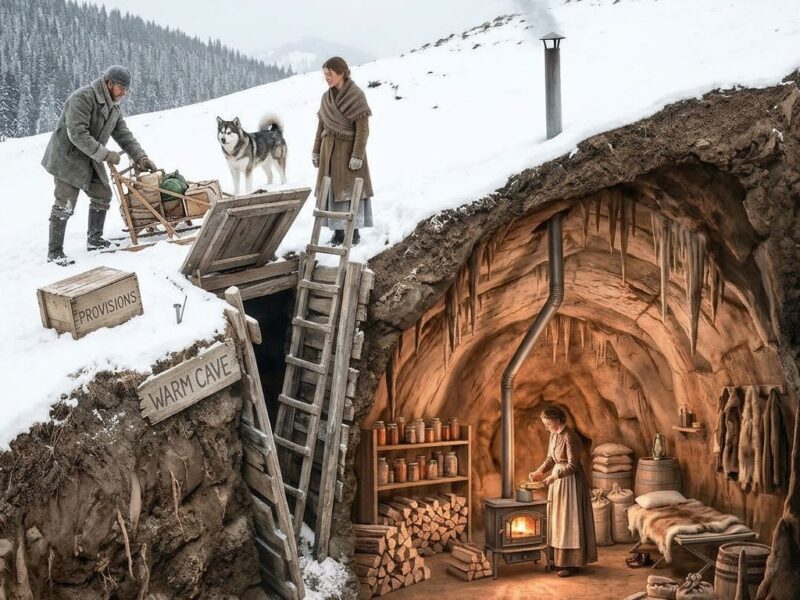
They Said Her $15 Cave Would Collapse—Until the Worst Dakota Winter Proved Her Right
The Great Freeze
When the great freeze of January 1881 struck, it brought the mercury down to forty below zero. The town below descended into a desperate struggle for survival.
Silas Thorne burned through his winter cordwood at an alarming rate, forced to abandon his freezing front rooms and cram his family into a single corner near the kitchen stove. Jedadiah Weatherbe’s expensive St. Louis brick chimney created a drafty vacuum that chilled his wife Martha into a dangerous fever. At the parsonage, the reverse-drawing chimney filled the parlor with choking smoke, forcing the reverend’s family to extinguish their fire entirely and huddle under quilts on a horsehair sofa.
On Mercer Hill, Bridget fed her barrel stove two small handfuls of bison chips twice a day. The subterranean stones glowed cherry red, holding the indoor temperature at a steady, comfortable fifty-four to sixty degrees.
And it was in the middle of this howling, apocalyptic blizzard, with the temperature hovering at thirty-eight below zero outside, that the child chose to arrive.
There was no doctor, no neighbor, no help. Remembering the birthing wisdom of her grandmother Mave, Bridget boiled snow water, laid out clean muslin and flannel, and knelt on a folded blanket by the hearthstone. Through hours of grueling labor, she breathed evenly, speaking aloud to the empty room so her child would know a voice to come toward.
At seventeen minutes past four in the morning on the third day of the storm, little Samuel Howerin entered the world with a robust, healthy cry. Bridget laughed through her tears, cutting the umbilical cord with a sterilized bone-handled knife and wrapping her newborn son against her bare chest beneath the walnut-dyed shawl.









