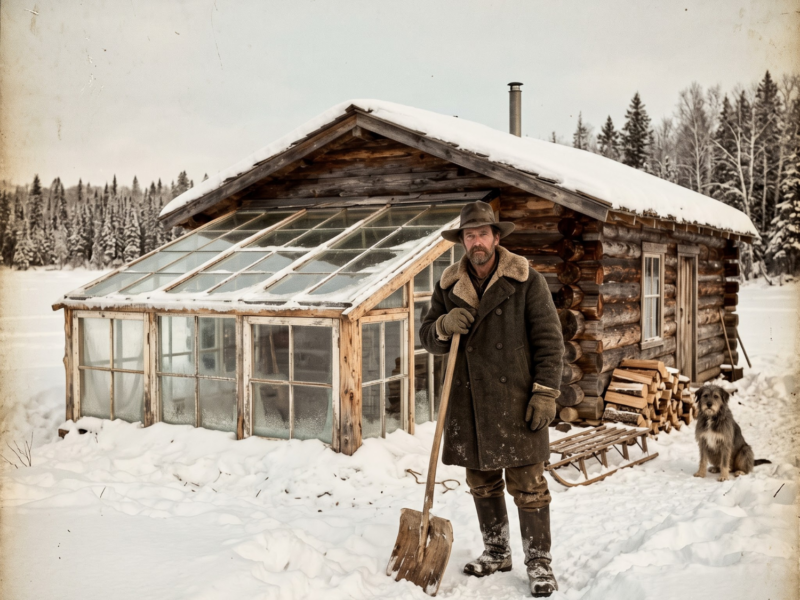
Everyone Laughed At His “Glass Shed” — Until It Heated His Cabin to 80°F for Free
THE BIG DIE-UP
January 9th, 1887, began with a deceptive calm that lured both livestock and humans into a fatal complacency. By afternoon, the barometric pressure dropped so precipitously that experienced plainsmen reported physical discomfort hours before the first snowflakes appeared.
When the blizzard finally struck at sunset, it brought sixteen inches of snow in sixteen hours, driven by winds sustained above forty miles per hour. Daytime temperatures plunged to twenty below zero, with nighttime readings dropping to forty-six degrees below zero across Dakota and Montana.
This was the opening salvo of the “Big Die-Up”—the winter that broke the financial backs of ranching operations from Wyoming to the Dakotas. Homesteaders who had survived previous harsh seasons found themselves facing conditions that exceeded every precedent in territorial memory.
At the Jensen homestead, Lars recorded outside readings of twenty-five below zero with wind gusts driving snow through the smallest gaps in conventional construction. His neighbors fought to maintain interior temperatures above freezing by feeding their stoves continuously with precious cordwood, yet still watched their breath fog visibly in rooms where children huddled under every available blanket.
Tom Walker’s cabin struggled to reach forty degrees inside despite burning wood faster than he had consumed it during entire previous winters.
The glass shed’s performance under these extreme conditions validated every aspect of Lars’s design. On the storm’s second day, when heavy clouds blocked direct sunlight and outside temperatures held steady at thirty below, the enclosed space maintained fifty degrees through thermal mass alone. The water barrels released stored energy slowly enough to prevent the addition from freezing solid.
When the sun finally broke through on the afternoon of January 12th, the glass shed’s temperature climbed with startling rapidity. Within two hours of full sunlight striking the south-facing glass, interior readings reached seventy-five degrees, then continued rising to eighty-5 degrees at head height.
The signature moment came when Tom Walker appeared at the outer door with his youngest son, the boy’s fingers white and unresponsive from frostbite. Walker’s stove had failed during the night, and his cabin had dropped to barely above freezing by morning.
Stepping into the glass shed, both father and son experienced the disorienting sensation of moving from life-threatening cold into shirt-sleeve warmth within the space of two footsteps. The boy’s hands began tingling back to sensation within minutes of exposure to the eighty-degree air. When Lars opened the inner door to the main cabin, a visible plume of warm air rolled across the threshold, and the thermometer inside climbed from sixty-four to seventy-two degrees within minutes without adding wood to the fire.
The demonstration provided undeniable proof that passive solar heating could not only supplement conventional fuel sources, but actually exceed their performance under extreme conditions.









