Evicted in October, She Moved Into a $60 Hillside Root Cellar — Then the Ice Storm Cut Power 9 Days
Sixty Dollars of Real Estate
Walt Simmons owned the hill behind Maple Run—140 acres of pasture and cedar that his family had worked since before the county paved the road. He was seventy-eight and moved like a gate on a rusted hinge, but his eyes still worked fine. When Pam came up his lane, he was already standing on the porch like he’d been expecting somebody.
She didn’t ask for charity. She asked about the root cellar.
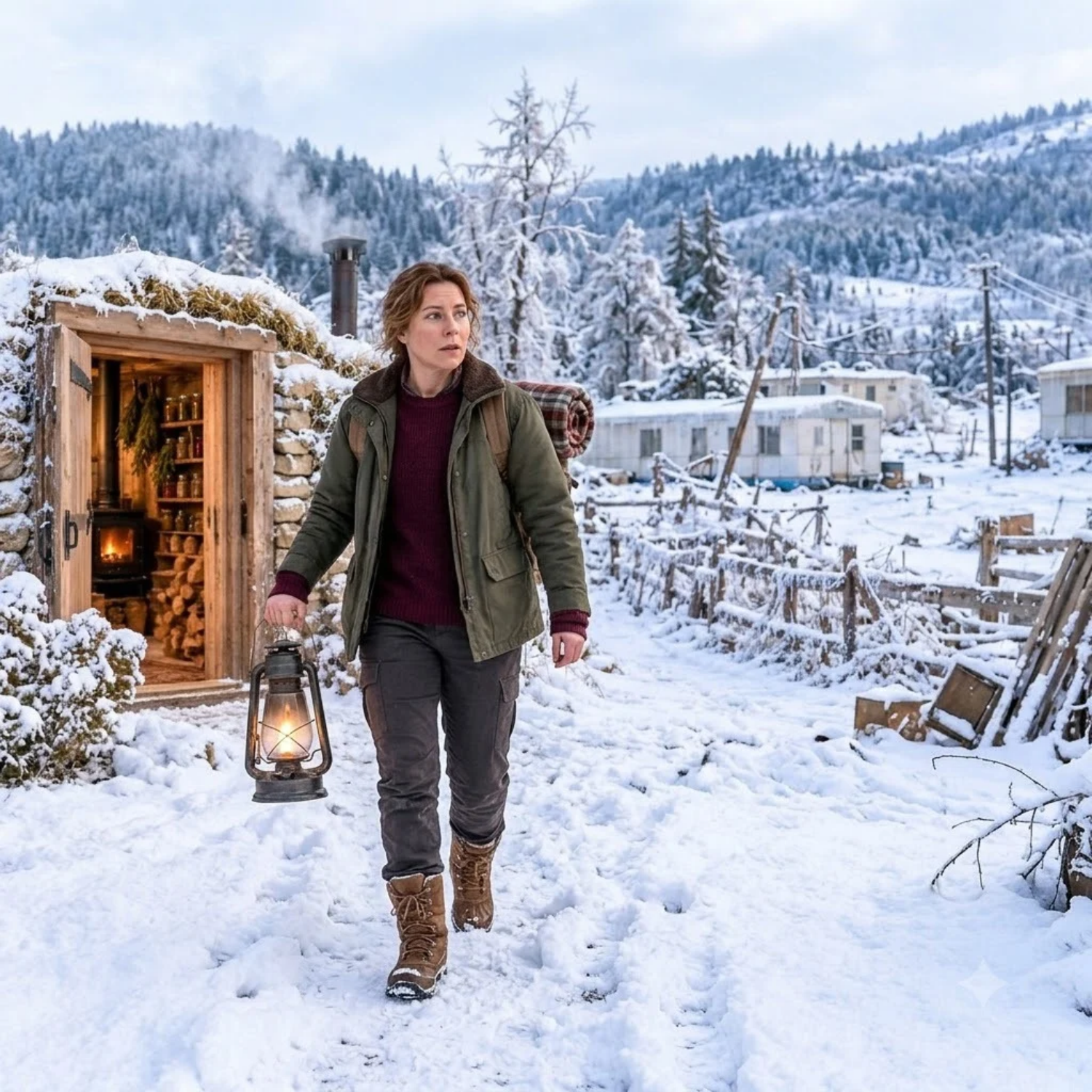
It sat dug into the south face of the hill, a hundred yards above the park, where Walt’s father had cut it into the slope back when the family still kept a hundred bushels of potatoes through the winter. It was twelve feet deep into the earth, stone-lined on three sides, with a ceiling of oak beams under four feet of packed dirt and sod, and a door of rough oak planks gone silver with age. Nobody had opened it in twenty years. Blackberry canes grew across the entrance like the hill was keeping a secret.
“It ain’t fit for a dog,” Walt said.
“I grew up in my granddad’s cellar half my childhood,” Pam said. “Shelling beans, waiting out tornadoes. I know what a cellar is and what it isn’t.”
Walt looked at her a long time—the way old farmers look at weather. Then he said, “What have you got?”
She gave him the coffee can. Sixty dollars. She kept the single for gas.
He counted it on the porch rail, wrote Use of cellar Hutchkins paid in full on the back of a feed store receipt, signed it, and handed it over like a deed.
“You’ll want straw,” he said.
“I got straw.”
Word got down the hill before she did. By Thursday it was at the Gas & Go. By Sunday it had been to church and back, picking up weight along the way: Pam Hutchkins paid sixty dollars to live in a hole. Pam Hutchkins is moving into the ground like a groundhog.
At the laundromat, two women she’d known for fifteen years stopped talking when she walked in, and the silence was louder than anything they could have said. She fed quarters into the dryer and watched her clothes tumble, feeling their eyes on the back of her neck like two cold thumbs.
Doyle Crance was the worst of it. He lived three lots down at Maple Run in a double-wide with a satellite dish, a wife named Rhonda, and a mother named Ida who sat by the window most days with her oxygen line. Doyle had opinions the way some men have dogs—a whole yard full, all of them loud.
He caught Pam loading the truck on her last day at the park, straw bales stacked past the cab, the maul riding on top like a flag.
“Hey, Pam,” he leaned on his fence, grinning around a toothpick. “You want us to say a few words over you, seeing as you’re getting buried anyway?”
A couple of men by his porch laughed. One of them said something low, and they laughed harder.
“Save it for spring, Doyle,” she said, pulling the tailgate. “You might need the practice.”
“Frozen solid by Thanksgiving,” Doyle called after her truck. “They’ll dig you out with a backhoe.”
She watched him shrink in the mirror and kept both hands tight on the wheel so they wouldn’t shake. It wasn’t the joke that stung—jokes she could carry. It was the certainty in it. The whole town so sure, so comfortable, like her failing was already a thing that had happened, and they were just waiting for the paperwork.
Somebody’s kid got dared to run up the hill that first week, slap the cellar door, and run away screaming. She stood inside in the dark, listening to the small feet thud away downhill, and she pressed her cracked knuckles against her mouth and breathed until the burning behind her eyes went back down where it came from.