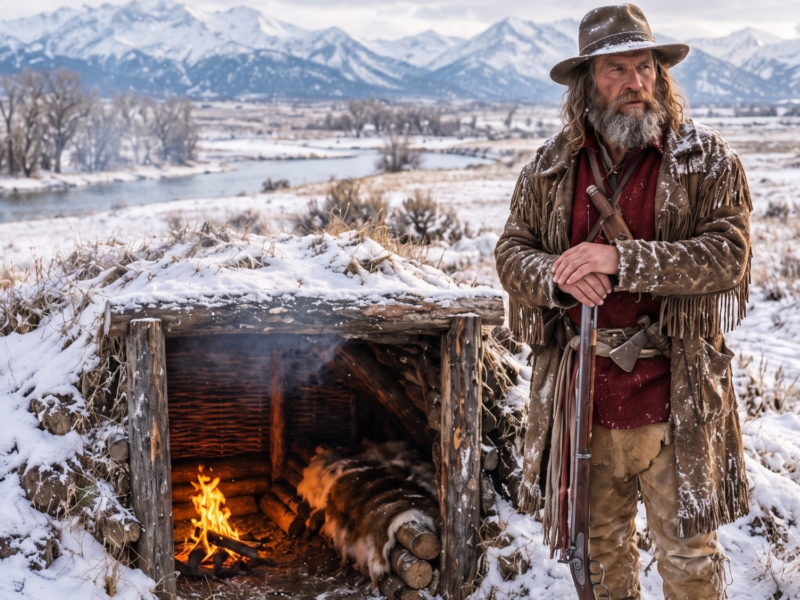
How Mountain Men Built Dugouts in 3 Days That Stayed 100°F Warmer Than Outside
The Anatomy of a Dugout
The first thing a mountain man did when he needed shelter was not dig. It was look.
Sight selection was without question the single most important decision of the entire build—more important than any tool he carried. And it is exactly the part that modern reconstruction attempts get wrong almost every single time. A trapper might spend hours, sometimes an entire day, just walking a stretch of hillside before he ever touched a shovel. He was reading the land the way another man might read a letter: slowly and for meaning.
He looked for a south-facing slope, somewhere between 15 and 30 degrees of pitch. South-facing mattered because even in the dead of winter, the low sun would warm the front of the dugout for a few hours each day. The angle mattered, too, because too steep and the walls would collapse in on themselves, while too shallow and water would pool right at the door instead of draining safely away.
He checked the wind next, not by guessing, but by reading the lean of the trees and the shape of old snowdrifts. A dugout mouth pointed into the winter wind would fill with snow after a single storm.
Then he looked at the soil itself, because not all dirt behaves the same way underground. Clay and heavy soil held its shape while he dug and shed water naturally afterward. Sandy soil, on the other hand, simply collapsed. Rocky ground was miserable on hand tools, but it built the strongest walls of all.
He looked for the water table, too—for damp patches in dry weather, for springs, or unusually green grass in one particular spot. Building above that water line was not a preference. It was the difference between a shelter and a flooded hole in the ground. Getting it wrong here meant three days of work wasted before winter had even properly begun.
He also watched the animals, because animals had already solved this problem long before he arrived. If elk or deer bedded down again and again on one particular slope, that told him something a shovel never could. It told him the wind was broken there and the sun still reached the ground. Tracks clustered on a south-facing bench below a ridge meant shelter from the worst of the weather and warmth in the afternoon. In a strange way, the animals had already done his survey for him.
Then, only then, did he look at the trees, and even that was not about live timber. He needed standing dead wood close enough to drag, because cutting green wood and waiting for it to season was a luxury he simply did not have. Deadwood still standing had dried in place, not rotted on the ground, which meant it was light, strong, and ready.
All of this happened before a single shovelful of dirt was ever turned. And this is exactly where most modern attempts fail: by picking a convenient spot instead of the right one and then trying to engineer their way around a problem the mountain man would have simply walked past.









