Neighbors Laughed When He Built A Secret Dugout Beneath His Barn – Until He Kept Warm All Winter
THE GHOST OF ALBERT COOPER
Thomas was twenty-nine years old. Five years earlier, he’d stepped off the immigrant train in Kansas with his wife, Ingrid, and their infant son, Niels, with little more than the clothes on their backs and a profound, bone-deep weariness. For sixty months they’d worked as hired hands on other men’s spreads, living in a single, drafty room of someone else’s house, saving every copper coin they could manage.
In November 1882, they’d finally scraped together enough for a down payment on this homestead: 160 acres, a three-room house, thirty broken acres, and a barn that looked sturdy enough from the outside. The price had been astonishingly low.
The seller, Mrs. Adelaide Cooper, was seventy-two and widowed three years prior when her husband, Albert, died of a sudden lung fever. She told Thomas she hated Kansas—hated the winters, hated the isolation, hated the ghosts of the place—and wanted nothing more than to pack her trunks and join her daughter in Ohio.
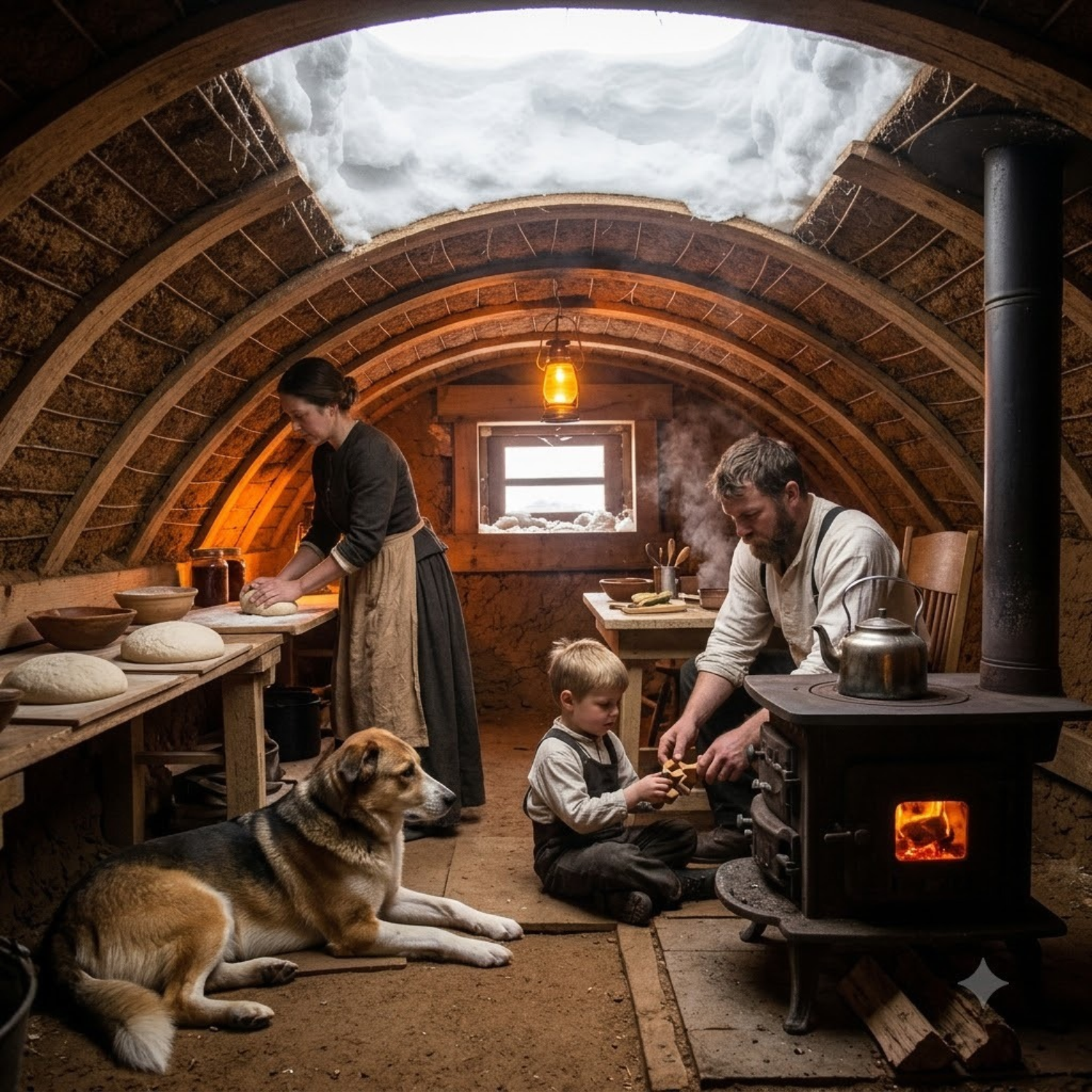
She had never mentioned a room beneath the barn. Thomas was certain she’d never known it was there, which meant Albert Cooper had built it in total secrecy, keeping it hidden even from the woman who shared his bed.
That evening, sitting over a bowl of thin broth in the house, Thomas told Ingrid what he’d found.
She stared at him across the oilcloth table. “A room? Under the barn?”
“A room,” Thomas repeated, wiping his mouth with the back of his thumb. “Sod-lined. Dry as a bone. With a stove.”
“Why would a man build a secret room under his own barn and tell his wife nothing?”
“That,” Thomas said, “is what I mean to find out.”
Over the next two days, Thomas asked around the settlement of Red Willow, keeping his questions casual, framing them as idle curiosity about the farm’s history. What he learned painted a picture of a difficult, solitary man.
Albert Cooper had homesteaded the land in 1872 and built the barn the following year entirely by his own hand, refusing help, refusing neighbors near his property line. He’d been sour, argumentative, and deeply suspicious. During the legendary winter of 1873–74—a season that had broken the spirits of half the county—Cooper had repeatedly claimed to anyone who would listen that his barn was warm enough to work in comfortably, even when the thermometer outside bottomed out at twenty below zero.
The neighbors had laughed him off as a lunatic spinning tall tales. Yet more than one man remembered seeing a thin, steady thread of blue smoke drifting from the barn’s north vent during the worst of those blizzards, long after any sensible farmer had stopped lighting fires outside the house.
Cooper had built a sanctuary, used it, and taken the secret to his grave three years ago.
Now, Thomas owned it.
And more importantly, Thomas desperately needed it.
The homestead purchase and the subsequent bank loan had bled their finances dry. There was no money left for the four to six cords of hardwood required to keep the farmhouse warm through a Kansas winter. Cutting that much timber by hand would eat weeks of precious daylight that needed to go toward spring plowing and wheat planting.
Yet an underground chamber, heavily insulated by six feet of earth, would require a fraction of that fuel. A fraction.
“We fix it,” Thomas decided on the third evening. “We make it secure, and we keep it between us until we know if it holds.”
Ingrid crossed her arms, studying her husband’s stubborn jaw. “And if the roof caves in while you’re down there?”
“Then I’ll have a very small, very deep grave. But the beams are cottonwood, Ingrid. They’re sound. The air is dry. I’m going down.”