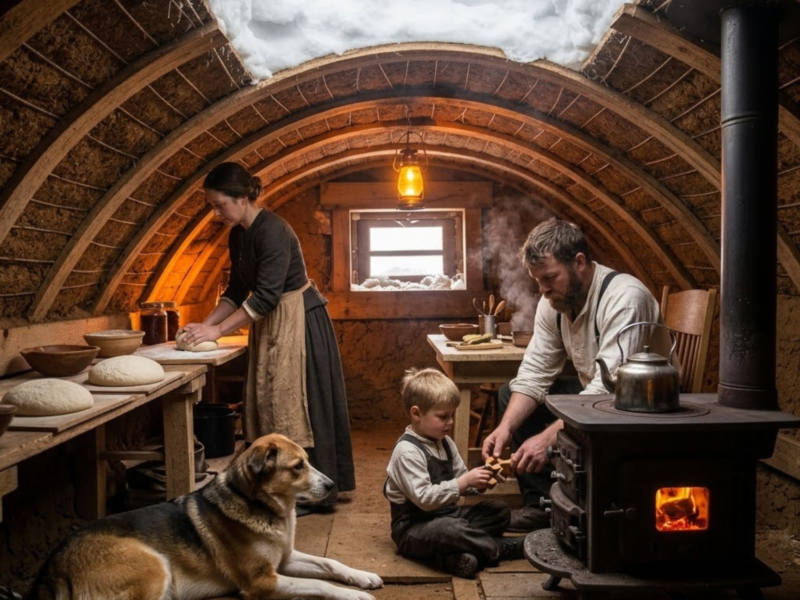
Neighbors Laughed When He Built A Secret Dugout Beneath His Barn – Until He Kept Warm All Winter
THE SPREAD OF THE KNOWLEDGE
By mid-January 1884, the news had swept across Red Willow like wildfire.
Some old-timers remained deeply skeptical, warning that digging beneath farm structures was structurally unsafe and courting a cave-in. But the majority of the settlement—traumatized by the brutal cold snaps—were desperate for solutions.
Thomas showed the dugout to anyone who asked. He gave tours, demonstrated the ventilation mechanics, and freely taught the art of stacking root-bound Kansas sod bricks.
When spring finally thawed the prairie soil in April, five different homesteaders were laying out the foundation lines for their own subterranean winter retreats.
Thomas rolled up his sleeves and helped every single one of them. The designs naturally evolved as the community experimented:
-
Martin Schultz tried digging beneath his barn, but hit groundwater at three feet and had to abandon the excavation.
-
Peter Johnson built a standalone subterranean dugout near his house, but botched the ventilation pipe, nearly knocking his family out with carbon monoxide before Thomas caught the error and helped him install a proper intake stack.
-
Others created detached, half-underground sod houses—improved “soddies” buried deep into south-facing slopes to maximize solar gain and thermal mass.
The economic transformation across the county was profound.
A family that could heat a compact dugout instead of a drafty, wood-framed house slashed their winter fuel consumption by up to seventy percent. That represented an annual savings of twenty to thirty hard-earned dollars—the exact margin that allowed a struggling family to buy seed wheat for an extra ten acres, purchase a healthy dairy cow, or invest in modern farming equipment.
The difference between merely surviving the Kansas winter and actually building a future often boiled down to those saved dollars.
Thomas Henrikson became an informal local hero, though the designation always made him uncomfortable. He never charged a single copper coin for his advice or labor, figuring that Albert Cooper’s decade of hoarding was long enough, and that true survival knowledge belonged to everyone who shared the prairie.









