Neighbors Laughed When She Installed a Chimney Beneath His Cabin — Until Made It Warmer All Winter
Neighbors Laughed When She Installed a Chimney Ben…
Neighbors Laughed When She Installed a Chimney Beneath His Cabin — Until Made It Warmer All Winter
.
.
The stone chimney rose fourteen feet above Ingred Halverson’s cabin roof in the Montana territory, looking much like every other settler’s stack along Stillwater Creek. But in November of 1877, something else rose that made her neighbors stop their wagons and stare in broad daylight.
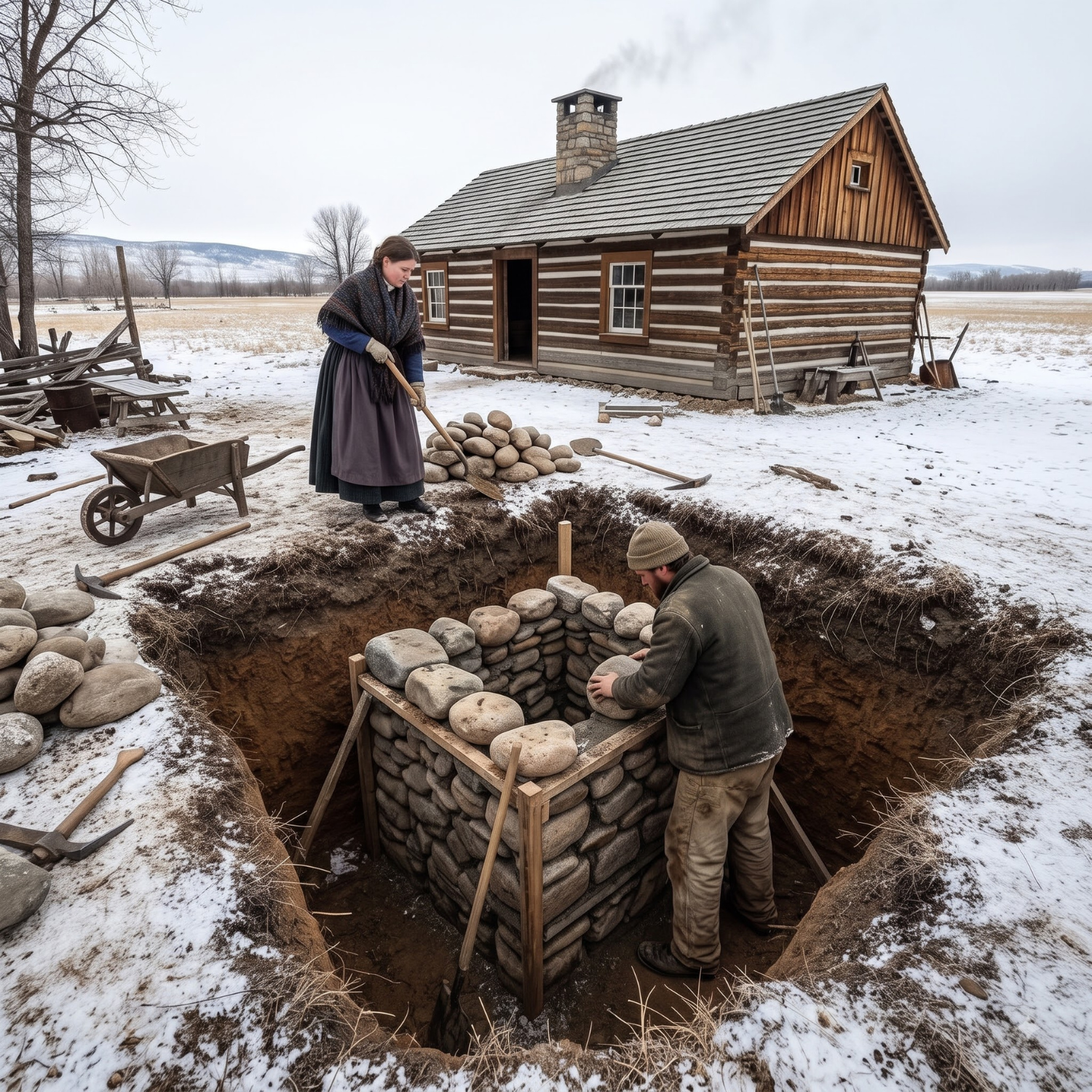
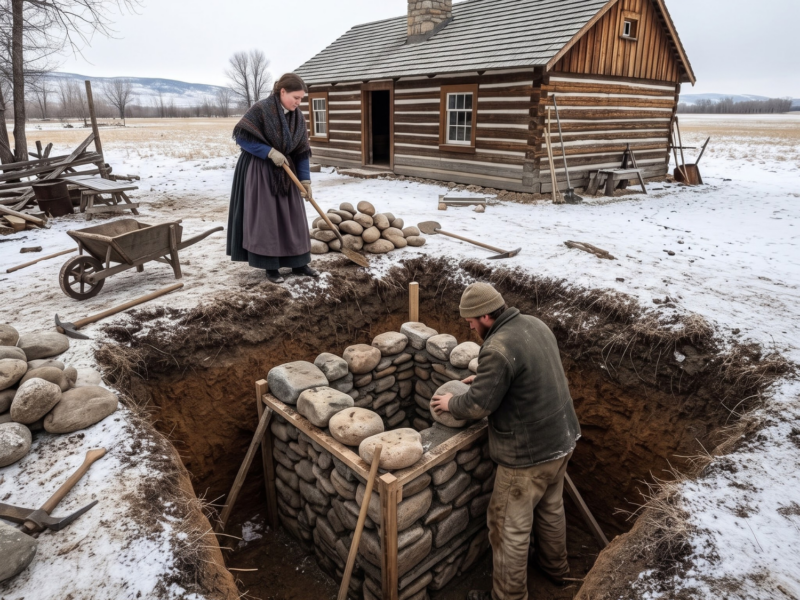
It was a second foundation of river rock, dug six feet into the frozen earth directly beneath where her late husband’s cabin floor had been.
While smoke climbed to the gray sky above, she was building something underground that would make the old-timers shake their heads and the young bucks laugh outright. They had buried Lars Halverson in August, just three months after a heavy cottonwood log crushed his chest during a frantic community barn raising. Ingred was forty-one years old, childless, and according to the unspoken rules of the frontier, supposed to either remarry quickly, sell out for a fraction of its value, or head back east to civilization.
Instead, she hired two Crow laborers to help her dig.
By the first week of December, when temperatures plummeted to eight below zero, she had excavated a subterranean chamber twelve feet long, eight feet wide, and seven feet deep directly beneath the cabin floorboards. The neighbors watched her haul out wheelbarrow after wheelbarrow of heavy, dark dirt, then begin lining the excavated pit with round river stones mortared together with a sticky clay she had mixed herself in an old livestock trough.
“That Swedish woman’s lost her mind,” Martin Keller told anyone who would listen at the general store.
Keller had homesteaded his one hundred and sixty acres seven years earlier and survived two brutal winters that had killed off half the settlers in the valley. He had built three cabins in his time, each one an improvement on the last, and he knew that a person didn’t waste precious daylight digging pointless holes when winter was barreling down on them.
“She’s going to freeze to death playing in the mud while her woodpile runs out,” Keller grumbled, spitting tobacco into the snow.
But Ingred Halverson wasn’t playing. She was quietly rebuilding the ancient heating system her grandfather had used in a stone farmhouse outside Uppsala, Sweden—a system designed to store heat in dense stone and earth instead of letting it race up a straight iron pipe and disappear uselessly into the freezing Montana sky.
What made the neighbors laugh wasn’t just the sheer labor of the digging. It was what she did with the chimney itself. She had systematically redirected it.
The main flue still went straight up through the roof, carrying away the bulk of the smoke and combustion gases. But before the hot gases could escape, she had built a secondary brick-and-clay channel that split off four feet above the firebox and curved sharply downward through a hole cut in the cabin floor.
This underground passage snaked through her stone-lined chamber in a series of deliberate, winding turns, heating the massive pile of rocks for hours before the cooled smoke finally rejoined the main chimney and vented outside. The principle was older than America itself. The Romans had heated their bathhouses this way two thousand years prior; Koreans had used ondol systems for centuries. But on the raw Montana frontier in 1877, it looked like sheer madness.