Neighbors Laughed When She Installed a Chimney Beneath His Cabin — Until Made It Warmer All Winter
THE NEW FOUNDATIONS
The blizzard finally broke on December 28th. By New Year’s Day, the temperature had climbed to a manageable twelve above zero, and the families returned to their own homesteads. But something fundamental had shifted across the Stillwater Creek settlement.
Martin Keller came back three days later with eager questions regarding excavation depth and stone selection. Thomas Rearen brought detailed measurements he had made of Ingred’s intricate flue system and asked formal permission to copy the architectural design for his own cabin. Daniel Brennan showed up with his two growing sons and offered two solid weeks of heavy labor to help Ingred repair, chop, or haul anything she needed after hosting their entire family.
By March, four other families had begun digging into the frozen earth.
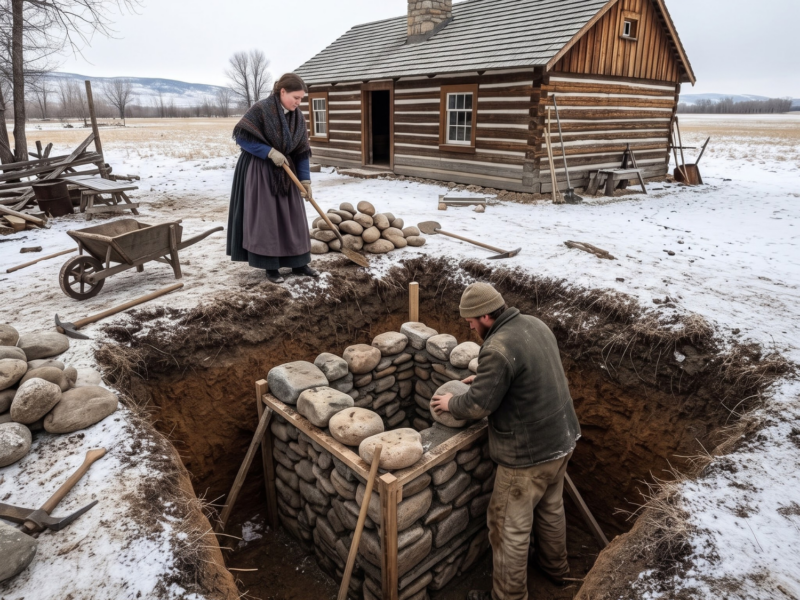
Martin Keller went the furthest. He excavated eight full feet down, lined his subterranean chamber with heavy granite blocks he hauled from a quarry nineteen miles away, and built a winding flue system that meandered thirty-two feet through the stone mass before finally venting outside. His wife Margaret proudly reported that they burned sixty percent less wood the following winter and slept comfortably in light nightclothes for the first time since leaving Pennsylvania.
Thomas Rearen took a different, more technical approach. He built his system into a brand-new cabin rather than retrofitting an existing one, incorporating the massive thermal mass directly into the foundation walls themselves. He ran calculations on heat loss per degree of temperature drop, thermal conductivity across various stone types, and optimal flue velocity. His cabin stayed above fifty-five degrees for thirty-six full hours even after the hearth fire went out completely.
By 1880, when the territorial census taker rode through recording homestead improvements, he noted something highly unusual in his official log:
“Settlement along Stillwater Creek shows advanced thermal mass heating systems not observed in other Montana territory locations. Settlers report 40 to 60% fuel savings using stone mass heating with redirected chimney gases. Norwegian, Swedish, and German immigrants report similar systems in countries of origin… Significant survival advantage observed during severe winter months.”
The census taker’s name was Edward Voss, and he was enough of an engineer to recognize brilliant, vernacular engineering when he saw it. He spent three days in the valley measuring, sketching, and interviewing families. His official report to the territorial government included detailed technical drawings of Ingred Halverson’s subterranean system and formally recommended that similar technology be implemented in military outposts and government buildings throughout the Montana territory.
Nothing ever came of the recommendation. Government bureaucracy moves slowly, and by the time anyone in Helena might have authorized funds for experimental heating systems, the frontier was changing beneath their feet.
Railroads were bringing cheap coal. Towns were growing large enough to support commercial lumber and stove suppliers. The desperate, brilliant ingenuity that marked the early homestead era was slowly giving way to industrial convenience.









