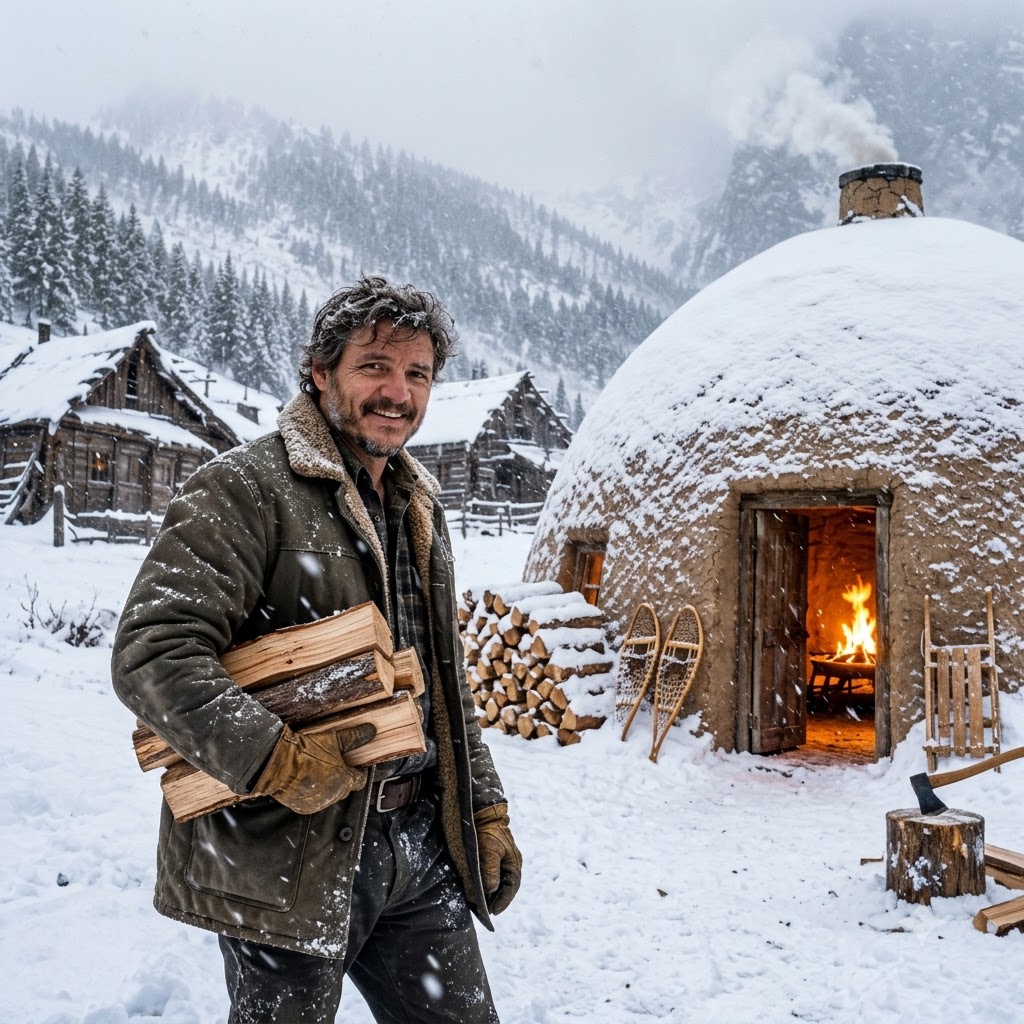
They Called His Clay House a Grave—Then It Survived the Worst Kansas Blizzard
The Three Skeptics
In the morning, Rand Brink walked over from across the draw, his coffee cup still in his hand. His own claim shack was a board-and-tar-paper box bought from Plimpmpton in the spring. He looked at the muddy patch on Friedrich’s wall and shook his head.
“Vaganded,” Brink muttered. “I’ll tell you plain, Friedrich. That thing is a grave with a door in it. The first real norther will find every hole you left, and I’ll be digging you out of it before Christmas.”
At noon, a black buggy came out from Hays. Mr. Ewing, the land agent for the railroad, sat in it with the company’s platbook open on his knee. The wagon claim was railroad land, bought on terms, and until the final payment, Ewing liked to remind everyone that the railroad had an interest in how it looked. He did not even get down from the buggy.
“Men come out from the east on the railroad to look at this country, Mr. Vagand,” Ewing said, peering over his spectacles. “And what do they see? A mudpot. People living in a burrow. It will fall in on you and the boy by the new year, and I will have to explain why.”
“It will not fall,” Friedrich said.
Ewing wrote something sharp in the margin of his book and drove away without another word.
Three men in one week. Plimpmpton said it would melt. Brink said it would freeze. Ewing said it would fall. Every one of them lived in, sold, or approved of a house made of imported pine boards.
What did a quiet German farmer understand about wind and heat that the lumber dealer, the neighbor, and the railroad had all missed?
On the worst morning of the worst blizzard in Kansas memory, the thermometer outside would drop to twenty below zero. By the end of this story, you will understand why a house with no corners, made entirely of the ground it stands on, stayed warm with a fire of twisted hay while board shacks with iron stoves froze solid—and exactly how warm it stayed.