They laughed At Them For Building Underground Homes – Until Brutal Winter Came
They laughed At Them For Building Underground Home…
They laughed At Them For Building Underground Homes – Until Brutal Winter Came
.
.
The winter of the Northern Plains did not arrive with the gentle flutter of an autumn leaf or the polite sigh of a retiring year. It struck like an iron mallet, swift and unsparing, blotting out the horizon until the world was reduced to two colors: the blinding, merciless white of the snow and the bruised, gun-metal gray of the sky.
On the east bank of the Missouri River, where the timbered bottomlands bled into the open prairie, a group of newly arrived settlers stood back from their handiwork, blowing on raw, blistered fingers. They had spent the late summer and autumn months sweating over broadaxes and crosscut saws, erecting what they proudly called proper winter homes.
From a distance, their cabins looked like tidy promises carved out of the wilderness. Straight walls of notched pine, heavy logs chinked tight with river mud, and steeply pitched wooden roofs designed to shed the heavy burdens of northern snow. To eyes trained in Ohio, Indiana, or the damp river valleys of the East, these structures represented the pinnacle of frontier civilization. They stood tall, proud, and defiant against the open horizon, casting long, dark rectangles across the virgin snow.
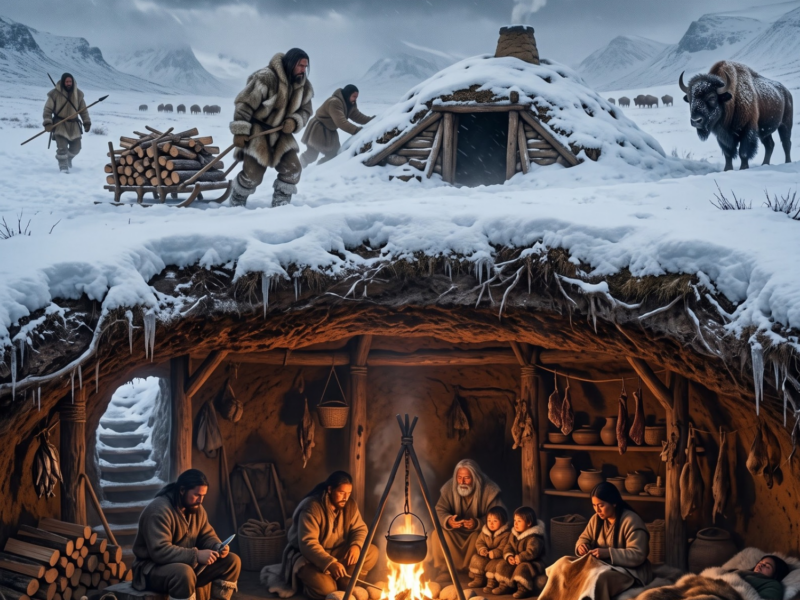
A mile away, across the frozen, bone-white expanse of the river, the Mandan and Hidatsa villages looked like nothing so much as a collection of giant, overturned bowls resting quietly against the earth.
From the outside, an earth lodge looked almost deceptively simple. Low-slung roofs, mounded dirt, dry grass, and sod blending seamlessly into the rolling contours of the river terrace. To the newcomers passing by on freight wagons or scouting for homestead claims, these dome-shaped mounds looked crude—almost primitive. Why, the settlers frequently asked one another over evening pipes, would any human being build down into the dark earth when they had a vast forest of cottonwood and pine waiting to be shaped into strong walls above ground?
To the European eye, a house belonged in the air, standing upright like a soldier at attention. To build low was to cower. To sink into the dirt was to surrender to the grave.
The settlers felt they had made the obvious, enlightened choice.
Then the weather changed.
The wind hardened, dropping down from the Arctic circle with an unbroken momentum that gathered speed across a thousand miles of frozen flatness. Snow swept across the prairie in blinding horizontal sheets, and the temperature plummeted past freezing, past zero, and down toward numbers that broke the spirit of ordinary iron and glass.
By the time the true, bone-cracking cold of early winter settled over the Missouri trench, the aesthetic debate over architecture was instantly replaced by a much more fundamental struggle: the mathematics of keeping warm. And the difference between those two distinct styles of human shelter was no longer about what looked proper to a traveler.
It was about who would wake up breathing when the sun finally crawled back over the frozen hills.









