What Did Medieval Villagers Do All Winter When the Fields Were Frozen?
The Harvest of Blood and Bone
By late January, the true test of the winter began. The psychological weight of the darkness was heavy, but the physical reality of the dwindling food stores was heavier.
The survival of January had been decided back in November. When the grass stopped growing, the village faced a brutal calculation: how many animals could they afford to feed through the winter?
If they kept too many, the stored hay would run out, and the beasts would starve. If they kept too few, they would have no breeding stock or draft animals for the spring. Thus, the autumn slaughter began.
Old cows, injured sheep, and the pigs that had spent the autumn gorging on acorns in the forest were killed. It was a bloody, frantic time. The meat could not be wasted. It was packed into heavy oak barrels with precious, expensive salt, or hung high in the smoky rafters of the cottage to cure.
Now, in the depths of winter, that preserved meat was a luxury, doled out in meager portions. The daily reality of their diet was pottage.
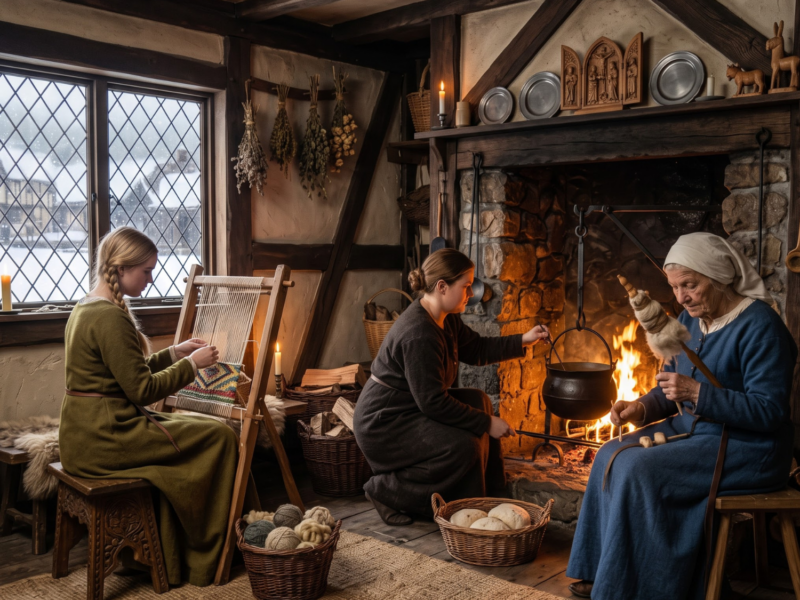
Every morning, Elara hung a heavy iron cauldron over the fire. Into it went water, oats, beans, and lentils. If they had onions, cabbage, or colwort, it went into the pot. If they had a scrap of salted bacon fat, it went in to flavor the broth. Even dried fruits, if they had them, were tossed in—medieval folk believed eating raw fruit was a sure path to sickness, so everything had to be boiled.
The pottage simmered all day. When Thomas came in from repairing a shattered plowshare or mending a fence, he took a wooden bowl and ate the thick, greyish-green stew. The next day, whatever was left in the pot formed the base for the new batch. It was monotonous, but it kept the fire in their blood burning.
Bread was the other pillar of life. The grain stored from the autumn harvest was brought to the communal oven to be baked into massive, dense loaves. But as the winter ground on, the stored grain aged. By February, the flour was coarse, sometimes mixed with peas or beans to stretch it. The bread grew dense and hard as stone.
Yet, there was a safety net. The village of Ashbury possessed a communal granary. It was not charity; it was survival infrastructure. If a family’s roof leaked and ruined their grain, or if wolves took their only cow, they could draw from the communal store. Everyone contributed, knowing that in the harsh theater of winter, luck was a fickle lord, and anyone might be the next to need the village’s mercy.









