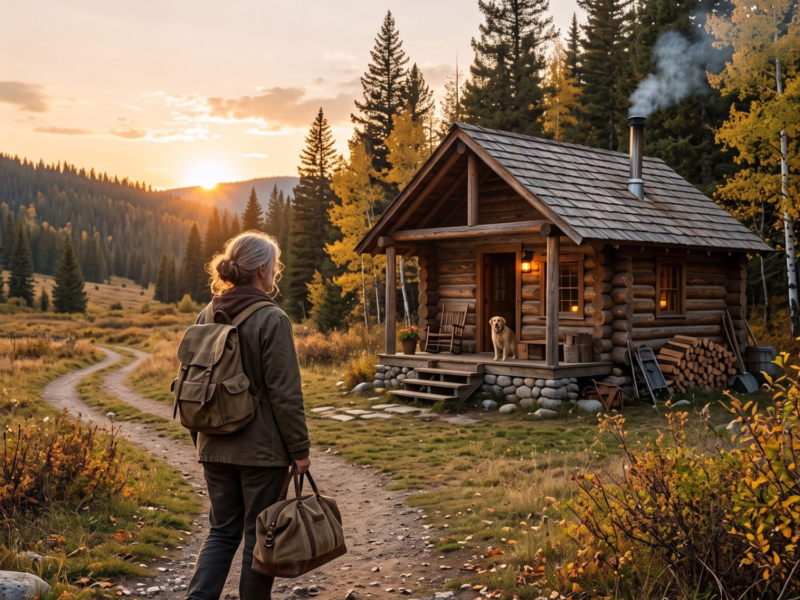
“All You Deserve Is a $50 Log Cabin” Her Family Said… Then They Froze Seeing What She Found Below
The True Valuation
The property had been officially assessed by the county tax assessor at essentially zero value at the time of the tax sale—a condemned structure on worthless land.
After she officially filed a formal reassessment request with the county, providing architectural photographs, receipts for materials, and a detailed physical description of the restored structures, the newly calculated assessed value came back at thirty-eight thousand dollars.
Yet, the total financial investment—every single dollar she had spent over ten months of relentless weekend labor, including the initial fifty-dollar purchase price, all dimensional lumber, metal roofing, the solar power array, the gravity water system, the wood stove, specialized hardware, tools she did not previously own, and the gasoline for every round trip from her previous urban housing—came to a grand total of $3,420.
She kept a meticulous notebook, logging every single expense down to the penny: dated, described, and categorized.
When her family had first looked at the online listing, what they saw was a single photograph of a collapsed porch and a sagging roof. A derelict property the county literally could not give away. A building that looked like it was already dead and buried.
What they could not see from that flat, two-dimensional photograph was what lay safely underneath and inside.
They couldn’t see the root cellar built from fitted, mortarless stone by an anonymous Appalachian farmer who understood both masonry and the micro-climates of the hillside. They couldn’t see the natural seep spring that had been flowing before any European ever set foot in the valley, and continued flowing because no human could shut it off.
They couldn’t see the chestnut logs, cut and hewed from ancient trees that no longer exist on this North American continent, locked forever into dovetail joints that only grew tighter and more secure as the building settled into the earth.
The bones of a home had been made from biological materials that simply cannot be manufactured in a factory. They were sitting on land that the modern real estate market initially considered unwanted, carrying a fifty-dollar price tag that reflected absolutely nothing about what was actually resting there in the dirt.
The property was never truly waiting for money. It was never waiting for a slick developer, or a corporate investor, or someone with a master plan drawn on expensive CAD software.
It was simply waiting for someone who would walk through the rotting front door, look resolutely past what was temporarily broken, and recognize what was still standing strong beneath the surface.









