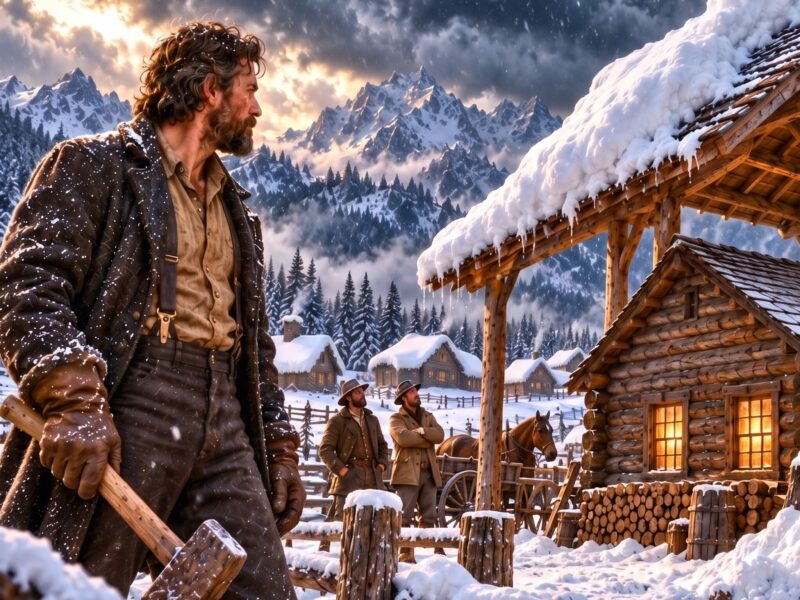
Neighbors Mocked His Strange Two Roof Cabin—Until Heavy Snow Made Every Other Roof Groan
Echoes from the Sawmill
The idea for the double roof had not originated in Hawthorne Basin. Years earlier, Nolan had spent one brutal season working at a lumber sawmill high in the rugged mountains. Most of the buildings there were ordinary timber sheds built low and close against the elements.
One building, however, was fundamentally different. The saw-filing shed sat beneath a steep, freestanding roof supported entirely by its own independent posts. The workspace below had a smaller roof of its own, with a wide, open gap of circulating air between the two independent structures.
The first time Nolan saw it, he assumed the mill had run out of time and left the building awkwardly unfinished. Then autumn brought heavy wet snow.
Men climbed onto the ordinary storage sheds with wooden shovels, clearing crushing weight before the ceiling boards bowed and snapped. The saw-filing shed needed no such human help. Snow gathered on the steep outer cover, held its position for a while under the freezing temperatures, and then suddenly broke loose and slid harmlessly into deep piles beside the building. Inside, the workbenches stayed completely dry. So did the delicate steel files and the rows of sharp saw teeth waiting to be sharpened.
Later that season, workers replaced several damaged boards on the outer cover. The filing work underneath continued almost without interruption.
Nolan never copied its exact dimensions. He never carried away a physical drawing. What stayed with him was simpler and more profound: The building itself did not have to be the first thing the weather touched.
Years later, standing beneath his unfinished frame in Hawthorne Basin, that was the part he remembered. The old cabin roof had more than one weakness. Its shallow pitch held heavy snow longer than Nolan wanted, but weight alone did not explain the persistent stains in the loft.
The stone hearth kept the cabin warm. That heat rose steadily through the ceiling boards and reached the underside of the cold roof. During the freezing winter, the lowest layer of snow could soften slightly against the warm wood surface even while the air outside remained sub-zero. Water moved downward, driven by invisible warmth.
Then, night temperatures plummeted. The melted moisture froze again around shakes, seams, and old nail holes, prying them apart with icy fingers. When warmer weather returned, it melted and searched for whatever opening years of patchwork had left behind.
Replacing the cedar shakes would stop some surface leaks. It would not change the thermodynamic cycle happening above them. So Nolan was not trying to make the old roof carry winter better. He was trying to remove most of winter from it entirely.









