She Inherited Nothing but a Dry Well Then Built a Home Inside That Survived the Great Blizzard
Sealing the Sanctuary
By the first week of October, the underground shell was complete. The air inside had settled into a remarkably constant, cool fifty-five degrees—thirty degrees cooler than the blistering surface air during the day, and twenty degrees warmer than the freezing midnight winds above.
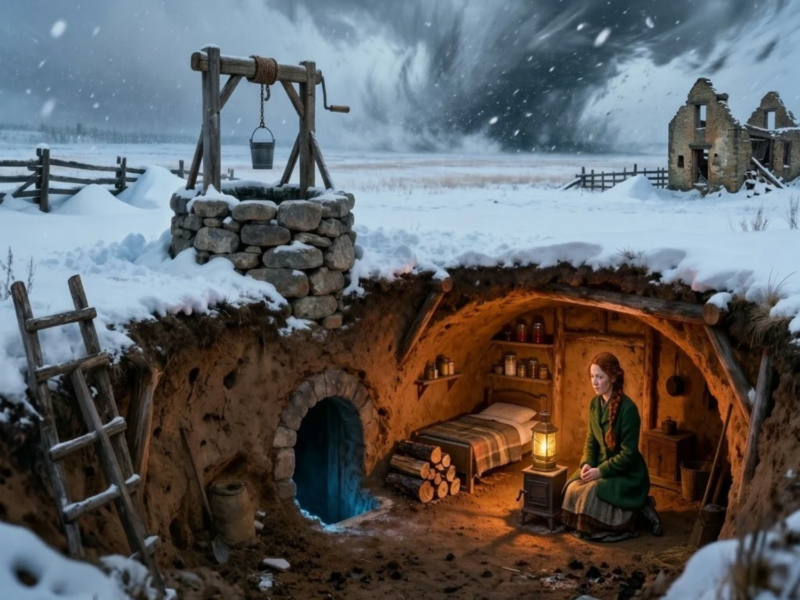
The only visible sign of the massive subterranean engineering project was two iron pipes jutting awkwardly from the parched earth thirty feet apart, angled like the alert ears of a buried beast. To anyone passing by, they looked like forgotten scrap metal. They had no idea those pipes were breathing.
On October 20th, the season turned. A brutal cold front swept down from the northern territories, plunging surface temperatures overnight to twenty-four degrees.
In town, families immediately began burning through their precious winter cordwood, huddling miserably around cast-iron stoves that simply couldn’t keep up with the drafty shacks. Clara, meanwhile, sat thirty feet below the frost line without a single stick of firewood burning—relying solely on a single tallow candle and the ambient warmth of her own body.
The salvaged thermometer hanging from her stone wall read a steady fifty-four degrees. The earth was holding its charge.
Then came the second critical phase: sealing the ceiling.
She mixed a thick slurry of native clay, chopped straw, and a small quantity of slaked lime—lime she had traded her mother’s gold wedding ring to acquire from a passing freighter. She plastered the interior vault meticulously, not for aesthetic beauty, but for absolute airtight integrity. An unsealed underground room quickly becomes a damp, moldering tomb; a hermetically sealed one remains bone-dry.
The iron hatch came last. It was constructed from two heavy layers of salvaged flat iron, with the dead airspace between them tightly packed with dried prairie grass for maximum insulation.
When she swung the heavy hatch shut on its greased hinges and dropped the thick iron bolt into place, the outside world vanished entirely. There was no howling wind, no abrasive grit, no biting cold—just the steady, unblinking flame of her candle and the profound stillness of a room that breathed entirely on its own.
Standing in the absolute silence, Clara finally understood what she had built: a home far more structurally permanent than any wood-frame shack in the county, and thirty degrees warmer than the freezing gales raging above.
Yet, the legal deadline loomed large. November 14th was fast approaching, and Miller was scheduled to arrive with the county sheriff, expecting to find nothing more than an open hole in the dirt.









