Single Mom Filled an Empty Pond With Minnows—Then the Worst Drought in 60 Years Arrived
THE INSPECTION
The rumor started in the second week of August, and it started fast, because a town under pressure will always prefer a villain to a mystery. Somebody driving by saw the pump box, the new tanks, and patches of green grass on the Whitlock slope, and the narrative solidified: The woman out east has a well nobody knows about and is pulling groundwater while the rest of them ration.
Within four days, Silas Barington stood up at the town council meeting, expressed concern in the calmest possible voice for the local aquifer during a declared emergency, and asked that the county water office look into unpermitted withdrawals at the Whitlock property. The vote to request an inspection was unanimous. Mara, who did not attend council meetings, learned about it from an official letter in her mailbox.
The inspection was set for the twenty-first of August at nine in the morning. By eight-fourty, there were seven pickup trucks parked along her fence line, which told Mara everything she needed to know about how the day was expected to go.
Dale Brunner came out from the county water office with a clipboard and a younger man carrying a locator wand. Grant Barington was there, leaning against his tailgate with three other landowners, wearing the particular relaxed posture of a man who had arrived early for a public execution. Silas did not come, which was its own kind of statement.
Mara had everything laid out on the tailgate of her own truck before Brunner even asked: the deed and the log for the single house well—a fifty-two-year-old hand-dug shallow well that served the kitchen and the shower and had never been connected to anything else—along with her notebooks, all four of them.
The locator wand found no unregistered casing anywhere on the seventy acres, and Brunner’s man walked a grid for two hours in the sun to be certain of it. There was no hidden line running to a neighbor’s system, no tap into the rural district main, no meter anywhere, no connection to the municipal supply, and no diversion from any creek, because the creek that gave Dry Creek its name had been a dry sand channel since the first week of June.
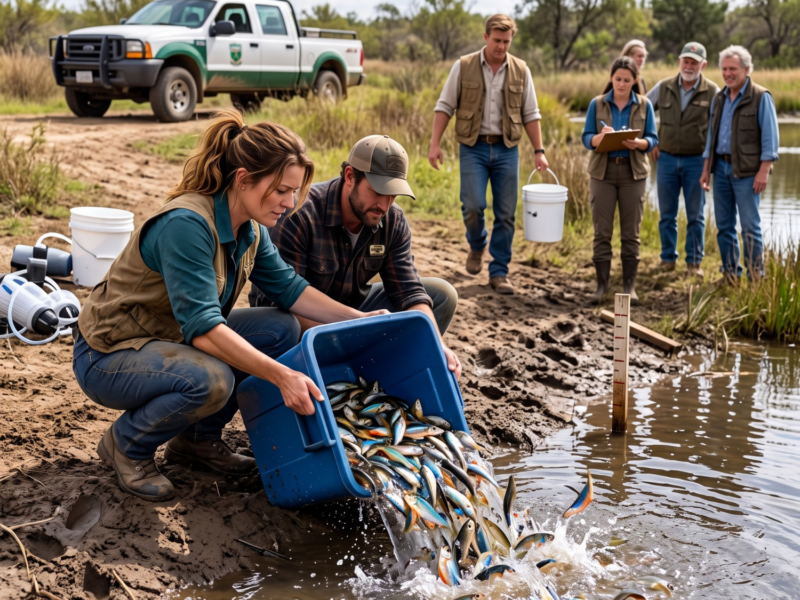
The pump in the plywood box drew from one place and one place only: the pond, through a four-inch intake sitting in open water that every man standing on that rim could see.
Brunner stood there with the clipboard against his leg and asked the question none of them had prepared for: Where was the water coming from?
The pond had lost most of its surface area since spring, but the level at the stakes had fallen less than eleven inches in a summer that had evaporated more than four feet off open water across that part of Kansas. He asked whether anybody had hauled water in, and six men who had been watching that fence line all summer out of pure entertainment had to admit that nobody had ever seen a truck.
Grant insisted that she must have capped a well somewhere and the wand had missed it. Brunner told him in front of everyone that the wand does not miss steel casing at four feet, and invited Grant to come walk the grid himself if he doubted it.
Grant did not take him up on it.
The inspection closed with no violation, no citation, and a two-page report that would sit in county files for years. The trucks drove off down the section road in a long train of dust that hung over the ditch for twenty minutes. Mara put her notebooks back in the house and went out to fix a leaking fitting on the upper tank, because the grass she had planted needed water on a schedule, and nothing that had happened that morning changed the schedule.
Three days later, Silas Barington came back. He did not mention the inspection. He stood in her kitchen because it was one hundred and three degrees outside, declined a glass of water with a small smile, and offered her one hundred and ninety thousand dollars for the farm—more than three times what she had paid for it in February. He said she could be out by October with enough to buy a house in town and put something away for Josie.
For the first time in six months, Mara asked Silas Barington a question instead of answering one. She asked why a man with four thousand acres and the largest reservoir in three counties wanted a worthless farm this badly in the middle of a drought at triple the price.
Silas held her eyes for about four seconds, said it had been a pleasure, and left without answering.









