They Called His Floor Stupid — Until It Kept His Cabin Warm for 6 Days
The Ghost in the Teton Valley
Three miles north of town, on a property that sat at the edge of the pine timber where the flat grazing land began its gentle rise toward the foothills, a trapper named Coleman had been walking for two hours through knee-deep snow.
Coleman was not a man easily rattled. He had spent twenty years in the Rockies, trading skins, dodging hostile parties, and sleeping under a single wool blanket when the whiskey ran out. But the rumors circulating through the saloons and general stores of Caldwell Crossing had pricked at his curiosity like a burr under a saddle.
They said that Norwegian fellow up in Teton Valley—or rather, the quiet Ohio stonemason who had settled there years ago—had built some kind of magic floor. They said he could heat his cabin once and stay warm for a week. They said he was burning a tenth of the firewood everyone else needed.
Coleman figured it was all talk. Frontier exaggeration. The kind of tall tales trappers told over lukewarm whiskey to pass the long December nights.
Yet, as he crested the rise and approached Marcus Webb’s cabin, something felt profoundly wrong. Or profoundly right. There was no smoke rising from the stone chimney. Not a wisp, not a gray thread against the pale winter sky. The fire had been dead for three days, completely out. Not even a coal remained in the stone fireplace.
Coleman stomped the snow from his boots, pushed open the heavy wooden door, and stepped inside.
The contrast struck him instantly. Outside, the temperature had dropped to fifteen below zero, and the wind was howling down off the peaks with the force of a skinning knife. Inside, Marcus Webb stood in his cabin wearing nothing but a wool shirt and trousers, as comfortable as a man sitting by a roaring blaze in mid-July.
And the floor beneath Coleman’s feet radiated warmth like it was alive.
Coleman knelt down slowly, his stiff joints cracking in the quiet, and pressed his palm against the wooden floorboards.
It was warm. Not just sun-touched warm, but hot enough to be uncomfortable to touch for more than a few seconds. He looked up at Webb with confusion and something close to fear.
“There’s no fire,” Coleman said, his voice dropping to a whisper.
“Hasn’t been for three days,” Webb replied, standing by a small table.
“The floor… it’s hot.”
“It is.”
“How?”
Webb smiled slightly. It was the smile of a man who’d been called crazy, called stupid, called wasteful. The smile of a man who’d been proven right in the most undeniable way possible. He gestured toward the floorboards beneath them. “Under these boards is about four tons of stone. I heat those stones once every six or seven days. They give the heat back slow. Real slow. Keeps the cabin warm without burning through cords of wood like you’re doing.”
Coleman shook his head, standing up and brushing his knees. “That’s not possible. Stone doesn’t hold heat that long.”
“These do.”
“I’ve never heard of such a thing.”
Webb walked to his small table and poured two cups of coffee from a pot that sat directly on the warm stones of his fireplace hearth. The coffee was still steaming, still hot, even though no fire had warmed it in seventy-two hours. He handed a cup to Coleman, who took it numbly.
“Most folks haven’t,” Webb said, leaning back against the edge of the table. “The Romans knew about it. Some old civilizations built whole heating systems around hot stones and hot air under floors. I read about it in a book once when I was an apprentice in Ohio. Figured I’d try something similar. Took me all summer to build.”
Webb took a sip of his coffee. “Everyone who saw it said I was wasting my time. Said I was dumb for putting all that stone under my floor when I could have just built normal and been done in two weeks.”
Coleman sipped the coffee, still trying to anchor his mind to reality. “Four tons of stone under the floor.”
“About that, maybe a bit more. I didn’t weigh it exact.”
“And you heat them. How?”
“Come here.”
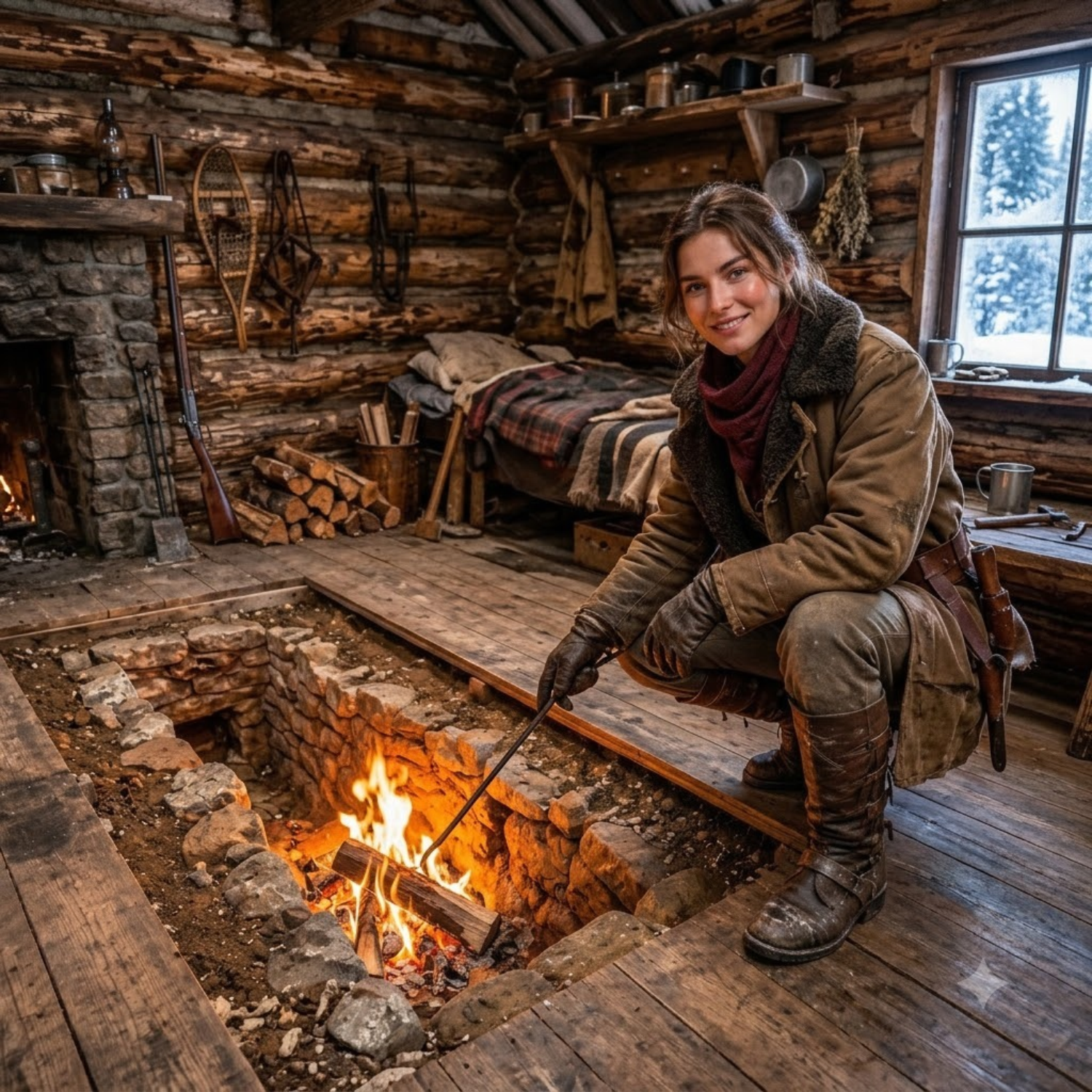
Webb led Coleman to the far corner of the cabin where a section of the wooden floor was built with removable boards. He pulled up three boards, revealing the dark, silent mass beneath.
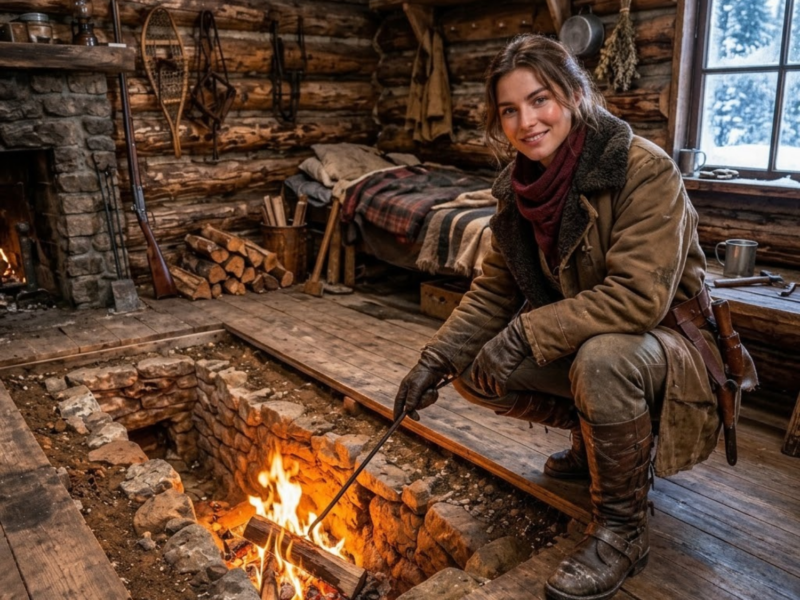
Coleman could see it now: large river stones, each weighing between fifty and a hundred pounds, fitted together in dense, deliberate layers. The stones were still radiating heat, visible as shimmering, upward-drifting air currents. Between the stones, Coleman could see channels—deliberate gaps where air could flow, winding outward from the fireplace area. Webb had arranged the rocks in a specific, interlocking pattern, creating a labyrinthine path for thermal energy.
“When I build my fire,” Webb explained, pointing down into the dark cavity, “I build it hot. Real hot. I burn hardwood for about four to six hours, getting those stones as hot as I can. The heat travels through these channels, warming the whole mass. Then, when the fire dies, those stones keep giving heat back for days. Sometimes a week in mild weather.”
Coleman was silent for a long moment, listening to the wind beat against the thick, double-chinked logs outside. Finally, he asked the question that mattered most: “How much wood do you burn in a month in deep winter?”
“Maybe two cords. Three at most.”
“I burn four cords every three weeks.”
“I know most folks do,” Webb said softly, “and you’re colder than I am.”
“I am,” Coleman admitted.
Coleman looked around the cabin again. It was larger than his, better built. The walls were thick, the chinking was absolute perfection. But that floor—that floor was something else entirely. That floor was the difference between merely surviving winter and actually living through it in comfort.
“Will you show me how you built it?” Coleman asked, his skepticism entirely burned away by the radiant heat rising through his boots.
“I will, but I’ll tell you now: it’s a lot of work. Most folks won’t want to put in the effort.”
“I want to.”
“Then come back when the snow melts. I’ll show you everything.”
Coleman left that day with his mind churning. He’d come to confirm or debunk a rumor. Instead, he had discovered something that would change how he thought about heating a cabin forever—something that seemed too simple to work, yet undeniably did.
The story of Marcus Webb’s floor wasn’t just about stones and heat. It was about understanding thermal mass, about working with natural principles instead of fighting them. It was about the difference between knowing how to build a fire and knowing how to build a system that could hold warmth and give it back slowly over days. But most importantly, it was about being willing to do something different, even when everyone around you called you dumb for trying.