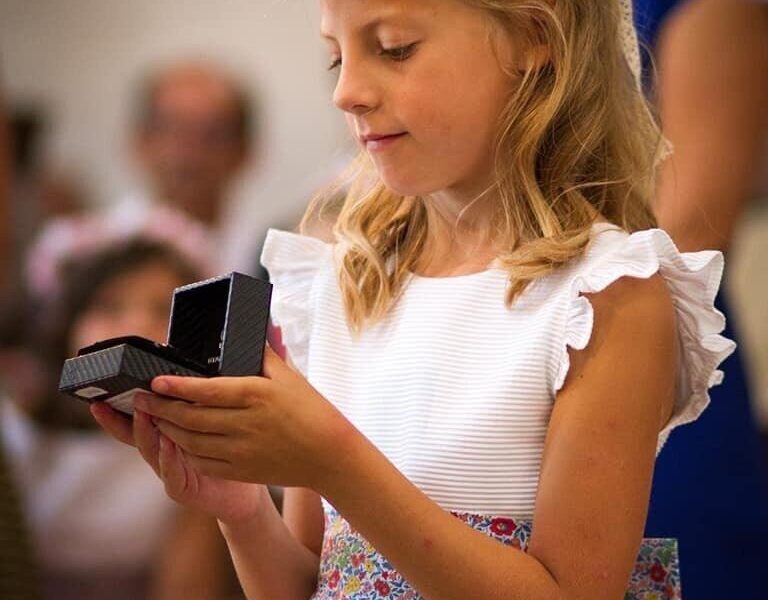
The Ring Box
CHAPTER THREE — The Clock
Julian Ashby had been waiting for this moment for twenty months, and now that it had come, the only thing he could think about was the weight of an envelope.
It lay against his ribs, inside the left breast of his tuxedo jacket, in a pocket his tailor had sewn in by hand last Thursday without asking why. A flat cream rectangle, no thicker than three sheets of paper. It had been in his safe, then in his desk, then in the glove compartment of his car, then, for one terrible week in October, in a freezer bag at the bottom of a bin liner he had been about to carry out to the kerb. It had followed him from room to room of his life like a patient, dignified ghost.
He had never opened it.
That was the one thing he could say for himself. In twenty months, through every sleepless night, every bottle of wine he had finished alone, he had never so much as lifted the flap. He had told himself that this was integrity. Deep down he knew it was merely fear: the plain, animal fear of a man who suspects that the thing inside a locked box will end him.
Now he stood on the white carpet beneath an arch of roses, with three hundred people watching, and he looked down into a ring box at a dead man’s telephone, and heard the clock he had been dreading all this time begin, at last, to tick.
Edmund, he thought. You old bastard. You really did it.
He remembered the voice. Dry, gravelly, amused. Insurance, my boy. Every honest man needs it. They had been sitting in the glass-walled office at the end of the yard, with the evening lights of the shipyard coming on one by one outside, and Edmund Hartwell had raised a heavy cut-crystal glass of whisky and added: If something goes wrong, there’ll be a telephone. It’ll know when to speak.
Julian had thought it was a joke.
He had been thirty-three then, newly flush with a fund that had made his name overnight, and a good deal too pleased with himself. He had come to the Hartwell Marine yard on a wet Tuesday in March to finish the deal of his career. A rescue, they were calling it in the financial papers. The old shipbuilder was bleeding money from somewhere nobody could find. Four hundred jobs hung on the signature. Edmund had begged, privately, with a dignity that had made Julian’s eyes sting, for the one thing he cared about more than his pride: that the yard not be broken up, that the workers not be thrown out, that his daughters not inherit a ruin.
Julian had agreed. He had liked the old man. He had liked him very much.
At half past six, the lawyers had gone home. At seven, the secretary. At a quarter past eight, with the contracts spread across the desk and the whisky bottle half empty, Edmund had put down his pen, looked at Julian for a long, grave moment, and slid an envelope across the leather blotter.
I want you to hold this, he had said. Don’t open it. If anything happens to me, you give it to my daughter, Isabelle. By hand. The day she marries.
The day she marries? Julian had laughed. Edmund, you’re sixty-six. You’ll be walking her down the aisle.
Humour an old man. The shipbuilder’s smile had been tired. There are things I haven’t told her. Things I haven’t dared to. I don’t want her to hear them until she’s happy, and loved, and strong enough to bear it. A woman on her wedding day can bear anything.
Julian had slid the envelope into his jacket. A courtesy, a favour, a small odd request from an old man with a sentimental streak.
It was nine o’clock when the door opened and Cordelia Hartwell Pryce came in with a tray.
He could still see her. The silver bob, the pearl-grey cardigan, the soft, warm, apologetic voice. You two have been at it for hours. Edmund, you haven’t eaten. I’ve brought tea. She had set the tray on the desk with a small clink of china. She had poured a cup. She had stood there with her gentle smile while her brother drank it, and then she had picked up the whisky glass beside his elbow and said, in the voice of every concerned sister who has ever lived: And you shouldn’t be drinking that with your heart.
It had been at nine-fifteen that Edmund had put a hand to his chest.
Julian could still hear the sound he made. Not a cry. A small, startled grunt, like a man who has walked into a glass door. The pen had fallen out of his fingers. His face had gone the grey of old putty. He had looked at Julian with eyes full of astonishment, and then, slowly, with what Julian would later swear was a flash of comprehension, he had turned his head and looked at his sister.
She had been standing quite still, with the tea tray in her hands.
Call an ambulance, Julian had said. He was already half out of his chair. Call an ambulance, now—
No.
The word had been so quiet, so reasonable, that he had actually stopped.
Not yet, Cordelia had said. She put down the tray. Her face had been pale, but her voice was perfectly steady. Mr. Ashby, listen to me. If the papers hear that the chairman collapsed on the night the sale was signed, the deal falls apart. The bank pulls the credit line in the morning. Four hundred men lose their wages by Friday. He’s had these turns before. He’ll sit down, he’ll be fine. Give me four minutes to get his tablets from the cabinet. Four minutes. We’ll call after.
And Julian Ashby, thirty-three years old, in a borrowed office, with the contracts still wet beneath his hand, had believed her.
That was the thing he could never forgive. Not that she had asked. That he had let her. That in the half-second when a decent man would have grabbed the phone, he had thought: four hundred jobs. The bank. The deal. That he had sat there, one hand clamped on the arm of a chair, watching Edmund Hartwell struggle for breath, while a woman in a pearl cardigan walked unhurriedly across the room, opened a cabinet, and began to search for pills she must have known were not there.
The clock on the wall had ticked. He had counted every one.
When the four minutes were gone, Edmund was dead.
Julian had called the ambulance at nine-twenty. In the confusion of the next hour, with the paramedics and the police and the weeping secretary and the terrible stillness of the old man’s body on the carpet, someone had written 4:50 p.m. in the incident log, and nobody had thought to ask why. Cordelia had held his sleeve in the corridor and whispered: Please. For the girls. It was a heart attack, Julian. It was nobody’s fault. Let them mourn. And he had said nothing, because the doctors had said cardiac arrest and the coroner had said natural causes, and there was an envelope in his jacket that he had not yet understood.
And then, a week later, he had gone to the funeral, and seen Isabelle.
That was what no one could ever have predicted. Not Edmund. Not Cordelia. Not Julian himself.
He had gone to that churchyard in the rain meaning to do a decent thing. He had meant to introduce himself, to offer his sympathy, to find a quiet moment to deliver an envelope and a confession and be done with it. He had rehearsed the speech all the way there. Miss Hartwell, I was with your father on the night he died. There are things you need to know.
But a girl in a black coat had stood alone beside the grave, small and straight, with rainwater running down her face and her father’s pearls at her ears. She had looked at him as if he were someone she should recognise. And when he said I’m so sorry, she had put her wet gloved hand into his, with absolute trust, and said, Thank you for coming. He’d have liked that you came.
He had not been able to say it.
Not that day. Not the next. Not in March, nor in April, nor in the long soft summer when she began to laugh again. Not when she took him into her father’s study and showed him the globe and the ship models and the logbooks. Not when she fell asleep one evening with her head on his shoulder. Every day that he did not say it, the saying became harder, until it was a wall, and he stood on the wrong side of it, loving her.
He told himself that he was protecting her. That the truth would only hurt. That the four minutes were an accident, a moment’s weakness, a tiny crack in an otherwise honest life.
He knew, deep down, that he was protecting himself.
So he had come up with a plan, which he now saw was ridiculous: to marry her, and then tell her. To kneel in front of her on their wedding night, with the envelope in his hands, and say, Your father wanted me to give you this, and I’m a coward, and I love you, and I’m sorry. To put himself in her power so completely that she could not possibly think he had come to her for any reason except love. He had even written his speech on the back of a hotel menu.
He had not counted on a ring box.
He had not counted on the way her face looked now, lit from below by the screen: so open, so stunned, so young. He had not counted on Cordelia in the front row with her hand over her mouth, pale as paper.
He had not counted on the dawning, sickening certainty that whatever was on that phone, it was his time-bomb as well as hers.
Because Edmund Hartwell had not trusted him. Edmund, who had slid that envelope across the desk, had also, behind his back, built a second insurance policy. And the second one would speak on the one morning Julian could least afford: the day she marries.
He could feel the room watching. He could feel Poppy’s small, steady eyes on his face, bright and unblinking, from where she stood at the edge of the carpet, and the faint prickle of that stare was like a draught on his skin. Does she know? he thought. Does the child know?
He could feel Isabelle’s hand, still in his, going slowly cold.
The string quartet had stopped. In the silence, a woman coughed. A glass chimed against a glass. Over the heads of the guests a chandelier trembled, once, as somebody, somewhere, shut a door.
He had maybe thirty seconds. Possibly less. In thirty seconds, she would reach down with that small, beautiful, trembling hand, and she would press the screen, and the voice of her dead father would fill the ballroom, and she would hear whatever it was before she heard it from him.
He could not allow that. Not that. He could bear almost anything except that.
He leaned towards her, his lips an inch from her ear, and the words came out of him in a cracked, low whisper, with a desperation he could not disguise.
“Izzy. Don’t press play.”









