His Sod House Had No Woodpile in January – Until the Trains Stopped and the Town Came Begging
The Verdict of Tolbeck
The storm blew itself out a little before dawn on the fourth day, leaving a brilliant, crystal-clear sunrise that cast long blue shadows across the endless white plains.
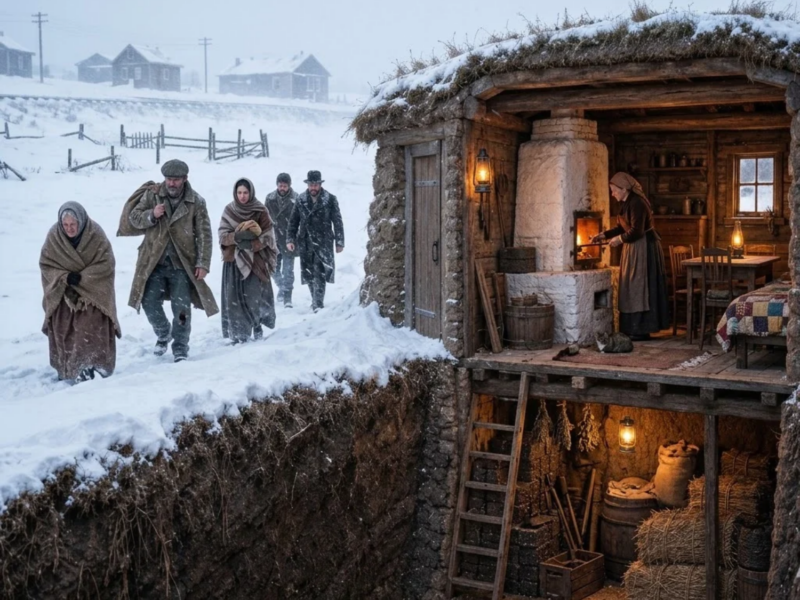
In the sod house, Ivor looked down at his feet. The healthy pink color had returned to most of his skin, but two toes on his left foot remained dark, shrunken, and hard as charred wood. Katherina, who had seen enough frostbite on the southern steppes to know the signs of death in the flesh, quietly packed them in clean linen without offering any false comforts about them recovering.
Ferris Collie walked back into town alone along the top of the frozen railway grade, and within one hour, the other two members of the town board were sitting with him in the back room of the general store.
The testimony was swift and devastating. Thea recounted word-for-word what she had heard at the coalyard fence; Ivor was carried in on a wide wooden door by two neighbors to testify about the tonnage he had hauled; and old Dora Eastston marched in through the drifted snow to describe what she had witnessed through her parlor window at night—heavy sacks of coal being smuggled up the dark alleys behind the saloon.
The formal vote took less than one minute.
At noon, half the population of Tolbeck followed Ferris Collie down the packed snow path toward the mercantile coalyard. The town marshal—the very man who had shoved Katherina into the mud back in August—stood before the padlocked shed holding a heavy iron pry bar.
Garvin Pelum stood off to one side in the snow, his hands thrust deep into his overcoat pockets, staring at the ground. He didn’t even reach for the key.
The marshal struck the padlock with a heavy hammer, and the rusted iron shackle snapped. When the double doors swung wide, the morning light spilled into the dim interior to reveal towering stacks of clean, glittering anthracite coal—filled precisely three-quarters high, exactly as Ivor had sworn under oath.
The board took immediate control of the inventory. They sold the coal that very afternoon to the townspeople at the exact price Pelum had originally paid, plus the standard freight cost—strictly limited to one single sack per family—and carefully entered every transaction into the store’s official ledger.
Pelum’s legitimate share of the invested capital was counted out in gold coin and set aside in a wooden box on the store counter. Nothing else was given to him.
When the telegraph wires finally hummed back to life two days later, Ferris Collie wired the railroad’s regional division office in the capital, requesting formally that the Tolbeck fuel and depot contract be stripped from Garvin Pelum immediately and awarded directly to the town board in trust.
The return wire arrived within two hours. It was only three words long, and Collie walked out onto the wooden store porch to read it aloud to the assembled town: APPROVED. EFFECTIVE TODAY.
At that exact same town meeting, the old nuisance order against Jacob Risig was officially struck from the record books, wiped clean by unanimous consent.