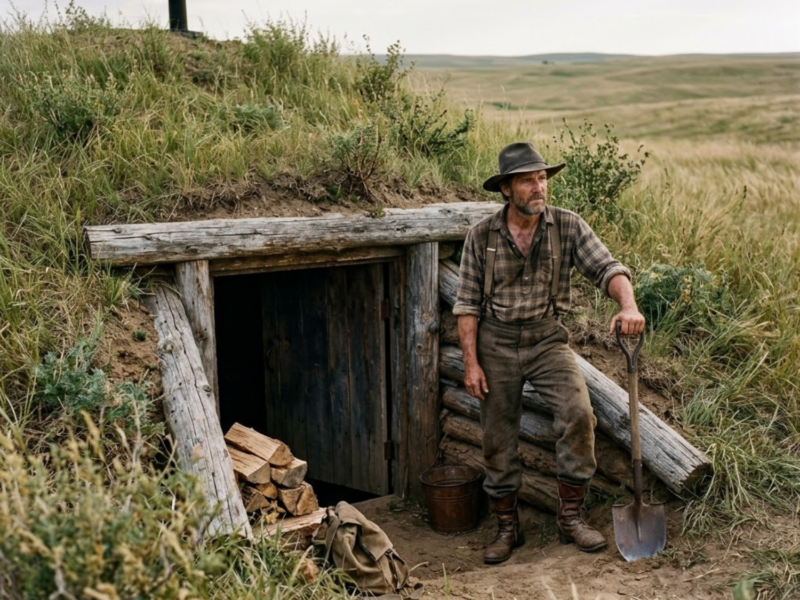
Neighbors Laughed When He Built an Underground “Grave” And Not a Cabin—Until It Kept Him 25°F Warmer
The Blue Norther
The atmosphere began to die on January 12th, 1887.
A thousand miles to the north, over the desolate, frozen expanse of Hudson Bay, a massive high-pressure system settled into place like a descending anvil. It was a weather mechanism of apocalyptic scale. Military meteorologists at distant outposts tapped their barometers in disbelief as the mercury climbed past 31 inches. The atmosphere was condensing, growing impossibly heavy, preparing to violently displace the warmer air to the south.
The morning of January 15th was deceptively calm. At noon, the temperature at the McCutchen farm was a tolerable twenty degrees above zero. The sky was a pale, washed-out blue.
By three o’clock, a strange, bruising darkness appeared on the northern horizon. It was a line of clouds the color of a fresh hematoma, churning and boiling. There was no sound at first, only a sudden, violent drop in barometric pressure that made the settlers’ ears pop and livestock scream in the pens.
Then, the Blue Norther hit.
It did not arrive as a storm; it arrived as a physical impact. The temperature plummeted thirty-five degrees in the span of an hour. The wind struck with the concussive force of a runaway train, sustaining instantly at twenty-five miles per hour, gusting to forty.
By sunset, the temperature was fifteen below zero. The air was filled with pulverized ice, stripping visibility to zero. The Dakota territory was immediately plunged into a fight for its life.
In the McCutchen cabin, panic took root. John and Thomas stood before the potbelly stove, feeding it with a frantic, desperate rhythm. The iron stove was cherry red, radiating furious heat, but it was a losing battle. The wind outside was so violent it was physically forcing the freezing air through the tar paper, through the wood grain itself.
The heat was being stripped from the room faster than the fire could generate it.
“Keep it burning, Tom!” John shouted over the roar of the wind, which sounded like a chorus of screaming women tearing at the shingles.
They took shifts. Every thirty minutes, they threw another massive split of oak into the firebox. But as the clock crept toward midnight, the temperature outside dropped to thirty-five below zero. The wind chill pushed the effective temperature into a realm where human flesh freezes solid in minutes.
Inside the cabin, the frost began to advance. It started at the baseboards, a creeping white fungus of ice. It climbed the walls. The nail heads on the interior studs blossomed into thick, white bulbs of frost.
At 2:00 AM, exhausted beyond measure, John McCutchen sat heavily in his chair and closed his eyes just for a moment.
At 3:15 AM, the stove went out.
The extreme cold outside had supercooled the iron stovepipe. The dense, freezing air violently inverted the draft. A blast of sub-zero wind shot down the chimney, blowing the fragile coals into gray ash and filling the room with a choking cloud of acrid smoke.
John snapped awake, coughing violently. He rushed to the stove, throwing open the iron door. Blackness.
“Tom! Wake up! The fire!”
The temperature in the cabin did not drop slowly; it crashed. Without the radiant heat of the stove, the balloon-frame cabin offered zero thermal resistance. By 4:00 AM, the interior was thirty-two degrees. By 4:45 AM, it was twenty-seven.
Mary McCutchen wept silently in the bed, pulling every quilt over her head, her breath pluming in thick white clouds. The water in the washbasin froze with a sharp crack that echoed like a pistol shot in the dark.
John’s hands shook so violently he could barely strike a sulfur match. His fingers were going numb, thick and useless. The iron of the stove was so cold it burned his skin. The cold had caused the metal components of the firebox to contract, creating gaps that ruined the draft.
When he finally managed to ignite a handful of cedar shavings at 5:20 AM, the interior of the cabin was twenty-four degrees. They were standing on the edge of the abyss.
Two miles away, the Kreger family was living a nightmare.
Their tin box stove had failed completely by midnight. The thin walls of their cabin offered no more protection than a canvas tent. Anna Kreger had dragged all three of her children into one bed, wrapping them in every piece of clothing and bedding they owned, creating a desperate, trembling cocoon of body heat.
Jacob paced the floor in the dark, swinging his arms to keep his blood moving, watching the solid sheet of ice form on the inside of his front door. He knew that if the sun did not bring relief, they would die before noon.









